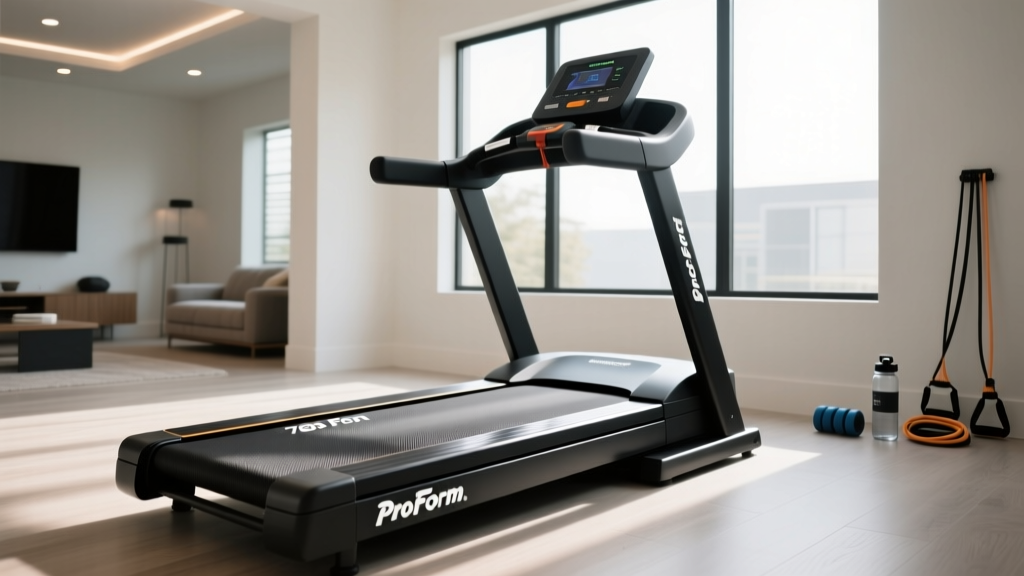
ProForm 760 EKG Treadmill Belt Maintenance: Budget Value Analysis
Analyze the true cost of ProForm 760 EKG treadmill belt maintenance. Learn lubrication schedules, part costs, and if repairing budget treadmills pays off.

The ProForm 760 EKG: Legacy Budget Workhorse
When evaluating home cardio equipment on a strict budget, the secondary market and hand-me-downs are goldmines. The ProForm 760 EKG treadmill is a classic example of an entry-level, budget-friendly machine that has populated countless home gyms over the last decade. Featuring a 1.5 CHP motor, an 18-inch by 50-inch running surface, and a 300-pound weight capacity, it was designed for walkers and light joggers. However, budget treadmills operate on razor-thin engineering margins. The deck is typically made of medium-density fiberboard (MDF) rather than commercial-grade phenolic resin, and the belt is a thinner 1-ply PVC construct. Because of these material compromises, rigorous belt maintenance and lubrication are not just recommended for the ProForm 760 EKG—they are the singular factor determining whether the machine lasts three years or ten.
In this budget breakdown and value analysis, we will dissect the true cost of ownership, the financial risks of neglected maintenance, and the step-by-step economics of keeping your ProForm 760 EKG treadmill running smoothly in 2026.
Quick Specs: ProForm 760 EKG Belt & Drive System
- Motor: 1.5 Continuous Horsepower (CHP)
- Belt Dimensions: 18' x 50' (1-Ply PVC)
- Deck Material: Wax-coated MDF
- Required Lubricant: 100% Silicone Liquid (Non-aerosol)
- Tensioning Hardware: 3/16-inch Allen wrench
The Hidden Cost of Friction: Motor and MCB Failure
To understand the value of maintenance, you must first understand the physics of a budget treadmill. According to repair data from Treadmill Doctor, the leading cause of death for entry-level treadmills is not structural failure, but electrical burnout caused by belt friction. When the ProForm 760 EKG belt dries out, the coefficient of friction between the PVC belt and the MDF deck skyrockets.
A properly lubricated 1.5 CHP motor draws between 3 to 5 amps under a 150-pound load. When the belt lacks silicone lubrication, that amp draw can spike to 10 or 12 amps. This excessive current generates immense heat, which degrades the motor windings and eventually fries the Motor Control Board (MCB). Replacing an MCB and a burned-out motor on a legacy budget machine often costs between $180 and $250 for parts alone—a repair bill that frequently exceeds the total replacement value of the used treadmill.
Budget Breakdown: 5-Year Cost of Ownership
Is it worth investing time and money into maintaining a budget treadmill, or should you let it run into the ground and upgrade? Below is a comparative financial analysis of three different ownership strategies for the ProForm 760 EKG over a 5-year period.
| Ownership Strategy | Maintenance Costs | Repair/Replacement Costs | Total 5-Year Cost |
|---|---|---|---|
| Proactive (DIY Lube) | $24 (Silicone) | $0 | $24 |
| Reactive (Run to Failure) | $0 | $210 (Motor/MCB) + $55 (Belt) | $265 |
| Upgrade (Buy New 2026) | $24 (Silicone) | $599 (New Entry-Level Unit) | $623 |
As highlighted in the Consumer Reports Treadmill Buying Guide, entry-level treadmills in 2026 generally start around $500 to $700, but they often feature the same 1.5 to 2.0 CHP motors and MDF decks as legacy models. Therefore, spending $12 a year on 100% silicone lubricant yields an astronomical return on investment, effectively delaying a $600 capital expenditure by half a decade or more.
Step-by-Step: Lubricating the ProForm 760 EKG Belt
ProForm officially recommends lubricating the belt every 300 miles or every 3 to 6 months, depending on usage intensity. Here is the exact, manufacturer-aligned procedure to service your machine without voiding any remaining warranties or damaging the deck.
- Power Down and Secure: Unplug the treadmill from the wall outlet. Never perform maintenance with the safety key inserted or the machine plugged in.
- Loosen the Belt Tension: Locate the two rear roller adjustment bolts at the back left and right of the foot rails. Using a 3/16-inch Allen wrench, turn both bolts counter-clockwise exactly three full turns. Keep track of your turns so you can restore the exact tension later.
- Access the Deck: Reach under the side edge of the belt and gently lift it away from the deck. The belt should now be slack enough to create a 2-inch gap between the PVC and the MDF board.
- Apply the Silicone: Using a 100% liquid silicone treadmill lubricant (never use WD-40, petroleum distillates, or aerosol sprays, which will melt the PVC backing), apply exactly 0.5 ounces of fluid in a zig-zag pattern across the center third of the deck. Repeat on the opposite side.
- Restore Tension: Turn both rear roller bolts clockwise exactly three full turns to return the belt to its baseline tension.
- Distribute the Lubricant: Plug the machine in, insert the safety key, and run the treadmill at 2.0 MPH for three minutes. Walk lightly on the edges of the belt to help spread the silicone evenly across the deck surface.
Edge Case: The 'Slipping vs. Sticking' Diagnostic
How do you know if your belt needs lubrication or if it needs tensioning? Many budget treadmill owners confuse the two, leading to over-tightened belts and burned-out motors.
- The Sticking Test (Needs Lube): Walk on the treadmill at 2.0 MPH. If the belt hesitates, stutters, or feels like it 'grabs' your foot with every step, but the front motor roller continues to spin smoothly underneath, you have high deck friction. Action: Lubricate.
- The Slipping Test (Needs Tension): If you step heavily on the belt and the walking surface stops moving entirely while you hear the motor whirring and the front roller spinning uselessly beneath you, the belt is too loose. Action: Tighten the rear roller bolts by 1/4 turn on each side.
Reading the Wear Pattern: When to Replace the Belt
Lubrication can only do so much. Eventually, the 1-ply PVC belt on the ProForm 760 EKG will stretch beyond its structural limits or the underside texture will wear completely smooth. Inspect the underside of your belt by lifting the edge. If the woven fabric backing is fraying, or if you notice black rubber dust accumulating near the motor shroud, the belt is disintegrating.
Warning: Never install a brand-new belt on a deeply grooved or warped MDF deck. The new belt will conform to the old damage within 30 days and tear prematurely. If your deck has visible wear lines deeper than 1/16th of an inch, you must replace the deck and belt simultaneously. According to ProForm Official Support, bundled belt-and-deck kits ensure proper factory calibration and prevent immediate motor strain.
Value Verdict: Repair or Replace in 2026?
From a strict budget analysis perspective, the ProForm 760 EKG treadmill remains a highly valuable asset if and only if the maintenance schedule is respected. The cost of a replacement aftermarket belt is roughly $45, and a bottle of 100% silicone lubricant costs about $12 and lasts for years.
If your machine is currently suffering from a seized motor or a fried control board due to years of neglect, the $250+ repair bill makes it a financial write-off; recycle the frame and invest in a modern 2026 entry-level model with a longer warranty. However, if the motor runs smoothly and the electronics function, committing to a strict 6-month lubrication cycle is the most cost-effective cardio strategy available. By spending less than $5 a year on silicone, you extract maximum ROI from your legacy fitness gear, proving that in the world of budget home gyms, proactive maintenance is the ultimate currency.
More gear to consider
All reviews
12 Incline Treadmill vs Elliptical: 2026 Home Cardio Review

The Fastest Treadmill for Small Spaces: 2026 Folding Reviews
Stair Climber Guide: Cursor Fitness Home Folding Treadmill Reviews

Folding Treadmill Review: Small Spaces & Redwood City Outlet Value

Choosing the Right Treadmill Motor Size for Your Cardio Program
