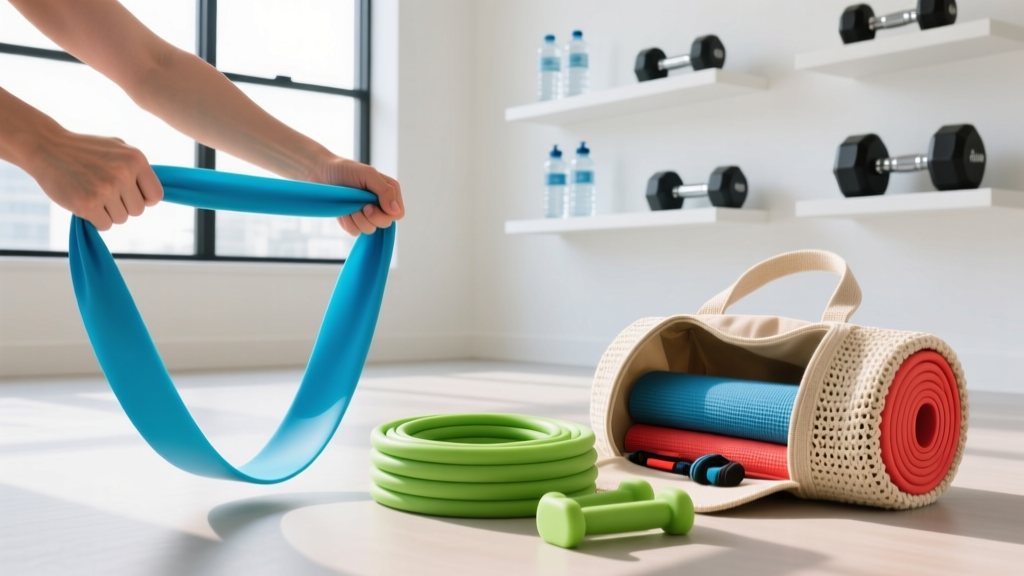
Pilates Accessories Care: Maintain Your Lululemon Yoga Mat Dupe
Learn how to clean, store, and extend the lifespan of your Pilates accessories, including top-rated lululemon yoga mat dupes and reformer gear.

The Complete 2026 Pilates Equipment Accessories Guide: Maintenance & Longevity
Building a functional at-home Pilates studio requires a strategic investment in the right gear. Whether you are practicing classical mat work or utilizing modern reformer-inspired accessories, the longevity of your equipment hinges entirely on your maintenance routine. In 2026, the market is flooded with high-performance alternatives to premium brands. Finding the perfect lululemon yoga mat dupe is only half the battle; understanding the material science behind your gear is what ultimately protects your investment.
This comprehensive maintenance guide dives deep into the exact care protocols for polyurethane mats, thermoplastic resistance rings, and grip accessories. We will cover specific failure modes, exact cleaning formulations, and environmental storage frameworks to ensure your Pilates accessories last for years, not months.
Expert Insight: According to standards emphasized by the National Pilates Certification Program (NPCP), equipment integrity is not just about aesthetics; degraded materials alter biomechanical feedback, potentially leading to improper form and joint strain during precise Pilates movements.The Foundation: Polyurethane and Natural Rubber Mat Care
The gold standard for hot Pilates and sweaty mat work is the open-cell polyurethane (PU) top layer bonded to a natural rubber base. The $128 lululemon The Reversible Mat (5mm) popularized this design, but the market is now rich with exceptional alternatives. If you are using a high-quality lululemon yoga mat dupe—such as the Gaiam Performance Dry-Grip ($69) or the Manduka GRP Adapt ($80)—the maintenance rules remain identical due to the shared polymer chemistry.
Understanding Open-Cell PU Failure Modes
Open-cell polyurethane is designed to absorb moisture rapidly, providing unparalleled grip when wet. However, this same porous structure makes it highly susceptible to lipid degradation and bacterial trapping.
- Lipid Degradation: Natural skin oils, lotions, and especially essential oils (like tea tree or lavender) break down the polymer chains in natural rubber and PU. Over time, this causes the top layer to delaminate from the base.
- Trapped Moisture & Anaerobic Bacteria: Rolling a damp PU mat traps moisture in the core. Within 48 hours, anaerobic bacteria multiply, resulting in a permanent, sour odor that cannot be washed out.
- The "Salt Scrub" Break-In: Many premium PU mats and their dupes ship with a thin factory film to prevent sticking during warehouse storage. If your new mat feels slippery, perform a one-time salt scrub: sprinkle coarse sea salt over the mat, mist lightly with water, let sit for 24 hours, and wipe clean with a damp cloth.
The Safe Cleaning Protocol
Never use harsh chemical surfactants, bleach, or vinegar on natural rubber. The acidic nature of vinegar accelerates the drying out of the rubber, leading to micro-cracking along the edges. Instead, use a 50/50 mix of distilled water and witch hazel, or a dedicated enzymatic mat cleaner. As outlined in Manduka's official material care guidelines, wiping the mat down immediately after use and allowing it to dry completely flat before rolling is non-negotiable for open-cell mats.
Pilates Rings, Arcs, and Tension Gear Maintenance
Pilates accessories like the Magic Circle (Pilates Ring), Spine Correctors, and resistance bands rely on specific elastomers and plastics to provide progressive tension. A standard Balanced Body Pilates Ring ($38) or a Stott Pilates Flex-Band ($25) will easily last a decade if protected from environmental stressors.
Thermoplastic Rubber (TPR) and UV Degradation
Most Pilates rings and resistance loops are constructed from Thermoplastic Rubber (TPR) or Thermoplastic Elastomer (TPE). The primary enemy of TPR is ultraviolet (UV) light and extreme temperature fluctuations.
- UV Exposure: Leaving your Pilates ring in a sunroom or near a south-facing window causes UV radiation to sever the chemical bonds in the plasticizers. This results in the TPR becoming brittle and eventually snapping under load.
- HVAC Proximity: Storing gear directly above or below HVAC vents subjects the materials to rapid humidity and temperature shifts, accelerating the leaching of plasticizers to the surface (that "sticky" feeling on old rubber gear).
- EVA Foam Pad Care: The soft foam pads on the inside of Pilates rings absorb sweat and harbor fungi. Wipe these pads weekly with a mild, non-alcoholic antibacterial wipe. Alcohol-based wipes will dissolve the EVA foam over time.
"The most common reason for Pilates ring failure isn't the tension snapping the core; it's the degradation of the outer TPR coating due to improper storage in high-heat or high-UV environments." — Equipment Maintenance Report, IDEA Health & Fitness Association
Grip Accessories: Socks and Towels
At-home Pilates heavily relies on grip socks and microfiber mat towels to bridge the gap between studio hygiene and home practice. The silicone or PVC dots on the soles of grip socks (like those from Toesox or Pointe Studio) are highly sensitive to heat.
Warning: Never put silicone-dotted Pilates socks in a high-heat tumble dryer. The heat will melt the silicone nodes, ruining both the socks and the interior drum of your dryer. Always air-dry or use a no-heat tumble setting.Microfiber mat towels require a different approach. Avoid using fabric softeners or dryer sheets. Fabric softeners coat the microscopic fibers in a waxy lipid layer, completely destroying the towel's ability to absorb sweat and grip the mat underneath.
The 2026 Cleaning Matrix: What to Use and Avoid
To eliminate the guesswork, reference this material-specific cleaning matrix before applying any solution to your Pilates accessories.
| Accessory Material | Safe Cleaning Agents | Fatal Agents (Avoid) | Primary Failure Mode |
|---|---|---|---|
| Open-Cell PU / Natural Rubber | Distilled water, Witch Hazel, Enzymatic cleaners | Vinegar, Tea Tree Oil, Bleach | Delamination, lipid degradation |
| Closed-Cell PVC (Standard Mats) | Mild dish soap, 70% Isopropyl Alcohol | Acetone, Abrasive scrubs | Surface scratching, toxic off-gassing |
| TPR / TPE (Rings & Bands) | Damp microfiber cloth, mild soap | Alcohol wipes, UV light | Plasticizer leaching, brittleness |
| Silicone Grip Socks | Cold water wash, mild detergent | High-heat drying, fabric softener | Silicone melting, loss of traction |
Environmental Storage Frameworks for Small Spaces
Proper storage is the final pillar of equipment longevity. In 2026, with urban living spaces shrinking, many practitioners are forced to store gear in suboptimal conditions. Follow these environmental baselines to protect your investments:
1. The Rolling vs. Folding Rule
Never fold a natural rubber or PU mat. Folding creates permanent stress fractures in the polymer matrix, which will eventually split open during use. Always roll your mat with the practice side facing outward. This ensures that when you unroll it, the edges naturally lay flat against the floor rather than curling up and creating a tripping hazard.
2. Climate Control Parameters
Ideal storage conditions for elastomers and natural rubber are between 60°F and 75°F (15°C - 24°C) with a relative humidity of 40% to 50%. Basements are often too damp, risking mold growth in the mat's porous cells, while attics or uninsulated garages experience thermal expansion and contraction that destroys TPR Pilates rings.
3. Tension Release
If you use resistance loop bands as part of your Pilates accessory kit, never leave them stretched around furniture or equipment handles. Constant tension causes "creep"—a permanent deformation of the elastomer that results in a loss of resistance profile and eventual snapping.
Troubleshooting Common Pilates Gear Failures
Even with meticulous care, accessories experience wear. Here is how to troubleshoot and salvage common issues:
- Problem: PU Mat feels excessively slippery despite cleaning.
Solution: The pores are likely clogged with dead skin cells and sebum. Perform a deep clean using a few drops of pH-neutral dish soap in a gallon of warm water. Scrub gently with a soft-bristled brush, rinse with a damp cloth, and air dry flat. - Problem: Pilates Ring squeaks during inner-thigh presses.
Solution: The internal metal or fiberglass tension ring is rubbing against the outer TPR casing. Apply a minuscule amount of food-grade silicone lubricant to the seam where the pads meet the ring. Wipe away all excess to prevent it from transferring to your hands or mat. - Problem: Microfiber towel slides off the mat during roll-ups.
Solution: The towel relies on capillary action to grip the mat. If it is sliding, the mat surface is likely coated in a lipid residue (from lotion or body oils). Clean the underlying mat thoroughly; the towel will regain its suction-like grip once the mat's surface is oil-free.
Final Thoughts on Protecting Your Investment
Whether you are utilizing a premium reformer setup or building a budget-friendly studio around a reliable lululemon yoga mat dupe and a set of resistance rings, the principles of material care remain universal. By understanding the chemical sensitivities of polyurethane, TPR, and silicone, you can easily double or triple the lifespan of your Pilates accessories. Consistent, informed maintenance ensures that your gear provides the precise biomechanical feedback you need to advance your practice safely for years to come.
More gear to consider
All reviews
Jade Voyager Travel Yoga Mat: Foam Roller Setup Guide
Stack Yoga Mat & Pilates Accessories: 2026 Budget Guide

Resistance Band Types & Levels For Your Gaiam Travel Yoga Mat
Beyond the Planet Fitness Yoga Mat: Pull Up Band Sizing

Pull Up Assist Band Sizing Guide & Yoga Mat Carrier Pattern Storage