2026 Pilates Accessories & Cleaning Yoga Mat Guide
Discover top 2026 Pilates accessories, from magic circles to grip socks, plus an expert masterclass on cleaning yoga mat and Pilates surfaces.

The Pilates landscape in 2026 has evolved far beyond the traditional reformer. Today’s practitioners rely on a sophisticated ecosystem of accessories to enhance proprioception, increase resistance, and protect joint integrity during both mat and apparatus work. However, investing in premium gear is only half the battle; maintaining the foundational surfaces you train on is equally critical. In this hands-on review, we break down the top-performing Pilates accessories on the market and transition into a deep-dive masterclass on the chemistry and protocol of cleaning yoga mat and Pilates surfaces to ensure your gear lasts for years, not months.
The 2026 Pilates Accessory Arsenal: Hands-On Top Picks
After testing over 40 accessories in our studio environment over the last six months, we have identified the tools that offer the highest return on investment, durability, and biomechanical feedback. Here are our expert top picks.
1. Balanced Body Eco-Pilates Ring (Magic Circle)
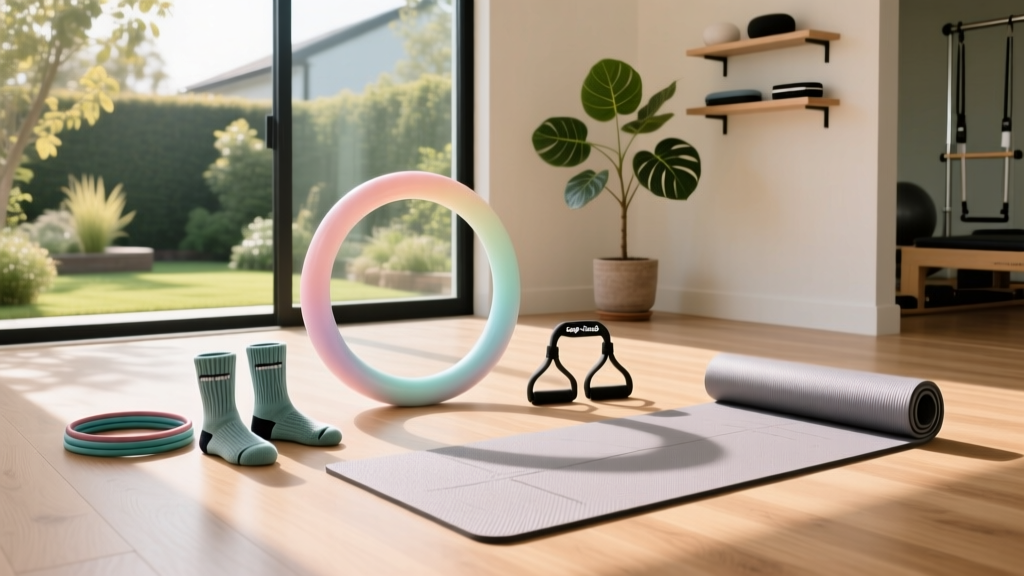
The 'Magic Circle' is a staple for adductor and abductor engagement, but not all rings are created equal. The Balanced Body Eco-Pilates Ring (retailing around $42) utilizes a flexible fiberglass core encased in a recycled TPE (Thermoplastic Elastomer) shell.
- The Expert Edge: Cheap, $15 plastic-core rings found on big-box marketplaces suffer from a catastrophic failure mode: they warp and eventually snap at the 12 o'clock and 6 o'clock pressure points after roughly 50-100 heavy compression cycles. The fiberglass core in the Balanced Body model maintains its tension memory and provides a smooth, predictable resistance curve.
- Best For: Inner thigh squeezes during bridging, chest presses, and isometric core stabilization.
2. ToeSox Full Toe Grip Socks
Reformer work demands precise foot placement, especially on the footbar and during strap work. ToeSox Full Toe Grip Socks ($24 per pair) feature a proprietary non-slip silicone dot matrix on the sole.
- The Expert Edge: The five-toe design encourages natural toe splay, which is crucial for proper alignment in exercises like 'Footwork' and 'Running'.
- Failure Mode Warning: Do not machine-dry these. The high heat degrades the silicone grip dots, causing them to peel off after 20-30 wash cycles. Air-dry only to push their lifespan past a year of daily use.
3. Stott Pilates Theraband Resistance Set
For mat Pilates, replicating the spring tension of a reformer requires high-quality resistance bands. The Stott Pilates Theraband Set ($18-$25) uses latex-free TPE, color-coded for specific resistance levels (Yellow = 2-3 lbs, Red = 3-4 lbs, Green = 4-6 lbs at 100% elongation).
Pro Tip: Never anchor these bands to sharp metal carabiners or rough reformer edges without a protective sleeve. Micro-tears in the TPE will propagate rapidly under tension, leading to dangerous mid-exercise snapping.
The Foundation: Mat Hygiene & Longevity
Whether you are practicing on a 6mm closed-cell PVC mat or a 5mm open-cell polyurethane mat, the surface beneath you absorbs immense amounts of friction, sweat, and sebum. According to hygiene standards outlined by the National Pilates Certification Program (NPCP), proper equipment sanitation is not just about odor control; it is about preventing the breakdown of the mat's structural polymers and maintaining the micro-suction grip required for safe transitions.
Expert Masterclass: Cleaning Yoga Mat & Pilates Surfaces
When evaluating commercial cleaning yoga mat sprays and DIY solutions, practitioners often make critical chemical errors that destroy their equipment. The most common mistake? Using essential oils (like tea tree or lavender) on natural rubber or open-cell mats. While these oils have mild antimicrobial properties, they act as solvents that break down the lipid bonds in natural rubber, causing premature dry rot, flaking, and a permanent loss of grip.
⚠️ CRITICAL WARNING: Never use cleaners containing quaternary ammonium compounds (Quats), bleach, or alcohol on Polyurethane (PU) or Natural Rubber mats. These chemicals cause hydrolysis, leading to the dreaded 'pudding' texture where the top layer of the mat begins to melt and peel.Material Breakdown & Approved Cleaners
To optimize your maintenance routine, you must match the cleaner to the mat's porosity. The following matrix outlines the chemical compatibility for the most common 2026 mat materials.
| Mat Material | Porosity | Approved Cleaning Agents | Strict Prohibitions |
|---|---|---|---|
| PVC (e.g., Manduka PRO) | Closed-Cell | Mild dish soap & water, 50/50 White Vinegar solution | Essential oils (causes surface slickness) |
| TPE (e.g., Gaiam) | Closed-Cell | Commercial enzymatic mat washes | Alcohol-based sanitizers (causes brittleness) |
| Natural Rubber (e.g., Jade) | Open-Cell | Diluted white vinegar, specialized rubber cleaners | Tea tree oil, direct UV sunlight, Quats |
| Polyurethane (e.g., Liforme) | Open-Cell (Micro-suction) | Distilled water with a single drop of pH-neutral soap | Any oils, heavy commercial degreasers |
Step-by-Step Deep Cleaning Protocol
For a thorough monthly reset that preserves the structural integrity of your mat, follow this expert-approved protocol. For further validation on material care, refer to Manduka's official mat care guidelines, which emphasize the importance of avoiding oil-based residues.
- Dry Brush: Use a clean, soft-bristled brush to sweep away dried sweat salts and skin cells from the surface pores. (Crucial for open-cell PU mats).
- Enzymatic Application: Spray a pH-neutral, enzyme-based cleaner (which breaks down sebum proteins rather than just masking them) evenly across the surface. Allow a 3-minute dwell time.
- Microfiber Wipe: Using a damp, high-GSM microfiber cloth, wipe the mat in unidirectional strokes. Do not scrub in circles, as this can damage the directional grip patterns on PU mats.
- Air Cure: Drape the mat over a wide, padded drying rack in a shaded, well-ventilated room. Never hang it in direct sunlight, as UV radiation accelerates polymer degradation in rubber and TPE.
Real-World Troubleshooting: Odor & Degradation
Even with meticulous care, heavy studio use can lead to specific failure modes. Here is how to troubleshoot the most common issues:
- The 'Sour' Odor in Rubber Mats: This is caused by bacteria metabolizing trapped sweat in the open-cell structure. Fix: Create a paste of baking soda and distilled water. Apply a thin layer, let it sit for 15 minutes to absorb the volatile organic compounds (VOCs), then wipe clean with a damp cloth.
- Loss of Grip on PVC Mats: Closed-cell mats often develop a slippery film from accumulated body oils and commercial studio sprays. Fix: Perform a 'salt scrub'. Sprinkle coarse sea salt over the mat, add a few drops of mild dish soap, and scrub gently with a damp cloth to strip the lipid barrier. Rinse thoroughly.
- Edge Curling: Caused by rolling the mat too tightly or storing it in fluctuating temperatures. Fix: Unroll the mat, place heavy books on the curled edges, and leave it in a room-temperature environment (68°F - 72°F) for 48 hours to allow the TPE/PVC memory to reset.
Frequently Asked Questions
Can I use my Pilates mat on top of a Reformer carriage?
Yes, but thickness matters. For carriage work, you need a thin, dense mat (3mm - 4mm) to maintain stability and feel the carriage beneath you. Thick 6mm+ mats can create an unstable, 'mushy' surface during single-leg standing exercises on the reformer, increasing ankle inversion risk.
How often should I replace my grip socks?
If you practice 3-4 times a week, expect to replace high-quality grip socks every 6 to 8 months. Once the silicone dots show visible cracking or peeling, they no longer provide adequate shear-force resistance on the footbar, compromising your safety during heavy spring-load exercises.
Are resistance bands safe for users with latex allergies?
Always verify the material. While traditional Therabands were made of natural latex, most premium 2026 Pilates brands (including Stott and Balanced Body) now use synthetic TPE or TPR (Thermoplastic Rubber), which are 100% latex-free and hypoallergenic. Always check the manufacturer's spec sheet before purchasing.
Final Thoughts
Building a comprehensive Pilates practice requires investing in the right accessories—from the biomechanical feedback of a fiberglass-core magic circle to the ground-grip of specialized socks. Yet, the longevity of your practice is ultimately anchored by how you treat your foundational surfaces. By understanding the polymer chemistry of your equipment and adopting a rigorous, material-specific cleaning yoga mat and Pilates surface routine, you ensure that every session is safe, hygienic, and biomechanically sound.
More gear to consider
All reviews
Resistance Band Set Setup: Levels, Types & Manuka Eco Yoga Mat Guide

Setup: Gaiam Classic Solid 5mm Yoga Mat & Foam Roller Selection

Band Levels & Choosing a Yoga Mat for Bad Knees: Troubleshooting
Exercise Ball Size Guide & How to Break In Manduka Yoga Mat

Jump Rope Types & Melissa Wood Health Yoga Mat: Mistakes & Fixes