Overhead Dumbbell Triceps Extension Guide: Rubber Hex vs Urethane
Discover how rubber hex vs urethane dumbbells impact your overhead triceps extension form, grip, and home gym budget in our expert hands-on review.

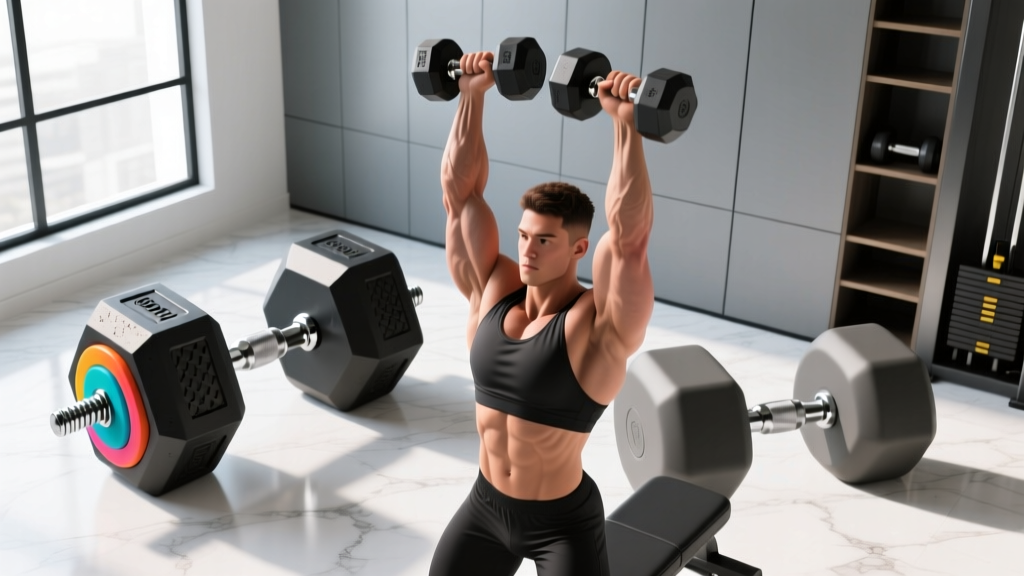
If you have been endlessly scrolling the internet searching for the perfect overhead dumbbell triceps extension GIF to fix your elbow flare or wrist pain, you are likely missing half the equation. While visual guides are excellent for understanding the gross motor patterns of the long head of the triceps, the physical tool in your hands dictates your wrist alignment, grip fatigue, and the movement's center of mass. As a senior equipment reviewer, I can tell you that the coating and head geometry of your dumbbells fundamentally alter the biomechanics of overhead isolation work.
In this hands-on review, we are pitting the ubiquitous rubber hex dumbbell against premium urethane dumbbells. We will analyze how each material behaves during the deep overhead stretch, evaluate grip ergonomics, and break down the real-world costs and failure modes you need to know before outfitting your home gym in 2026.
The Kinesiology of the Overhead Stretch
According to the exercise kinesiology databases at ExRx.net, the overhead triceps extension uniquely targets the long head of the triceps brachii because it is the only head that crosses the shoulder joint. To achieve maximum hypertrophy, the shoulder must be fully flexed, placing the muscle under a deep, loaded stretch.
Expert Form Note: When holding a single heavy dumbbell vertically (the diamond grip) or two dumbbells horizontally, the center of mass shifts dramatically based on the dumbbell head's bulk. A bulky dumbbell head forces the wrists into unnatural ulnar deviation at the bottom of the movement, increasing joint strain and limiting the stretch on the triceps belly.Material Matrix: Virgin Rubber vs. Premium Urethane
Before diving into the hands-on feel, it is crucial to understand the material science separating budget rubber from commercial-grade urethane. Below is our 2026 benchmark comparison based on standardized 50 lb dumbbells.
| Feature | Virgin Rubber Hex | Premium Urethane (Round/Hex) |
|---|---|---|
| Average Cost (per lb) | $1.40 - $1.90 | $3.50 - $4.80 |
| Head Volume & Density | High volume, bulky | High density, compact |
| Odor Profile | Strong off-gassing (weeks) | Odorless / Faint factory scent |
| UV & Ozone Resistance | Poor (prone to dry rot) | Excellent |
| Handle Knurling | Shallow, often chrome-plated | Deep, aggressive, bare steel or cerakote |
Hands-On Testing: The Overhead Experience
The Rubber Hex Reality (CAP Barbell & Yes4All)
We tested the widely available CAP Barbell Cast Iron Hex Dumbbell with Rubber Coating (50 lb model, approx. $75). The immediate issue during the overhead triceps extension is the geometry. Rubber is less dense than urethane, meaning the manufacturer must use a larger mold to encase the iron core.
- The Bottom Position: When lowering the 50 lb dumbbell behind the head, the massive rubber heads physically collide with the forearms and the back of the neck before the triceps reach a full stretch.
- Grip Fatigue: The handles on budget rubber hex bells typically feature a 35mm diameter with very shallow, chrome knurling. During a high-rep set of 15 overhead extensions, sweat accumulates. Without aggressive knurling, you end up gripping the handle 20% harder just to prevent it from slipping, which prematurely fatigues the brachioradialis and forearm flexors before the triceps reach failure.
- The Smell Factor: If your home gym lacks industrial ventilation, the volatile organic compounds (VOCs) off-gassing from recycled or low-grade virgin rubber will make deep breathing during strenuous overhead sets highly unpleasant.
The Urethane Advantage (Rep Fitness & Rogue)
Next, we moved to the Rep Fitness Urethane Dumbbells (50 lb model, approx. $185) and the Rogue Urethane Dumbbells. The difference in overhead mechanics is night and day. As highlighted in extensive durability testing by Garage Gym Labs, urethane allows for a much denser, compact head design.
- Unrestricted Range of Motion: The compact urethane heads clear the forearms and head easily, allowing you to drop into a deep, end-range stretch. This is where the most muscle damage (and subsequent growth) occurs in the long head of the triceps.
- Ergonomic Handles: Premium urethane sets usually feature 32mm to 34mm handles with medium-depth, volcano-profile knurling. This bites into the calluses just enough to secure the grip during the sweaty lockout phase of the extension without tearing the skin.
- Acoustic Dampening: While both materials protect your floors, urethane has a higher durometer rating (usually 85A-90A), meaning it absorbs the shock of setting the weight down on wooden platforms without the loud, sharp 'clack' associated with hard rubber hex bells.
"When performing unilateral overhead extensions, the balance point of the dumbbell is critical. Rubber hex bells often suffer from uneven encasement, causing a slight lateral pull at the wrist. Urethane molds are precision-cast, ensuring the center of gravity sits perfectly in the palm, reducing wrist strain during heavy eccentric loads."
Long-Term Degradation & Edge Cases
Equipment buying is an exercise in lifecycle cost analysis. Here are the specific failure modes we track for both materials:
Rubber Hex Failure Modes
- Collar Separation: After 2-3 years of temperature fluctuations in a garage gym, the adhesive bonding the rubber to the iron core and steel handle degrades. You will notice the rubber head shifting or 'clicking' during the concentric phase of your lift.
- Ozone Cracking: Exposure to sunlight or ozone generators causes the rubber to become brittle and flake off onto your workout mats, leaving black scuff marks that are nearly impossible to remove.
Urethane Edge Cases
- Concrete Chipping: While urethane is incredibly durable, it is not invincible. Dropping a 50 lb urethane dumbbell directly onto unsealed concrete from shoulder height can chip the outer edge. You must use 3/4-inch horse stall mats or specialized drop pads.
- Hydrolysis in Faux-Urethane: Beware of ultra-cheap 'urethane' imports. True polyurethane resists moisture, but cheap PU blends will undergo hydrolysis (breakdown from ambient humidity) over time, becoming sticky to the touch.
Expert Verdict & Buying Framework
So, which should you buy? Your decision should be dictated by your training environment and your dedication to isolation mechanics.
The Budget / Generalist Route: If you are strictly doing compound movements like goblet squats, farmer's carries, and floor presses, Rubber Hex Dumbbells ($1.50/lb) are perfectly adequate. The bulky heads and shallow knurling are negligible for these lifts. The Hypertrophy / Serious Lifter Route: If your programming relies heavily on isolation movements like the overhead dumbbell triceps extension, lateral raises, or skull crushers, invest in Urethane Dumbbells ($3.50+/lb). The compact head geometry, superior knurling, and perfect center of mass are non-negotiable for joint health and maximizing the stretched position.Frequently Asked Questions
Do I need to watch an overhead triceps extension GIF to avoid injury?
Visual aids help, but understanding your equipment's limitations is more critical. If your rubber dumbbell is too bulky to allow a full stretch without neck impingement, switch to a cable rope overhead extension or invest in compact urethane bells.
Can I clean urethane dumbbells with standard gym wipes?
Yes, but avoid harsh solvents, bleach, or alcohol-based cleaners, which can dry out the urethane over time. A simple damp microfiber cloth with mild dish soap is the industry standard for maintaining the matte finish and grip texture.
More gear to consider
All reviews
Slight Incline Dumbbell Press Mistakes & Olympic vs Standard Plates

Gym Setup: Olympic Barbell Knurling & Leg Exercises with Dumbbells

Step-by-Step Dumbbell Core Exercise Guide for Neoprene Sets
Rogue Loadable Dumbbells vs Neoprene Weights: Home Gym Guide

Cast Iron vs Competition Kettlebells & Twisting Dumbbell Curls