Olympic vs Standard: How to Get a Bigger Chest Using Dumbbells
Discover how Olympic vs standard weight plates impact adjustable dumbbells, and learn the exact protocols on how to get a bigger chest using dumbbells.

When lifters research how to get a bigger chest using dumbbells, they typically obsess over rep ranges, bench angles, and mind-muscle connection. However, they frequently overlook the foundational hardware that makes progressive overload possible: the weight plates. If you are building a home gym and relying on plate-loaded adjustable dumbbells for chest hypertrophy, the debate between Olympic vs standard weight plates is not just a matter of semantics. It directly impacts your grip clearance, biomechanical range of motion, and ultimate safety during heavy pressing movements.
In this head-to-head comparison, we break down the exact engineering differences between 1-inch standard plates and 2-inch Olympic plates, and reveal how your choice of hardware dictates your ceiling for pectoral growth.
The Core Dilemma: Standard vs. Olympic Hardware
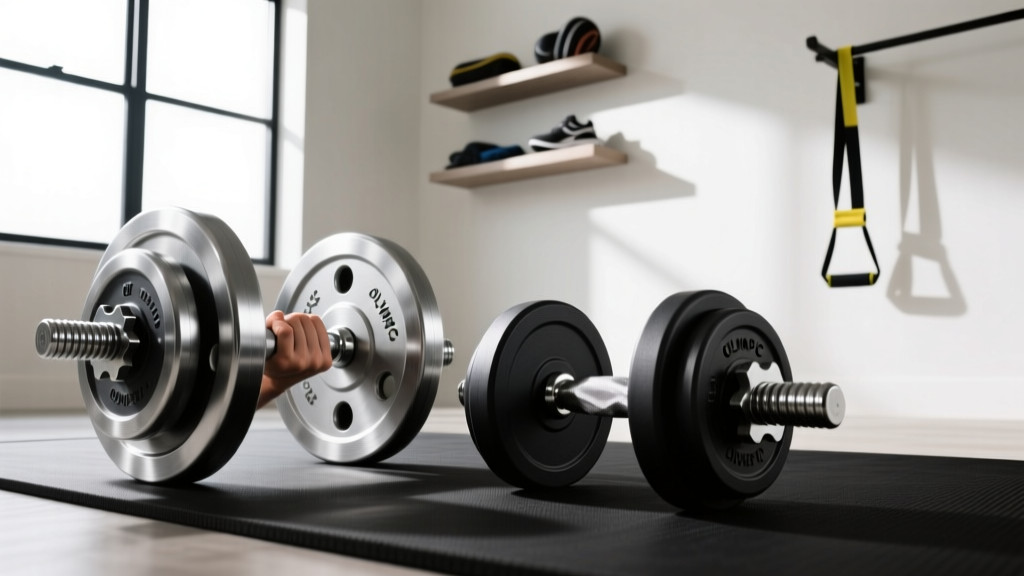
Standard weight plates feature a 1-inch (25.4mm) center hole and are designed for budget-friendly, entry-level home gym equipment. Olympic plates feature a 2-inch (50.8mm) center hole, engineered for commercial-grade barbells and heavy-duty loadable dumbbell handles. While standard plates are cheaper upfront, they introduce severe mechanical limitations when applied to dumbbell chest training.
Sleeve Length and Load Capacity
A standard 14-inch spin-lock dumbbell handle typically offers only 6.5 to 8 inches of sleeve space. Because standard cast iron plates are relatively thick, maxing out the sleeve limits you to roughly 70–80 lbs per dumbbell. Conversely, Olympic loadable dumbbell handles (such as the Rogue Fitness Loadable Dumbbell Handles) feature 10.5-inch sleeves and can safely hold 120 to 150+ lbs per hand when paired with thin-profile Olympic urethane plates.
Head-to-Head Comparison Matrix
| Feature | Standard Plates (1-Inch) | Olympic Plates (2-Inch) |
|---|---|---|
| Center Hole | 1 inch (25.4mm) | 2 inches (50.8mm) |
| Max DB Load | ~80 lbs (sleeve limited) | 150+ lbs (scalable) |
| Collar Type | Spin-lock (threaded) | Spring clips / Clamp collars |
| Plate Profile | Bulky, thick cast iron | Compact, high-density urethane/iron |
| Cost Per Pound | $1.20 - $1.80 / lb | $2.50 - $5.00 / lb |
| Durability | Prone to rust, drops crack floors | High-impact resistant, drop-safe |
How to Get a Bigger Chest Using Dumbbells (The Hypertrophy Protocol)
Understanding the hardware is only half the battle. To trigger actual myofibrillar hypertrophy in the pectoralis major, you must apply the right stimulus. According to guidelines from the American Council on Exercise (ACE), muscle growth requires mechanical tension, muscle damage, and metabolic stress. Dumbbells excel at this because they allow for a deeper stretch and greater horizontal adduction than barbells.
Here is the exact protocol to maximize chest growth using plate-loaded dumbbells:
- The Biomechanical Setup: Set your bench to a 15-to-30-degree incline. This targets the clavicular (upper) pecs without shifting the load entirely to the anterior deltoids.
- The Eccentric Phase: Lower the dumbbells for a strict 3-second count. The stretch-mediated hypertrophy response in the pecs is highly sensitive to slow eccentrics.
- The Adduction Squeeze: Press the weight up and slightly inward. As noted by the ExRx Exercise Directory, the primary function of the sternal pec is horizontal adduction. You must bring the dumbbells together at the top without clanking them.
- Volume & Intensity: Aim for 3 to 4 sets of 8-12 reps, stopping at 2 RIR (Reps in Reserve). If you can easily hit 12 reps, you must add weight.
Why Plate Type Ruins the "Adduction Squeeze"
This is where the standard vs. Olympic debate directly impacts your chest growth. When performing dumbbell flyes or presses, the dumbbells must meet at the midline of your chest. Standard 25-lb cast iron plates are incredibly wide and bulky. If you load 50 lbs per hand using standard plates, the outer edges of the plates will physically crash into each other before your hands reach the midline. This robs you of the final 10-to-15 degrees of horizontal adduction—precisely where the pectoral muscles experience peak contraction.
Olympic plates, particularly 10-lb and 25-lb fractional urethane bumpers, have a much tighter profile. Combined with the longer sleeves of Olympic dumbbell handles, the weight sits further away from your grip, allowing the plates to pass each other cleanly at the top of the movement. This ensures full range of motion and maximum muscle fiber recruitment.
⚠️ Safety Warning: The Spin-Lock Failure PointStandard dumbbells rely on threaded spin-lock collars. During the eccentric (lowering) phase of a heavy incline press, the rotational torque of the plates can cause cheap spin-lock nuts to loosen. If a collar backs off mid-rep, the plates will slide off the sleeve, resulting in a catastrophic drop onto your face or chest. Olympic handles use heavy-duty spring clips or aluminum clamps that lock onto the 2-inch sleeve with hundreds of pounds of lateral clamping force, eliminating this risk entirely.
Real-World Cost and Space Analysis
Building a home gym requires a pragmatic look at your budget and floor space. Let us break down the financial reality of outfitting a chest-focused dumbbell station in 2026.
- The Standard Route: A pair of 14-inch CAP Barbell standard handles ($25) plus 150 lbs of standard cast iron plates ($225). Total: ~$250. While cheap, you are capped at 75 lbs per dumbbell. Once your chest adapts to 75 lbs for 10 reps, your progressive overload stalls, and so does your chest growth.
- The Olympic Route: A pair of Rogue Loadable Dumbbell Handles ($195) plus 200 lbs of Rogue Echo Urethane Olympic plates ($600). Total: ~$795. This is a significant investment, but it provides a commercial-grade setup that scales with your strength for the next decade.
"Progressive overload is the non-negotiable law of hypertrophy. If your equipment caps your maximum load before your genetic potential is reached, you have engineered a plateau into your home gym." — Strength and Conditioning Best Practices, National Strength and Conditioning Association (NSCA)
Expert Verdict: Which Setup Wins for Chest Growth?
If your primary goal is learning how to get a bigger chest using dumbbells, the Olympic plate and loadable handle setup is the undisputed winner. The biomechanical clearance for peak adduction, the safety of clamp collars during heavy incline presses, and the infinite scalability for progressive overload make it a mandatory investment for serious lifters. Standard plates are perfectly adequate for light isolation work, lateral raises, or beginner goblet squats, but they are a structural bottleneck for heavy, high-intensity chest hypertrophy.
Frequently Asked Questions (FAQ)
Can I use Olympic plates on a standard dumbbell handle?
No. Standard handles have a 1-inch diameter sleeve. Olympic plates have a 2-inch hole and will simply slide right off. You must use an Olympic-specific loadable dumbbell handle to accommodate 2-inch plates safely.
Are rubber-coated standard plates better for dumbbell presses?
Rubber coating protects your floors, but it does not solve the thickness issue. A 25-lb rubber-coated standard plate is often even thicker than bare cast iron due to the outer casing, which exacerbates the clearance problem at the top of a dumbbell chest press. High-density urethane Olympic plates offer the best combination of floor protection and slim profiles.
How often should I increase the weight on my dumbbell chest presses?
Aim to add 2.5 to 5 lbs per dumbbell once you can comfortably complete 3 sets of 12 reps with perfect form and a 3-second eccentric. This is why having access to 2.5-lb and 5-lb fractional Olympic plates is critical for continuous chest growth without risking shoulder strain from jumping up 10 lbs at a time.
More gear to consider
All reviews
2026 Market Analysis: Racks for the 150 Pound Dumbbell

Great Arm Workouts With Dumbbells: 2026 Adjustable Gear Mistakes
Standard vs Olympic Plates Setup & Seated Dumbbell Power Clean
Beyond Lower Body Dumbbell Workouts: Barbell Collar Troubleshooting

Dumbbell Lunge Form Guide & Best Adjustable Dumbbells 2026
