
Olympic vs Standard Plates for Your Full Body Dumbbell Only Workout
Transitioning from a full body dumbbell only workout? Compare Olympic vs standard weight plates to build the ultimate home gym. Pricing, specs, and tips.

For many home gym owners, a full body dumbbell only workout is the foundation of their fitness journey. Dumbbells offer incredible versatility, allowing for unilateral training, enhanced stabilizer engagement, and a smaller spatial footprint than a full barbell rack. However, as your strength progresses, the limitations of entry-level adjustable dumbbells become glaringly obvious. You eventually hit a biomechanical ceiling where progressive overload—the primary driver of muscle hypertrophy and strength gains—demands more weight than your current equipment can safely hold.
This brings you to a critical purchasing crossroad: do you continue buying standard weight plates to max out your current spin-lock handles, or do you invest in Olympic weight plates and upgrade your loading system? Understanding the mechanical, economic, and practical differences between standard and Olympic plates is essential for anyone looking to future-proof their home gym.
The Biomechanical Ceiling of Standard Dumbbell Handles
Before diving into the plates themselves, we must address the hardware they mount to. Standard dumbbell handles typically feature a 1-inch diameter sleeve and use threaded spin-lock collars. While perfectly adequate for beginners, these handles possess a critical failure mode: sleeve bending and thread stripping.
When you load a standard 14-inch handle with more than 60 to 70 pounds of iron, the torque generated during movements like heavy Bulgarian split squats or single-leg Romanian deadlifts can physically bend the 1-inch steel sleeve. Furthermore, the threaded ends can strip under heavy lateral loads, causing the collar to back off mid-set. According to the American Council on Exercise (ACE), progressive overload requires consistent increases in mechanical tension. If your equipment fails at 65 lbs per hand, your lower-body progression is effectively capped.
Standard vs. Olympic Weight Plates: Core Specifications
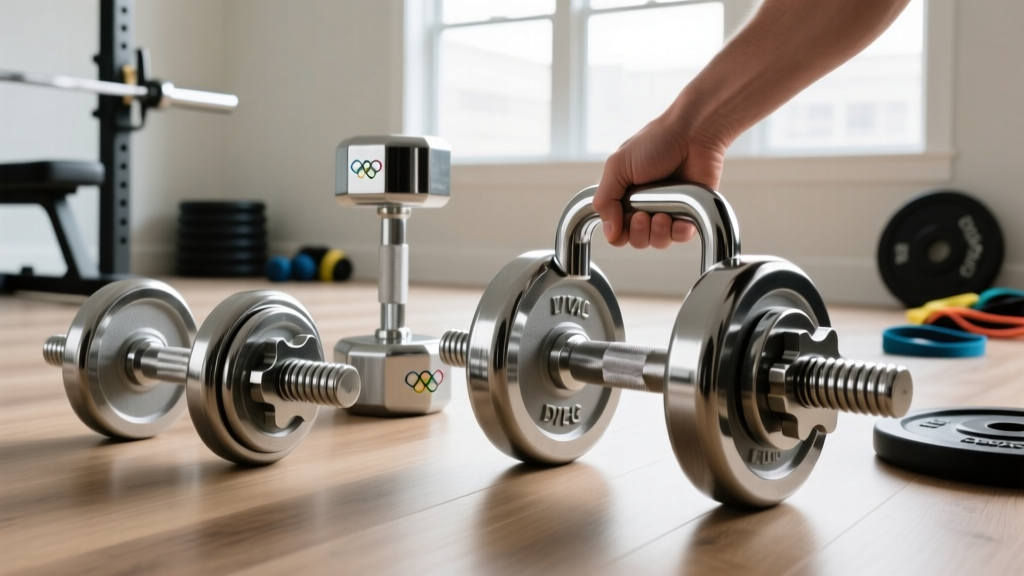
The primary distinction between the two plate types lies in the center hole diameter, which dictates the entire ecosystem of compatible racks, bars, and heavy-duty dumbbell handles. Below is a direct comparison matrix to help you visualize the differences.
| Feature | Standard Weight Plates | Olympic Weight Plates |
|---|---|---|
| Center Hole Diameter | 1 inch (25.4 mm) | 2 inches (50.4 mm) |
| Max Dumbbell Load (Safe) | ~60 - 75 lbs per hand | 150 - 175+ lbs per hand |
| Common Materials | Cement/PVC, Cast Iron | Cast Iron, Rubber, Urethane, Bumper |
| Collar Type Used | Spin-lock (threaded), Spring clips | Snap-rings, Clamp collars, Screw-down |
| Best Suited For | Beginners, light isolation work, budget setups | Intermediate/Advanced lifters, heavy compounds |
Center Hole Diameter and Sleeve Compatibility
Standard plates have a 1-inch center hole. They are designed to fit inexpensive, mass-market dumbbell handles and lightweight home gym machines. Olympic plates feature a 2-inch center hole, conforming to the International Weightlifting Federation (IWF) standard. This 2-inch aperture allows them to slide onto heavy-duty barbell sleeves and specialized Olympic loadable dumbbell handles (such as the Rogue Fitness Loadable Dumbbell Handles), which utilize high-tensile steel shafts that will not bend under extreme loads.
Material Breakdown and Real-World Failure Modes
When expanding your home gym to support an advanced full body dumbbell only workout, the material composition of your plates dictates their lifespan and safety profile.
The 'Cement Plate' Warning
⚠️ Critical Gear Warning: Many budget standard plates are not solid iron; they are a cement or sand mixture encased in a thin PVC plastic shell. While cheap, these plates are highly susceptible to cracking if dropped during dynamic movements like dumbbell lunges or renegade rows. Once the plastic shell fractures, the internal sand leaks out, altering the plate's weight and creating a massive mess on your gym flooring. Always verify if a 'standard' plate is solid cast iron or cement-filled before purchasing.Cast Iron vs. Urethane Olympic Plates
Olympic plates are predominantly manufactured from solid cast iron or coated in high-density urethane. Cast iron is incredibly dense, meaning a 45lb Olympic iron plate takes up significantly less physical space on the dumbbell sleeve than a 25lb standard cement plate. This density is crucial for dumbbell work; if your plates are too bulky, they will clash together at the top of a dumbbell chest press or restrict your range of motion during a goblet squat.
For premium home gyms, urethane-coated Olympic plates are the gold standard. Urethane resists UV degradation, does not emit the harsh off-gassing odors associated with cheap recycled rubber, and can withstand thousands of drops from shoulder height without splitting.
2026 Market Pricing: Cost Per Pound Analysis
Understanding the economics of weight plates helps you budget for your home gym upgrade. Prices fluctuate based on raw steel and shipping costs, but here are the standard market rates you can expect in 2026:
- Standard Cement Plates: $0.80 - $1.20 per lb. (Cheapest, but bulky and fragile).
- Standard Cast Iron: $1.30 - $1.80 per lb. (Often hard to find in high increments, as manufacturers prioritize Olympic).
- Olympic Cast Iron: $2.00 - $2.80 per lb. (The best value for raw lifting capacity and durability).
- Olympic Urethane/Rubber Grips: $3.50 - $5.50 per lb. (Premium pricing for noise reduction and drop protection).
- Calibrated Olympic Steel: $8.00 - $12.00+ per lb. (Unnecessary for dumbbell work; reserved for competitive powerlifting).
While standard plates are cheaper upfront, the cost-to-longevity ratio heavily favors Olympic cast iron. Furthermore, shipping costs for heavy freight are identical regardless of plate type, meaning the percentage premium you pay for Olympic iron shrinks when factoring in delivery fees.
Transitioning Your Routine: Loadable Olympic Dumbbells
If you are committed to a full body dumbbell only workout but require loads exceeding 70 lbs per hand, you must transition to Olympic loadable dumbbell handles. Unlike fixed-weight hex dumbbells (which cost upwards of $3.50/lb and require an entire wall of storage), loadable Olympic handles allow you to use the same 2-inch plates you would use on a barbell.
For example, an intermediate lifter aiming for heavy unilateral Romanian Deadlifts might need 90 lbs per hand. According to ExRx Strength Standards, a 180lb intermediate male lifter should be capable of deadlifting roughly 1.5x to 2x their body weight. Translating that to unilateral dumbbell work requires serious load. By sliding a 45lb and two 25lb Olympic iron plates onto an Olympic dumbbell handle secured with a machined snap-ring collar, you achieve a highly compact, perfectly balanced 95lb dumbbell. This setup is impossible to replicate safely with standard 1-inch hardware.
Storage Considerations
One advantage of standard plates is that they can be stored on cheap, lightweight wall pegs. Olympic plates, due to their sheer weight and 2-inch hubs, require a heavy-duty steel weight tree or a specialized wall-mounted plate rack rated for at least 500 lbs to prevent structural tearing into drywall or wood studs.
Frequently Asked Questions
Can I use Olympic plates on standard dumbbell handles?
No. Olympic plates have a 2-inch hole, while standard handles have a 1-inch sleeve. The plate will simply slide off and fall. There are no safe, reliable adapters that reduce a 2-inch plate hole to fit a 1-inch dumbbell sleeve without introducing dangerous wobble and instability during a lift.
Are standard plates completely obsolete for home gyms?
Not entirely. Standard plates are still highly useful for lightweight isolation movements, such as lateral raises or tricep extensions, where loads rarely exceed 20-30 lbs per hand. They are also compatible with many budget-friendly plate-loaded accessory machines, like leveraged chest presses or leg extensions.
Should I buy rubber-coated Olympic plates for dumbbells?
While rubber-coated Olympic plates protect your floors if dropped, cheap rubber can degrade, chip, and smell. If you want drop protection for your full body dumbbell only workout, invest in high-quality urethane Olympic plates or use standard cast iron plates paired with thick, 3/4-inch horse-stall mats for flooring.
Final Verdict: Which Plate Type Should You Buy?
If you are strictly a beginner and your full body dumbbell only workout utilizes less than 50 lbs per hand, standard cast iron plates and spin-lock handles are a cost-effective starting point. However, if you are intermediate or advanced, standard plates will bottleneck your progress. Investing in a set of Olympic cast iron plates and a pair of high-quality Olympic loadable dumbbell handles is the most economical, space-efficient, and future-proof method to build a world-class home gym that will support your strength gains for decades.
More gear to consider
All reviews
Power Rack vs Squat Rack vs Stand: Dumbbell Chest Press GIF Guide

10 Minute Workout with Dumbbells: 2026 Rack & Storage Market Trends
Olympic Dumbbell & Barbell Collars: A Beginner Guide

90 Pound Dumbbells Compared: Bowflex 1090 vs Ironmaster Quick-Lock

Aldi Dumbbells vs Top Adjustables: 2026 Buying Guide
