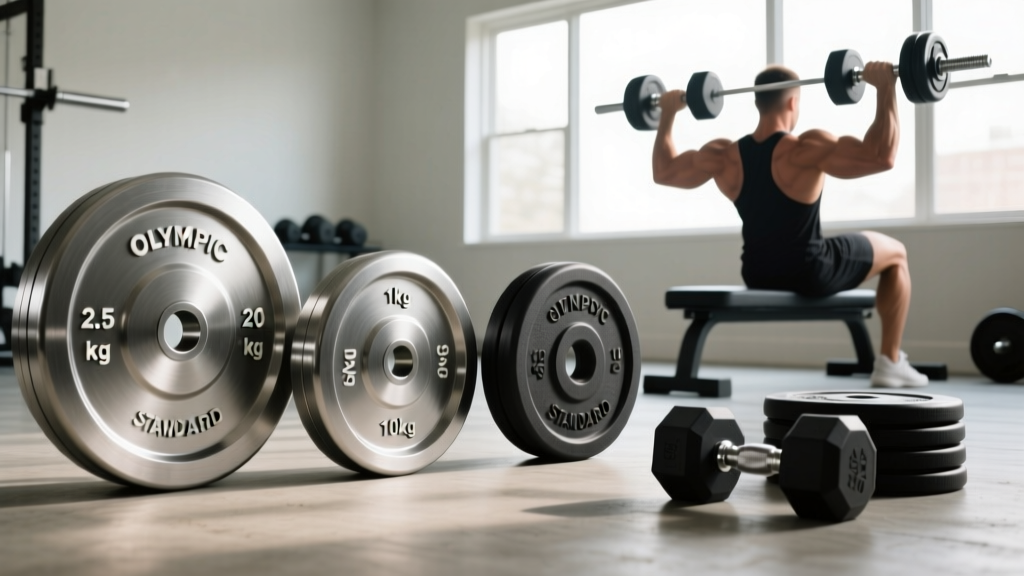
Olympic vs Standard Plates: Buying Guide & Dumbbell Flys for Back
Compare Olympic vs standard weight plates for your 2026 home gym. Learn how plate profiles impact heavy lifts and dumbbell flys for back isolation.

The Core Divide: 1-Inch Standard vs. 2-Inch Olympic Ecosystems
Building a home gym in 2026 requires navigating one of the most fundamental equipment divides in the fitness industry: the 1-inch standard versus the 2-inch Olympic weight plate ecosystem. This decision extends far beyond the barbells you use for heavy squats and deadlifts. It dictates your plate storage rack dimensions, your dumbbell handle compatibility, and even the biomechanical efficiency of isolation movements. Choosing the wrong ecosystem can lead to equipment failure, restricted range of motion, and wasted capital.
While standard plates remain a budget-friendly entry point, Olympic plates represent the global standard for commercial and serious home gyms. Below, we break down the metallurgical, dimensional, and practical differences between the two, including a specialized look at how plate profiles affect precision isolation exercises like dumbbell flys for back development.
Head-to-Head Comparison Matrix
| Specification | Standard Plates (1-Inch) | Olympic Plates (2-Inch) |
|---|---|---|
| Center Hole Diameter | 1.00 inch (25.4 mm) | 2.00 inches (50.8 mm) |
| Barbell Sleeve Yield Strength | 35,000 - 45,000 PSI (Bends >200 lbs) | 190,000 - 215,000 PSI (Handles 1,000+ lbs) |
| Typical Material | Vinyl/Cement, Basic Cast Iron | Cast Iron, Urethane, Virgin Rubber Bumpers |
| 2026 Average Cost (Per Lb) | $0.60 (Vinyl) to $1.30 (Iron) | $1.80 (Iron) to $4.50+ (Urethane/Bumper) |
| IWF Calibration Tolerance | Not Calibrated (± 5-10%) | ± 1% to ± 15 grams (Calibrated Steel) |
Standard Weight Plates: The Budget Trap
Standard weight plates feature a 1-inch center hole and are designed for lighter-duty home gym equipment. They generally fall into two categories: vinyl-encased cement and basic cast iron.
The Problem with Vinyl-Filled Plates
Vinyl standard plates are filled with sand or cement. While they are cheap (often under $0.70 per pound), they are notoriously bulky. A 25-pound vinyl plate can have a diameter of 14 inches and a thickness of 2.5 inches. This excessive bulk creates severe clearance issues on dumbbell handles and machine weight horns. Furthermore, the vinyl casing degrades, cracks, and leaks sand over time, especially in fluctuating garage gym temperatures.
Cast Iron Standard Plates & Barbell Failure Modes
Cast iron standard plates are more durable and compact than vinyl. However, the critical failure point in the standard ecosystem is not the plate itself, but the 1-inch solid steel barbell sleeves. Most 1-inch bars lack the tensile strength to support heavy loads. If you attempt to deadlift or squat over 200 pounds on a standard 1-inch bar, the sleeves will permanently bend downward, ruining the bar and creating a dangerous loading/unloading hazard. According to equipment testing data from the Rogue Fitness weight plate lineup and engineering specs, 1-inch bars simply cannot withstand the shear force of heavy compound lifting.
Olympic Weight Plates: The Gold Standard
Olympic plates feature a 2-inch (50mm) center hole, designed to fit on high-tensile steel Olympic barbells. This ecosystem is mandated by the International Weightlifting Federation (IWF) for competition and is the undisputed choice for serious lifters. As noted by Eleiko's strength training plate specifications, Olympic plates are engineered for precise weight calibration, drop resistance, and optimal sleeve rotation.
Types of Olympic Plates
- Cast Iron (Deep Dish / Machined): The most economical Olympic option ($1.50 - $2.00/lb). Excellent for powerlifting where drops are rare. Machined iron offers tighter weight tolerances.
- Urethane Grip Plates: Coated in high-durometer urethane with ergonomic handles ($3.00 - $4.50/lb). They resist scratching, dampen noise, and are easy to load onto dumbbell handles.
- Bumper Plates (Virgin Rubber): Uniform 450mm diameter regardless of weight. Designed to be dropped from overhead during Olympic weightlifting.
- Calibrated Steel Plates: Ultra-thin, highly accurate (± 10 grams). Used primarily by competitive powerlifters to maximize bar whip and fit maximum weight on the sleeve.
When buying Olympic cast iron or urethane plates, look for raised rubber hubs or steel-ring hubs. These protect your barbell sleeves from metal-on-metal scraping and reduce the noise of loading plates in a home gym environment.
Biomechanics & Equipment: Dumbbell Flys for Back
One of the most overlooked aspects of the 1-inch vs. 2-inch debate is how plate dimensions affect isolation exercises, specifically dumbbell flys for back development. When fitness professionals refer to dumbbell flys for back, they are typically describing the bent-over reverse fly or chest-supported rear deltoid fly. This movement targets the posterior deltoids, rhomboids, and middle trapezius.
The Range of Motion (ROM) Restriction
The posterior deltoid requires a deep, loaded stretch at the bottom of the fly movement to maximize muscle fiber recruitment. According to biomechanical guidelines outlined by the American Council on Exercise (ACE) exercise library, incomplete range of motion severely limits hypertrophic adaptations in the rear delts.
If you are using standard 1-inch loadable dumbbell handles, you are likely dealing with two issues:
- Sleeve Length: Standard handles often have short sleeves (4 to 5 inches).
- Plate Bulk: Standard 10lb cast iron plates are thick. To load 40 lbs per hand, you must stack multiple thick plates, causing them to clink together and physically block the handles from lowering past your torso.
Furthermore, if you attempt dumbbell flys for back while seated on the floor or bent over, the bulky profile of standard plates will strike the ground before your rear delts reach full extension.
The Olympic Advantage for Isolation
By utilizing Olympic loadable dumbbell handles (which feature longer, 6.5-inch sleeves and knurled grips) paired with slim-profile Olympic urethane or calibrated steel plates, you solve the clearance issue. A 10-pound Olympic urethane plate is significantly thinner and denser than its standard cast iron counterpart. This allows you to load heavy weight onto the dumbbell handle while maintaining a compact silhouette, ensuring the plates clear the floor and your torso during deep dumbbell flys for back, allowing for peak muscular contraction and stretch.
2026 Cost Analysis: Outfitting a 300 lb Set
Let us look at the real-world financial commitment required to purchase a basic 300-pound weight plate set (2x45, 2x35, 2x25, 2x10, 4x5) in both ecosystems, excluding the cost of the barbell.
| Ecosystem | Material Type | Estimated Cost (300 lbs) | Longevity & Resale Value |
|---|---|---|---|
| Standard | Vinyl/Cement | $180 - $220 | Poor (Degrades, zero resale value) |
| Standard | Cast Iron | $350 - $420 | Moderate (Rusts if uncoated) |
| Olympic | Basic Cast Iron | $480 - $550 | High (Lasts generations) |
| Olympic | Urethane Grip | $950 - $1,200 | Excellent (Commercial grade) |
While the upfront cost of Olympic plates is higher, the standard ecosystem represents a sunk cost. If you eventually upgrade to an Olympic barbell and power rack, your entire collection of standard plates becomes obsolete, as 1-inch plates cannot be adapted to 2-inch Olympic sleeves safely or practically.
Storage and Rack Compatibility
Your plate ecosystem dictates your storage solutions. Standard weight trees and rack pegs use 1-inch solid steel pins. These pins are prone to bending if you load them with heavy 45-pound standard plates. Olympic weight storage pegs are 2-inch diameter, heavily reinforced steel tubes that integrate directly into modern power racks and squat stands. In 2026, almost all premium rack manufacturers design their storage attachments exclusively for the 2-inch Olympic standard, making 1-inch storage an afterthought that requires buying separate, freestanding A-frame trees.
Frequently Asked Questions
Can I use an adapter to put standard plates on an Olympic bar?
Yes, you can purchase 1-inch to 2-inch sleeve adapters. However, this is not recommended for heavy lifting. The adapter introduces lateral play and wobble, which can be dangerous during dynamic movements. Furthermore, it adds unnecessary length to the barbell sleeve, pushing the weight further outward and altering the bar's whip and balance.
Are Olympic plates always exactly 45 pounds?
Not always. While a standard Olympic cast iron plate is marketed as 45 lbs (20.4 kg), cheap imports can vary by up to 5%. If you require exact weight for progressive overload or competition prep, you must purchase IWF or IPF calibrated steel plates, which are guaranteed to be within 10 grams of their stated weight.
Which plates are best for a garage gym with noise restrictions?
If you share walls or have close neighbors, avoid bare cast iron. Olympic urethane grip plates or crumb-rubber bumper plates are essential. Urethane is highly dense and absorbs the acoustic shock of plates clinking together, while bumpers eliminate the metal-on-metal impact entirely when dropped or set down heavily.
Final Verdict
For 95% of lifters building a home gym in 2026, the Olympic 2-inch ecosystem is the only logical investment. The standard 1-inch system restricts your heavy lifting potential, limits your equipment upgrade path, and creates physical clearance issues for vital isolation movements like dumbbell flys for back. Invest in a quality set of Olympic cast iron or urethane plates, pair them with a high-tensile barbell, and you will have a commercial-grade foundation that supports your strength journey for decades.
More gear to consider
All reviews
Back Muscles Workout with Dumbbells: Neoprene Mistakes & Fixes

Power vs Squat Rack vs Stand & One Arm Dumbbell Row Muscles Worked

Olympic vs Standard Plates for the One Arm Dumbbell Shoulder Press

Adjustable Dumbbells & Full Body Dumbbell Workout Chart PDF Free Download

Best Adjustable Dumbbells for Incline Dumbbell Rows (2026)
