
Olympic vs Standard Plates Setup & Alt Dumbbell Curl Guide
Master your home gym setup with our walkthrough on Olympic vs standard weight plates, weight tree installation, and the alt dumbbell curl clearance test.

Architecting Your Iron Sanctuary: The 1-Inch vs. 2-Inch Dilemma
Building a functional free-weight zone requires more than just buying iron; it demands a strategic commitment to an ecosystem. The foundational decision in any home or garage gym is choosing between Standard (1-inch center hole) and Olympic (2-inch center hole) weight plates. As of 2026, the global supply chain for cast iron and urethane has fully stabilized, meaning buyers can now focus purely on biomechanical utility and spatial planning rather than inflated pandemic-era pricing. This comprehensive setup walkthrough will guide you through weight tree installation, plate organization, and how to use the alt dumbbell curl as a diagnostic test for your plate-loaded dumbbell handle clearance.
The Core Divide: Standard vs. Olympic Specifications
Before unboxing your first weight tree, you must understand the physical limitations of your chosen plate type. Standard plates are typically aimed at casual users and light commercial setups, while Olympic plates are the undisputed standard for serious strength training, powerlifting, and Olympic weightlifting.
| Specification | Standard Plates (1-Inch) | Olympic Plates (2-Inch) |
|---|---|---|
| Center Hole Diameter | 1.0 inch (25.4 mm) | 2.0 inches (50.8 mm) |
| Max Load per Dumbbell Handle | ~100 - 150 lbs (Sleeve length limited) | 250 - 400+ lbs (Extended sleeves) |
| Plate Material Options | Cast iron, cement-filled vinyl | Cast iron, rubber, urethane, calibrated steel |
| Average 2026 Cost | $1.00 - $1.50 per lb | $2.00 - $4.50 per lb |
| Sleeve Rotation Mechanism | None (Solid steel rod) | Bronze bushings or needle bearings |
Complete Weight Tree Installation Walkthrough
Improperly installed weight trees are a leading cause of home gym accidents. A fully loaded Olympic tree can easily exceed 800 lbs, creating a massive tipping hazard if bumped. Follow this step-by-step installation protocol to ensure your storage solution is immovable.
Step 1: Base Assembly and Floor Anchoring
- Locate the Joists: Use a stud finder to locate the floor joists in your garage or basement. If you are on a concrete slab, mark your drilling points ensuring they are at least 4 inches away from any edges or expansion joints.
- Drill Pilot Holes: For concrete, use a 1/2-inch masonry bit to drill 3-inch deep holes. For wood subfloors, drill 3/8-inch pilot holes directly into the joists.
- Secure the Base: Use 3/8-inch x 3-inch wedge anchors for concrete, or 3/8-inch lag screws for wood. Tighten with a torque wrench to 40 ft-lbs to eliminate any base wobble.
Step 2: Horn Placement and Load Distribution
Always install the longest and thickest storage horns at the base of the tree. The heaviest plates (45 lb / 20 kg) must be stored on the bottom pegs to keep the center of gravity low. Store 2.5 lb and 5 lb fractional plates on the uppermost pegs. According to safety guidelines outlined by the National Strength and Conditioning Association (NSCA), weight storage racks should be loaded from the bottom up to prevent top-heavy tipping moments during plate retrieval.
Plate-Loaded Dumbbells: Setting Up the Handles
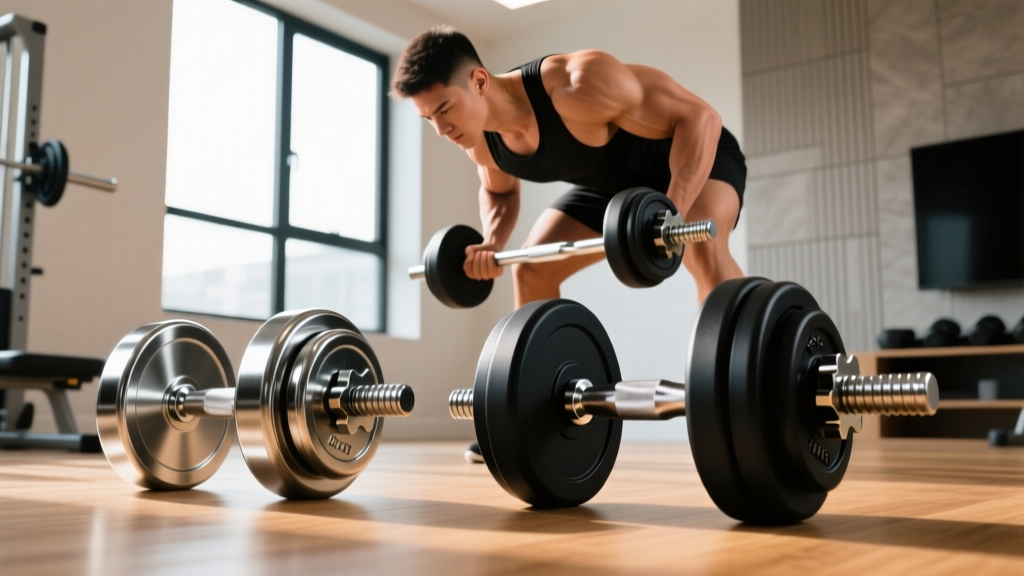
One of the most cost-effective ways to build a heavy dumbbell set in 2026 is utilizing plate-loaded dumbbell handles. However, the transition from fixed rubber hex dumbbells to plate-loaded handles introduces new spatial and ergonomic variables.
- Standard Handles (e.g., CAP Barbell 14-inch): Feature a solid 1-inch sleeve. They use spin-lock collars or spring clips. The lack of sleeve rotation means the plates will rotate against the inner collar during supination movements, creating friction and torque on the wrist.
- Olympic Handles (e.g., Rogue Loadable Dumbbell Handles): Feature a 2-inch sleeve with internal bronze bushings. The plates spin independently of the handle grip, drastically reducing rotational inertia and protecting the elbow and wrist joints during dynamic curls.
The Ergonomic Clearance Test: The Alt Dumbbell Curl
How do you know if your newly assembled plate-loaded dumbbell handles are ergonomically sound? You perform a diagnostic movement. The alt dumbbell curl (alternating dumbbell curl) is the ultimate test for collar clearance and sleeve rotation. Because this exercise requires unilateral supination (twisting the wrist outward as you lift), it exposes any design flaws in your handle setup.
Execution and Clearance Metrics
When performing the alt dumbbell curl with plate-loaded handles, pay close attention to the following mechanical feedback loops:
- The Collar Strike Test: As you curl the weight and supinate your wrist, the inner edge of your forearm will approach the dumbbell sleeve. If you are using bulky Standard spring clips, they will dig into your forearm at the top of the movement. Olympic screw collars or low-profile clamp collars sit flush and prevent this bruising.
- The Rotational Inertia Check: According to biomechanical breakdowns of the alternating dumbbell curl on ExRx, the biceps brachii acts as both a flexor and a powerful supinator. If your Standard handle lacks rotating sleeves, the momentum of the heavy iron plates will fight your supination, leading to medial epicondylitis (golfer's elbow). The smooth rotation of an Olympic bushing sleeve allows the plates to remain stationary while the handle turns in your grip.
- Spacing Requirements: To safely execute the alt dumbbell curl in your newly installed weight tree zone, ensure you have a minimum of 36 inches of lateral clearance from the tree. Swinging heavy 45-lb plates near a steel weight tree risks catastrophic finger injuries if the plates clip the storage horns.
Failure Modes and Edge Cases in Plate Storage
Even with perfect installation, improper maintenance of your plates and handles can lead to equipment failure. Here are the most common edge cases we see in home gyms:
- Urethane Degradation: If you purchase premium urethane Olympic plates (like those from Rogue Fitness), do not store them in direct sunlight or unventilated sheds where temperatures exceed 100°F. UV exposure will cause the urethane to chalk, crack, and eventually shatter upon impact.
- Sleeve Galling: On Olympic loadable dumbbell handles, failing to lubricate the bronze bushings with 3-in-One oil or synthetic barbell oil every 6 months will cause the steel sleeve to gall (friction-weld) to the inner shaft. This completely destroys the rotational benefit needed for movements like the alt dumbbell curl.
- Standard Hole Warping: Cheaper cast-iron Standard plates often have poorly machined 1-inch holes. Over time, forcing them onto slightly bent 1-inch handles will warp the plate hole, making them impossible to remove without a rubber mallet.
Frequently Asked Questions (FAQ)
Can I use Standard plates on an Olympic barbell or dumbbell handle?
No, not without a specialized adapter. You can purchase 1-inch to 2-inch sleeve adapters (usually made of high-density nylon or aluminum) that slide over the 1-inch Standard plate hole to fit a 2-inch Olympic sleeve. However, this adds 2 inches of dead space to your sleeve, reducing the amount of weight you can load and altering the balance point of the dumbbell during isolation exercises.
Why is the alt dumbbell curl recommended over a standard bilateral curl for testing?
Bilateral (two-arm) curls lock the shoulders into a fixed plane and often involve slight torso swaying to compensate for heavy loads. The alt dumbbell curl forces strict unilateral stabilization. This strict form highlights any imbalance in the dumbbell's weight distribution, collar friction, or sleeve rotation, making it the superior diagnostic tool for testing new plate-loaded equipment.
How much floor space do I need for a full Olympic plate setup?
A standard 10-peg Olympic weight tree has a footprint of roughly 24 x 24 inches. However, you must account for the 'loading zone'—the space required to stand, bend, and slide 45-lb plates onto the lower pegs. Allocate a minimum 4-foot by 4-foot clear zone around the tree to ensure safe loading and unloading without striking nearby squat racks or benches.
More gear to consider
All reviews
Cast Iron vs Competition Kettlebells & Dumbbell Exercises for Rounded Shoulders

Olympic vs Standard Plates: Setup for Squats & Dumbbell Goblet Squats

Bumper vs Iron Plates & A Landmine Rotation Alternative with Dumbbells
Collar & Clamp Comparison: Best Exercises for Lats with Dumbbells
Beyond Dumbbell Exercises for Runners: Barbell Collar Setup Guide
