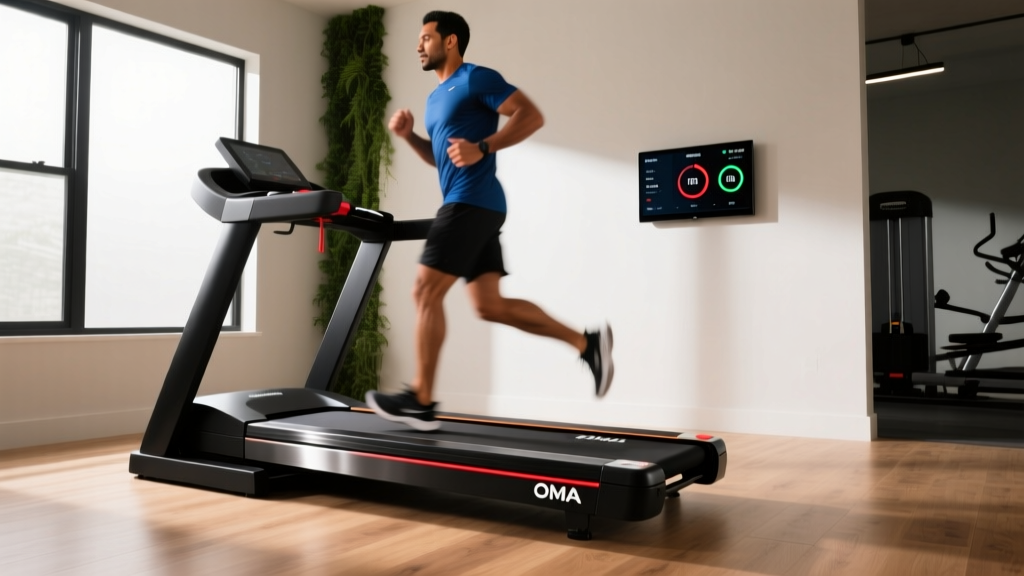
NordicTrack C1900 Treadmill vs Home Stair Climber: 2026 Guide
Debating the legacy NordicTrack C1900 treadmill vs a modern home stair climber? We compare footprint, biomechanics, and 2026 upgrade paths.

The Cardio Conundrum: Legacy Workhorse vs. Vertical Innovation
Building or upgrading a home gym in 2026 often forces a difficult choice between retaining proven, heavy-duty legacy equipment and adopting modern, space-efficient vertical cardio machines. If you are currently utilizing or considering purchasing a refurbished NordicTrack C1900 treadmill, you already know its reputation as a mid-2010s workhorse. However, the explosive popularity of home stair climbers has left many fitness enthusiasts wondering if it is time to trade the horizontal belt for vertical steps.
This head-to-head guide bypasses generic marketing fluff to deliver a deep-dive comparison. We will analyze the exact biomechanical differences, spatial economics, mechanical failure modes, and long-term maintenance costs of the NordicTrack C1900 treadmill versus modern home stair climbers (such as the Bowflex Max M9 and Sunny Health SF-S9002). Whether you are rehabbing a knee, optimizing a 100-square-foot apartment gym, or chasing VO2 max gains, this data-driven breakdown will dictate your next equipment move.
The 2026 Market Reality: Refurbished Value vs. Premium Vertical Tech
To compare these machines fairly, we must first establish their current market positions. The NordicTrack C1900 is no longer manufactured. In 2026, it exists almost exclusively on the secondary and refurbished market. You can typically acquire a fully reconditioned C1900 for between $400 and $650. It boasts a 3.0 CHP motor, a 20-inch by 60-inch tread belt, and a 325-pound user capacity. It is a massive, stable, and highly capable incline walking and running machine.
Conversely, the home stair climber market has bifurcated into two distinct tiers:
- Budget/Compact Steppers (e.g., Sunny Health SF-S9002): Priced around $450 to $600, these use hydraulic or basic chain-drive resistance, offer a smaller footprint, but lack the smooth inertia of commercial gym climbers.
- Premium Hybrid/Vertical Climbers (e.g., Bowflex Max M9, Climbr): Ranging from $1,800 to $2,500, these feature magnetic resistance, interactive coaching, and fluid pedal articulation that closely mimics a Life Fitness PowerMill.
The financial question is not just about the upfront cost; it is about the cost-per-use and the physiological return on investment.
Biomechanical Breakdown: Joint Loading and Muscle Activation
The most critical distinction between the NordicTrack C1900 treadmill and a stair climber lies in ground reaction forces (GRF) and muscle recruitment patterns. According to the Hospital for Special Surgery, stair climbing is uniquely effective for building lower-body bone density while minimizing the high-impact eccentric loading associated with running.
The Treadmill Incline Illusion
Many users attempt to replicate stair climbing by setting the C1900 to its maximum 12% incline. While this elevates heart rate and shifts focus to the posterior chain, the biomechanics remain fundamentally different. On a motorized treadmill, the belt actively pulls your foot backward. This assists in hip extension, meaning your glutes and hamstrings do less concentric work than they would when moving your body weight through space.
The Vertical Advantage
A stair climber requires pure concentric force production. You must physically lift your entire body weight against gravity with every single step. Electromyography (EMG) studies consistently show that stair stepping elicits 15% to 22% higher muscle activation in the gluteus maximus and vastus lateralis (outer quad) compared to maximum-incline treadmill walking. Furthermore, because there is no 'falling' phase (as there is in running), the compressive forces on the patellofemoral joint are significantly reduced, making stair climbers a superior choice for users managing mild osteoarthritis or recovering from meniscus repairs.
Expert Insight: If your primary goal is hypertrophy and targeted glute development without the joint pounding of sprint intervals, the vertical stair climber provides a vastly superior stimulus per minute of exercise compared to the C1900's incline walking.
Spatial Economics: The Home Gym Footprint
Home gym real estate is at a premium. The NordicTrack C1900 is an undeniably massive piece of equipment. When planning your 2026 gym layout, you must account not just for the machine's static dimensions, but for the 'operational clearance' required for safe mounting, dismounting, and emergency falls.
| Equipment Model | Length x Width (Inches) | Total Footprint (Sq. Ft.) | Ceiling Clearance Required |
|---|---|---|---|
| NordicTrack C1900 Treadmill | 78' x 30' | 16.25 sq. ft. | 8 ft (for tall runners at 12% incline) |
| Sunny Health SF-S9002 Climber | 43' x 28' | 8.36 sq. ft. | User Height + 15 inches |
| Bowflex Max M9 | 49' x 30' | 10.20 sq. ft. | User Height + 15 inches |
As the data illustrates, swapping a C1900 for a dedicated stair climber instantly reclaims nearly 50% of your floor space. This freed square footage in a standard spare bedroom or garage gym can be reallocated to a functional fitness zone for kettlebell work, yoga, or free-weight lifting.
Maintenance and Failure Modes: What Actually Breaks?
Every cardio machine has an Achilles heel. Understanding the mechanical failure modes of the C1900 versus a stair climber will help you anticipate long-term ownership costs and maintenance schedules.
NordicTrack C1900 Treadmill Failure Points
- Deck Delamination and Belt Friction: The most common cause of death for legacy treadmills is user neglect regarding belt lubrication. If the silicone lubricant dries out, friction spikes. This draws excess amperage, which eventually fries the Motor Control Board (MCB). Replacing an MCB on an out-of-production model like the C1900 requires sourcing refurbished electronics, often costing $150 to $250.
- Drive Belt Stretch: The ribbed drive belt connecting the motor to the front roller stretches over 1,000+ miles of use, resulting in a slipping sensation during heavy foot strikes.
Stair Climber Failure Points
- Pedal Arm Bushing Wear: On budget chain-drive climbers, the lateral stress placed on the pedal arms degrades the nylon or bronze bushings over time, leading to a 'clunking' sound and lateral pedal wobble.
- Magnetic Resistance Calibration Drift: In premium magnetic climbers, the servo motor that adjusts the magnetic flywheel distance can lose calibration, resulting in uneven resistance between the left and right pedals.
The Maintenance Verdict
The NordicTrack C1900 requires strict, scheduled maintenance (lubricating the deck every 150 miles or 3 months). Stair climbers are generally lower maintenance regarding daily friction, but their mechanical linkages (chains, pedals, bushings) endure higher sheer forces and may require physical part replacements after 3 to 5 years of heavy daily use.
Cardiovascular Adaptations and the AHA Guidelines
According to the American Heart Association, adults should aim for at least 150 minutes of moderate-intensity or 75 minutes of vigorous aerobic activity per week. Both the C1900 and a stair climber can easily facilitate these guidelines, but the pathways to cardiovascular adaptation differ.
The C1900 excels at steady-state, zone 2 cardio. Its long 60-inch belt allows for natural stride mechanics, making it ideal for 45-to-60-minute endurance building sessions where maintaining a consistent, rhythmic heart rate is the goal. The Mayo Clinic notes that sustained, moderate aerobic exercise is foundational for improving overall cardiovascular endurance and managing blood pressure.
Stair climbers, however, are the undisputed kings of High-Intensity Interval Training (HIIT) and VO2 max improvement. Because the machine demands immediate, heavy concentric force, your heart rate will spike into Zone 4 or Zone 5 within 30 seconds of increasing the step rate. If your 2026 fitness goal is to maximize caloric burn and cardiovascular capacity in under 20 minutes a day, the stair climber is vastly more time-efficient.
The Final Decision Matrix: Which Machine Belongs in Your Gym?
Do not base your decision solely on trends. Use this practical framework to determine which machine aligns with your specific physiological needs and spatial constraints.
Keep (or Buy) the NordicTrack C1900 Treadmill If:
- You are a runner training for 5K, 10K, or half-marathon events and need to practice specific pacing and stride mechanics.
- You have a dedicated room with at least 20 square feet of floor space and 8-foot ceilings.
- Your primary goal is low-impact, steady-state Zone 2 endurance work or daily walking while consuming media (the C1900's console and stability are superior for reading/watching screens compared to the upper-body sway required on a stair climber).
- You are on a strict budget and can source a well-maintained refurbished unit for under $500.
Upgrade to a Home Stair Climber If:
- You are dealing with chronic lower-back or knee pain exacerbated by the repetitive eccentric pounding of treadmill walking or running.
- You live in an apartment or multi-use space where the C1900's 16.25 sq. ft. footprint is prohibitive.
- Your primary aesthetic or performance goal is targeted glute, hamstring, and quad development alongside rapid calorie expenditure.
- You prefer short, brutal 15-to-20-minute HIIT workouts over long, drawn-out endurance sessions.
Ultimately, the NordicTrack C1900 remains a highly capable piece of engineering for horizontal locomotion. But if your 2026 goals prioritize space efficiency, joint preservation, and maximum posterior-chain activation, transitioning to a dedicated home stair climber is an upgrade your body—and your floor plan—will thank you for.
More gear to consider
All reviews
NordicTrack Treadmill Stuck on iFIT Screen? Rowing Machine Setup

Beyond the Lexiscan Treadmill Stress Test: 2026 Bike Trends

Small Space Folding Treadmills: SuperFit Treadmill App Review

Stair Climber Guide: NordicTrack vs ProForm 400 C Treadmill

Matrix T30 Treadmill Reviews & Cardio Machine Noise Level Comparison