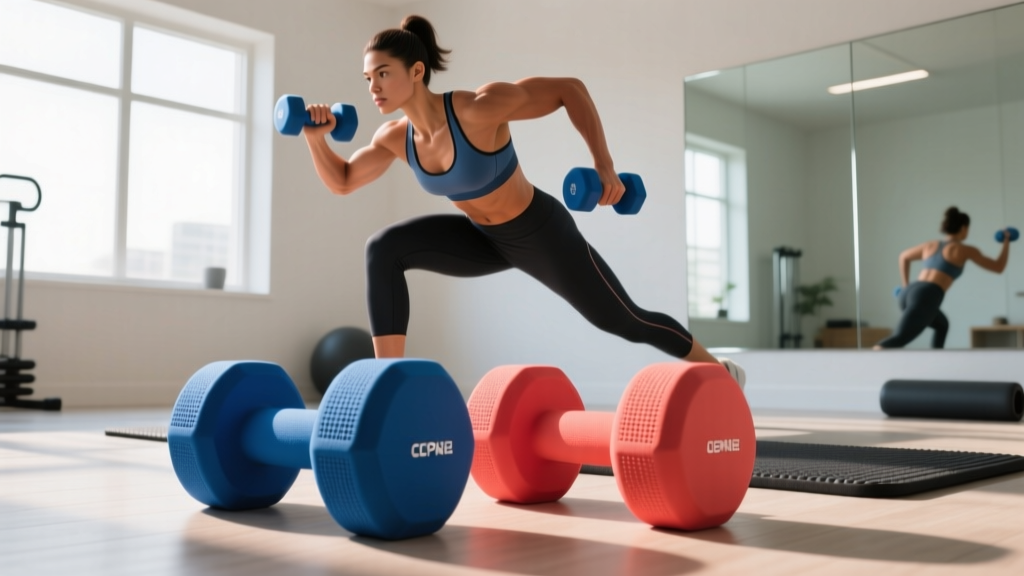
Neoprene Dumbbell Workouts for Weight Loss: A Beginner's Home Guide
Discover effective neoprene dumbbell workouts for weight loss at home. This beginner-friendly guide covers routines, gear picks, and step-by-step form.

Why Neoprene Dumbbells Are the Ultimate Home Fat-Loss Tool
When building a home gym specifically for fat loss and metabolic conditioning, the equipment you choose dictates your consistency. In 2026, while smart-gyms and adjustable dial-systems dominate the premium market, traditional neoprene-coated hex dumbbells remain the undisputed champions for high-repetition, sweat-drenched circuit training. If you are searching for effective dumbbell workouts for weight loss, neoprene dumbbells offer a unique combination of floor-friendly durability, sweat-resistant grip, and budget-friendly pricing that makes them perfect for beginners.
Neoprene is a synthetic rubber that provides a slightly 'tacky' surface. When your heart rate spikes to 150 BPM during a metabolic circuit and your palms begin to sweat, bare cast iron or smooth vinyl dumbbells become dangerous slip hazards. Neoprene grips your skin securely without the need for excessive chalk or lifting gloves. Furthermore, the hexagonal heads prevent the weights from rolling away mid-workout—a critical safety feature when transitioning between floor exercises like renegade rows and burpees.
The 2026 Neoprene Pricing Benchmark
As of early 2026, expect to pay between $1.15 and $1.60 per pound for high-quality neoprene dumbbells. Budget brands like Yes4All hover around $1.15/lb, while premium commercial-grade options from CAP Barbell or Rogue Fitness sit closer to $1.60/lb. Avoid paying more than $2.00/lb for neoprene; at that price point, you should be looking at urethane.
Material Showdown: Neoprene vs. Rubber vs. Urethane
Before diving into the workout, it is vital to understand where neoprene sits in the free weight hierarchy. Here is how it compares to other common coatings for home fat-loss circuits.
| Material | Avg. Cost per Lb | Grip When Sweaty | Floor Protection | Best Use Case |
|---|---|---|---|---|
| Neoprene | $1.15 - $1.60 | Excellent (Tacky) | Very Good | HIIT, AMRAP, Beginner Circuits |
| Virgin Rubber Hex | $1.00 - $1.40 | Good | Excellent | Heavy lifting, Garage gyms |
| Urethane | $2.50 - $4.50 | Moderate | Excellent | Commercial gyms, Premium homes |
Step-by-Step: The 'Metabolic Flush' Neoprene Circuit
Effective dumbbell workouts for weight loss rely on Excess Post-exercise Oxygen Consumption (EPOC). According to the American Council on Exercise (ACE), high-intensity resistance circuits elevate your metabolism for hours after the workout ends as your body works to restore oxygen levels and clear lactic acid. This routine is designed to maximize that 'afterburn' effect using light-to-moderate neoprene dumbbells.
The Setup & Protocol
- Equipment: 1 pair of neoprene hex dumbbells (Women: 8-15 lbs; Men: 15-25 lbs).
- Format: 45 seconds of continuous work, followed by 15 seconds of transition/rest.
- Rounds: Complete 4 full rounds. Rest 90 seconds between rounds.
- Frequency: 3 times per week on non-consecutive days.
Exercise 1: Dumbbell Thrusters (Lower Body + Shoulders)
Hold the dumbbells at shoulder height with a neutral grip (palms facing each other). Descend into a deep squat, keeping your chest up. As you drive through your heels to stand, explosively press the dumbbells overhead. The neoprene coating ensures the handles won't slip from your sweaty palms during the overhead lockout.
Exercise 2: Renegade Rows (Core + Back)
Get into a high plank position, gripping the hex dumbbells on the floor. Crucial Edge Case: If you are using round dumbbells, this exercise is dangerous as they will roll and wreck your wrists. The flat hex-edges of neoprene dumbbells anchor them to the floor. Row the right dumbbell to your hip, lower it, and row the left. Keep your hips perfectly square to the ground.
Exercise 3: Goblet Reverse Lunges (Legs + Glutes)
Hold one heavier dumbbell (or two if you are advanced) vertically against your chest. Step backward into a lunge, dropping your back knee to within an inch of the floor. Drive off the front foot to return to the start. Alternate legs. This movement spikes the heart rate rapidly due to the large muscle mass involved.
Exercise 4: Floor Press to Glute Bridge (Chest + Posterior Chain)
Lie on your back, knees bent, holding the dumbbells over your chest. Press the weights up, then lower them until your triceps lightly touch the floor. Immediately drive your hips into a glute bridge at the top of the press. This hybrid movement keeps constant tension on the body, preventing the heart rate from dropping.
Overcoming the 'Light Weight' Plateau
A common beginner mistake is buying a single pair of 10 lb neoprene dumbbells and using them for months. As the Harvard T.H. Chan School of Public Health notes, progressive overload is necessary for continued metabolic adaptation and muscle retention during a caloric deficit. If you cannot afford to buy heavier dumbbells every month, use these three progression frameworks:
- Time Under Tension (TUT): Instead of pumping out 20 fast goblet squats, take 3 full seconds to descend, pause for 1 second at the bottom, and explode up. This turns a lightweight into a heavy stimulus.
- 1.5 Rep Style: Go all the way down, come halfway up, go back down, then come all the way up. That equals one rep. This doubles the time spent in the stretched, most difficult position of the movement.
- Decrease Rest Intervals: If 45 seconds of work and 15 seconds of rest becomes too easy, shift to 50 seconds of work and 10 seconds of rest before buying heavier gear.
Warning: The 5-Pound Trap
Many beginners purchase 3 lb or 5 lb neoprene dumbbells for 'toning.' Spot reduction and high-rep light-weight toning are fitness myths. To trigger fat loss and preserve lean muscle mass, you must challenge the muscle. If you can easily perform more than 20 repetitions of an exercise without feeling a significant burn or muscular fatigue, the weight is too light to stimulate a meaningful metabolic response. Upgrade to a weight that makes the 12th to 15th rep feel highly challenging.
How to Choose Your Starting Weight (The 15-Rep Test)
If you are ordering your first set of neoprene dumbbells online, use this diagnostic test with household items or gym weights to find your baseline:
- Lower Body (Squats/Lunges): Choose a weight where 15 continuous reps leave you breathing heavily but with perfect form. (Usually 15-25 lbs per hand).
- Upper Body Push (Presses): Choose a weight where 12 reps are challenging. (Usually 8-15 lbs per hand).
- Upper Body Pull (Rows): You are generally stronger pulling than pushing. (Usually 12-20 lbs per hand).
Pro-Tip: Buy two sets. A lighter pair (e.g., 8 lbs) for isolation and upper body pressing, and a heavier pair (e.g., 20 lbs) for lower body and compound movements. The total cost for two pairs of neoprene dumbbells will still be under $100, making it the most cost-effective home gym investment available.
Frequently Asked Questions
Can I lose belly fat specifically using dumbbell circuits?
No exercise can target fat loss in one specific area (spot reduction). However, dumbbell circuits burn a high number of calories per minute and build metabolically active muscle tissue. As your overall body fat percentage drops through a caloric deficit and consistent circuit training, abdominal fat will reduce proportionally.
How do I clean neoprene dumbbells?
Neoprene is porous and can absorb sweat and bacteria over time. Wipe them down after every session with a microfiber cloth and a mild, non-bleach antibacterial spray. Avoid harsh chemicals or alcohol-based cleaners, as they will dry out the neoprene coating, causing it to crack and peel prematurely.
Are neoprene dumbbells toxic?
Modern, reputable neoprene dumbbells manufactured in 2026 are free from the heavy metals and phthalates found in cheap, uncertified imports. Always buy from established fitness brands that comply with California Proposition 65 and REACH safety standards to ensure the materials are safe for indoor home use.
More gear to consider
All reviews
Power Rack vs Squat Rack vs Squat Stand: Dumbbell Twist Press Errors
Dumbbell Racks & Russian Twists with Dumbbell Muscles Worked
Neoprene Dumbbell Comparison & Dumbbell Bench Press Tutorial

Olympic Barbell Guide & Standing Dumbbell Rear Delt Fly Setup

Maximize Benefits of Dumbbells: Neoprene Mistakes & Fixes
