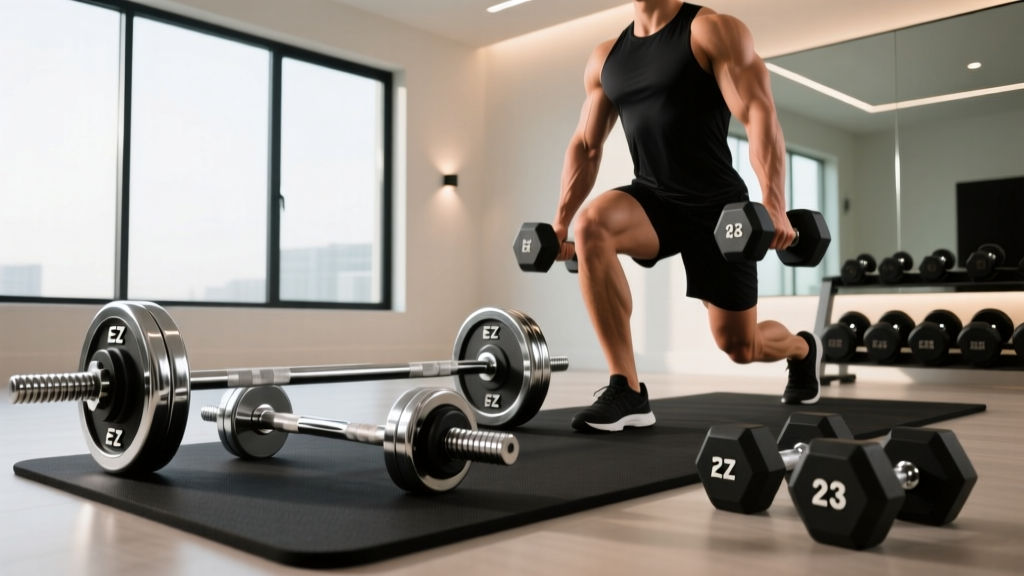
Home Gym Setup: Full Arm Exercises With Dumbbells Using Neoprene
Master your home gym setup with neoprene dumbbells. Learn storage tips and step-by-step form for the best full arm exercises with dumbbells.

Station Installation: Preparing Your Neoprene Dumbbell Zone
When building a home gym, the 'installation' phase isn't just about bolting a power rack to the floor; it's about strategically setting up your free weight zones for optimal flow and safety. Neoprene-coated dumbbells are a staple for home setups in 2026 due to their floor-friendly properties and acoustic dampening. However, setting up a dedicated station for full arm exercises with dumbbells requires specific spatial and equipment considerations.
Pro-Tip: The 3-Foot RuleFor full arm movements (which require overhead extension and lateral tracking), ensure your primary workout mat is at least 3 feet wide and 6 feet long. A standard 3/4-inch thick rubber horse-stall mat provides the necessary shock absorption if a neoprene dumbbell is dropped from shoulder height.
Rack Selection and Footprint
Neoprene dumbbells feature a hexagonal anti-roll design, meaning they can be stored on flat shelves or tiered A-frame racks. For a standard 5 to 50-pound set, a 3-tier A-frame rack (such as the CAP Barbell A-Frame) is the industry standard.
Installation Specs:
- Floor Footprint: 24 x 24 inches.
- Vertical Clearance: 32 inches (ensure it is not placed under low-sloped attic ceilings).
- Weight Distribution: A fully loaded 5-50lb set weighs roughly 550 lbs. Place the rack over a floor joist if installing on a second-floor wooden subfloor to prevent long-term structural sagging.
Why Neoprene? Material Science & 2026 Market Pricing
Before executing your workout, it is crucial to understand the gear you are handling. Neoprene (polychloroprene) is a synthetic rubber that offers a porous, tactile grip. Unlike cheap vinyl coatings that peel and crack after 14 to 18 months of heavy use, or premium urethane that costs upwards of $4.00 per pound, neoprene sits in the 2026 sweet spot of $1.50 to $2.20 per pound.
The Grip Advantage: During high-rep arm isolation movements, palmar sweat accumulates rapidly. Neoprene's micro-porous surface absorbs moisture, maintaining a friction coefficient that prevents the dumbbell from slipping during overhead extensions—a common failure point with smooth rubber or chrome dumbbells.
Biomechanical Installation: Prepping the Arm Chain
According to the Mayo Clinic's strength training guidelines, proper joint preparation is vital before loading the elbow and shoulder complexes. 'Installing' the correct movement pattern requires a specific warm-up protocol to lubricate the synovial joints.
- Scapular Retraction Drills: 2 sets of 15 band pull-aparts to stabilize the shoulder girdle.
- Elbow Tracking: Unweighted tricep kickbacks (20 reps) to push blood into the triceps brachii and warm the elbow tendon.
- Wrist Mobility: Dynamic wrist circles and flexor stretches to prepare for the heavy gripping demands of thick-handled neoprene dumbbells.
Walkthrough: Full Arm Exercises With Dumbbells
To fully develop the arm, you must target the biceps brachii, brachialis, brachioradialis, and the three heads of the triceps. Below is a complete setup and execution walkthrough for the most effective full arm exercises with dumbbells, utilizing the specific grip dynamics of neoprene-coated weights.
1. The Incline Curl to Overhead Press (Compound)
This movement installs both elbow flexion and shoulder flexion, stretching the long head of the bicep while engaging the anterior deltoid.
- Equipment Setup: Set an adjustable bench to a 45-degree incline. Select a neoprene dumbbell weight that is 20% lighter than your standard standing curl.
- Body Setup: Sit back, letting your arms hang straight down behind your torso. Retract your scapula into the bench pad.
- Execution: Curl the dumbbells up while keeping your elbows pinned back. At the top of the curl, rotate your wrists and press the dumbbells overhead.
- Failure Mode: Flaring the elbows forward during the curl. The neoprene coating allows you to grip tightly without squeezing the life out of the handle, reducing forearm fatigue and keeping the focus on the bicep.
2. Cross-Body Hammer Curls
Targeting the brachialis (the muscle that pushes the bicep up), this exercise is heavily reliant on grip endurance.
- Equipment Setup: Stand on a flat mat with dumbbells at your sides, neutral grip (palms facing your thighs).
- Execution: Curl the right dumbbell across your torso toward the left shoulder. Lower under a strict 3-second eccentric count. Alternate arms.
- Neoprene Advantage: The slightly thicker profile of neoprene handles (usually 35mm to 40mm in diameter) increases brachioradialis activation compared to standard 28mm chrome Olympic handles.
3. Overhead Tricep Extensions
To hit the long head of the tricep, the arm must be elevated overhead. This is where grip security is paramount.
- Equipment Setup: Seated on a 90-degree bench to protect the lower back. Hold a single heavy neoprene dumbbell vertically with both hands cupping the inner plate.
- Execution: Lower the weight behind your head until your elbows reach 90 degrees, then extend to the top without locking out the joint.
- Safety Check: Ensure the neoprene coating on the inner plate is free of tears. A torn neoprene edge can cause friction burns on the palms during the two-handed grip setup.
Movement Setup Matrix
Use this reference table to troubleshoot your form and ensure your home gym setup is optimized for these specific movements.
| Exercise | Stance / Bench Angle | Grip Type | Common Setup Error |
|---|---|---|---|
| Incline Curl to Press | 45° Incline | Supinated to Neutral | Elbows drifting forward during flexion |
| Cross-Body Hammer | Standing, feet shoulder-width | Neutral (Hammer) | Using momentum to swing the weight across |
| Overhead Extension | 90° Seated (Back supported) | Two-handed Neutral | Flaring elbows outward instead of pointing up |
For further visual references on joint tracking and biomechanics, the ACE Fitness Exercise Library provides excellent anatomical breakdowns of these specific arm movements, while the Bodybuilding.com Exercise Database offers extensive video walkthroughs for home gym setups.
Maintenance: Preserving the Neoprene Bond
Installing your equipment is only step one; maintaining it ensures longevity. Neoprene is highly durable but susceptible to specific environmental factors in a home gym.
Warning: UV and Sweat DegradationDo not store your neoprene dumbbell rack directly in front of a south-facing window. Prolonged UV exposure in 2026's intense summer months will cause the chloroprene rubber to fade and become brittle. Furthermore, the lactic acid and salts in human sweat can break down the adhesive bonding the neoprene to the cast-iron core.
The Post-Workout Cleaning Protocol
- Wipe Down: Use a microfiber cloth dampened with a pH-neutral cleaner (avoid bleach or ammonia-based sprays, which dissolve the rubber polymers).
- Dry Time: Allow the dumbbells to air dry for 15 minutes before placing them back on the A-frame rack. Trapping moisture between the dumbbell head and the rack shelf can cause the iron core to rust from the inside out, eventually pushing through the neoprene coating.
- Monthly Inspection: Check the seams where the neoprene meets the handle. If you notice lifting, apply a tiny drop of flexible rubber cement to prevent the coating from peeling entirely.
Final Thoughts on Your Home Arm Setup
Mastering full arm exercises with dumbbells requires more than just effort; it demands a meticulously planned environment. By properly installing your neoprene dumbbell station, respecting the biomechanics of the elbow and shoulder joints, and maintaining your gear against environmental wear, you create a sustainable, highly effective home gym ecosystem. Whether you are focusing on brachialis thickness via hammer curls or tricep long-head development via overhead extensions, the right setup guarantees that your energy is spent on muscle contraction, not fighting poor equipment or unsafe spatial arrangements.
More gear to consider
All reviews
Power Rack vs Squat Stand: American Barbell Dumbbell Layout Mistakes

Things to Do with a Dumbbell vs Barbell: Collar Guide

Olympic vs Standard Plates: Gear for Incline Dumbbell Rear Delt Fly
Troubleshooting Dumbbell RDL Form With Neoprene Weights
2026 Bumper vs Iron Plate Market Trends & Seated Dumbbell Side Lateral Raises