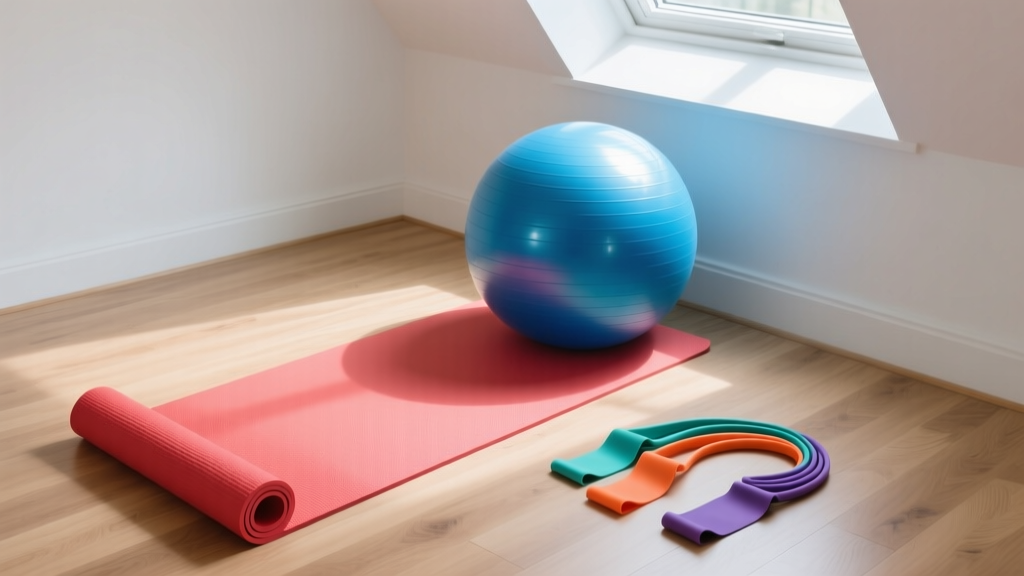
Medicine Ball Weight Selection Guide & How to Disinfect Yoga Mats
Master your home gym with our beginner-friendly medicine ball weight selection guide, plus expert steps to safely disinfect yoga mats and protect your gear.

The Beginner's Step-by-Step Medicine Ball Weight Selection Guide
Building a functional home gym requires more than just buying the heaviest gear you can find. When it comes to medicine balls, selecting the correct weight is entirely dependent on your biomechanics, training goals, and the specific movement patterns you intend to perform. According to the American Council on Exercise (ACE), using a ball that is too heavy compromises your rotational velocity and increases the risk of lumbar strain, while a ball that is too light fails to trigger the necessary neuromuscular adaptations for power development.
This guide will walk you through the exact framework for choosing the right medicine ball weight, followed by a crucial maintenance protocol to disinfect yoga mats and gym flooring where these heavy implements are frequently dropped.
Step 1: Categorize Your Primary Movement Pattern
Medicine ball training generally falls into three distinct categories: rotational power, vertical slams, and targeted core isolation. Each category demands a different weight threshold.
- Rotational Throws (e.g., Russian Twists, Side Tosses): These movements rely on velocity and the stretch-shortening cycle of your obliques. A ball that is too heavy will slow down your hips, turning a power exercise into a grinding strength exercise.
- Vertical Slams (e.g., Overhead Slams, Burpee Slams): These are pure force-production movements. You can handle significantly more weight here because you are utilizing your lats, glutes, and gravity in a linear path.
- Core Isolation (e.g., V-Ups, Weighted Crunches): These require slow, controlled tension. Moderate weights are ideal to prevent hip-flexor takeover.
Step 2: Match the Weight to Your Experience Level
Use the matrix below to identify your starting weight. Note that these are baseline recommendations for beginners; as your central nervous system adapts, you will scale up.
| Exercise Category | Beginner Weight (Women) | Beginner Weight (Men) | Recommended Ball Type |
|---|---|---|---|
| Rotational Throws | 4 - 6 lbs (1.8 - 2.7 kg) | 6 - 8 lbs (2.7 - 3.6 kg) | Wall Ball or Leather Med Ball |
| Vertical Slams | 10 - 15 lbs (4.5 - 6.8 kg) | 15 - 20 lbs (6.8 - 9 kg) | Dead Ball or Sand Slam Ball |
| Core Isolation | 6 - 8 lbs (2.7 - 3.6 kg) | 8 - 10 lbs (3.6 - 4.5 kg) | Hex-Grip or Rubber Med Ball |
| Wall Balls (Squat to Throw) | 10 - 14 lbs (4.5 - 6.3 kg) | 14 - 20 lbs (6.3 - 9 kg) | Bouncing Wall Ball |
Step 3: Understand the Physics of Bounce (Material Selection)
Weight is only half the equation; the internal construction of the ball dictates its safety and utility.
Expert Insight: The Danger of the ReboundNever use a bouncy 'Wall Ball' for overhead slams. Wall balls are constructed with a gel or air core designed to rebound off rigid surfaces. If you slam a 20lb wall ball into a concrete garage floor, the kinetic energy will bounce back, potentially striking you in the face or shattering your floor. For slams, you must use a 'Dead Ball' or 'Slam Ball'.
Real-World Gear Recommendations for 2026
- For Slams (No Bounce): Titan Fitness Sand Slam Ball ($55 - $85). Filled with iron sand, these absorb 100% of kinetic impact. Start with the 15lb model.
- For Rotational Work (Grip Focus): TRX HexGrip Medicine Ball ($45 - $90). The hexagonal shape prevents rolling on your yoga mat and provides superior grip for sweaty hands.
- For Wall Balls (Rebound): Rogue Echo Medicine Ball ($115 - $145). Features a Kevlar-reinforced shell that maintains its spherical shape even after thousands of throws against a plyo box.
Post-Workout Gear Care: How to Disinfect Yoga Mats
Once you have selected your medicine ball, you need a safe surface to drop it on and perform your core work. Most beginners use a thick yoga mat or interlocking foam tiles. However, heavy sweating and the transfer of skin flora mean you must regularly disinfect yoga mats to prevent bacterial and fungal growth, particularly Staphylococcus aureus and ringworm.
According to dermatology and fitness hygiene guidelines highlighted by the Cleveland Clinic, standard household disinfectants can actually ruin the structural integrity of premium fitness mats. Here is the step-by-step protocol to clean and protect your gear.
The Material Science: Why Standard Cleaners Fail
Before you spray, you must identify your mat's material:
- Closed-Cell (PVC): Dense, non-porous (e.g., Manduka PRO). Sweat sits on the surface. Easier to wipe down, but becomes slippery.
- Open-Cell (Natural Rubber / Polyurethane): Porous, absorbent (e.g., Lululemon The Mat, YOLO Board). Sweat and bacteria sink into the microscopic pores. Warning: Using bleach, Lysol, or alcohol-based sprays on open-cell rubber will dry out the polymers, causing the mat to crack, flake, and lose its grip permanently.
Step-by-Step: The Safest Way to Disinfect Yoga Mats
To effectively disinfect yoga mats without destroying the polyurethane top layer or natural rubber base, follow this 3-step routine after heavy medicine ball or HIIT sessions.
1. The Physical Wipe-Down (Remove Oils and Dirt)
Disinfectants cannot penetrate layers of sebum (body oil) and dead skin. First, wipe the mat down with a microfiber cloth dampened with warm water and a single drop of mild, unscented dish soap (like Dawn Free & Clear). This removes the physical barrier.
2. Apply an Antimicrobial Mat Spray
Avoid quaternary ammonium compounds (found in gym wipes) as they degrade TPE and rubber. Instead, use a dedicated mat wash or a DIY antimicrobial solution. The official Manduka Mat Care guide recommends using specialized botanical washes that lift bacteria without stripping the mat's natural moisture.
DIY Antimicrobial Mat Spray Recipe- 1 cup distilled water (tap water contains minerals that leave a white residue)
- 1/4 cup witch hazel (a gentle astringent that breaks down oils)
- 10 drops Tea Tree essential oil (proven natural antimicrobial and antifungal properties)
- 5 drops Lavender essential oil (for scent and additional antibacterial benefits)
Shake well before every use. Spray generously, let sit for 3 minutes, and wipe with a clean microfiber towel.
3. The Air-Dry Protocol
Never roll up a damp mat. Trapped moisture in a dark, rolled environment is the exact breeding ground for mildew. Hang your mat over a railing or a specialized mat hanger in a well-ventilated room out of direct sunlight (UV rays degrade natural rubber rapidly).
Frequently Asked Questions
Can I use a medicine ball on my yoga mat?
It depends on the mat and the ball. A 15lb sand slam ball dropped from overhead will easily tear through a standard 5mm PVC yoga mat and damage the subfloor. If you are doing slams, use a dedicated 1/2-inch thick high-density EVA foam mat or a horse-stall mat. For lightweight rotational throws and core work (under 10 lbs), a premium 6mm natural rubber yoga mat will provide adequate protection.
How often should I disinfect my yoga mat?
If you are doing high-sweat workouts or using the mat in a shared home gym space, you should perform the physical wipe-down after every use, and the full antimicrobial spray disinfection at least twice a week. If you practice gentle, low-sweat restorative yoga, a full disinfection once a week is sufficient.
What is the best weight for a beginner doing wall balls?
For a beginner learning the squat-to-throw mechanics of a wall ball, women should start with a 10lb or 12lb ball, and men should start with a 14lb or 16lb ball. The goal is to maintain a fluid, continuous rhythm. If the heavy ball causes you to pause at the bottom of the squat or fail to hit your 9-foot target, drop down 2 to 4 pounds until your cardiovascular endurance catches up to your leg strength.
The FitGearPulse Verdict: Proper weight selection protects your joints, and proper gear maintenance protects your skin. Start light with your medicine ball, prioritize velocity over sheer mass, and treat your yoga mat care with the same discipline as your workout programming.
More gear to consider
All reviews
Jump Rope Setup: Speed, Beaded Ropes & Lole Yoga Mat Costco Hacks
Speed vs Beaded Jump Ropes on Manduka GRP Hot Yoga Mat

Beyond the Bunny Yoga Mat: A Beginner's Resistance Band Guide

Medicine Ball Weight Guide & Setup: Yoga Mat Clas Ohlson Test

Beyond the Yoga Mat TJ Maxx Haul: 2026 Pilates Accessories Guide