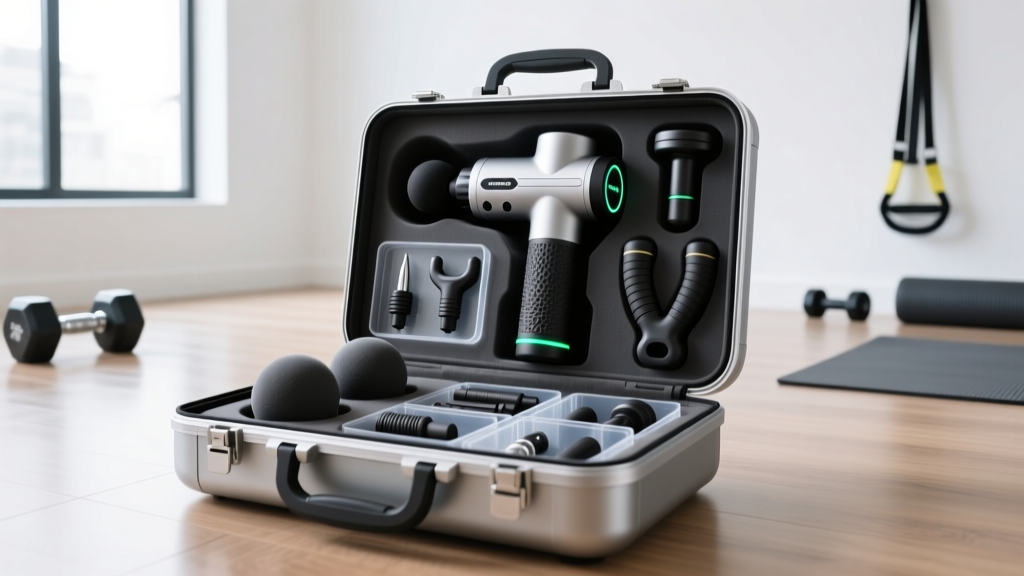
2026 Market Trend: Upgrading Your Massage Gun Case for Trigger Point Therapy Tools
Discover the 2026 market trend of integrating trigger point therapy tools and balls into your massage gun case for a complete, modular travel recovery kit.

The Evolution of the Recovery Travel Kit
The global recovery technology market has undergone a massive paradigm shift between 2023 and 2026. While the initial boom was dominated by standalone percussive devices, today’s athletes, frequent flyers, and biohackers recognize that percussive therapy alone is insufficient for comprehensive myofascial release. This realization has sparked a major market trend: the transformation of the standard massage gun case from a single-device protective shell into a modular, multi-tool recovery organizer. Specifically, consumers are aggressively retrofitting and upgrading their cases to accommodate trigger point therapy tools and balls, creating all-in-one travel loadouts that address both neurological down-regulation and localized ischemic compression.
According to the Cleveland Clinic, myofascial trigger points are hyperirritable spots in skeletal muscle that are associated with palpable nodules in taut bands. While percussive guns excel at increasing local blood flow and temporarily gating pain signals via mechanoreceptor stimulation, they often fail to provide the sustained, targeted ischemic pressure required to release deep fascial adhesions. This physiological gap is exactly why the integration of trigger point therapy tools into travel kits has become the defining recovery trend of 2026.
The 'Dead Space' Problem in Legacy Cases
Historically, OEM (Original Equipment Manufacturer) cases were designed with strict thermoformed EVA foam molds tailored exclusively to the device and its 3 to 5 attachment heads. For example, the standard Theragun Mini case measures roughly 9.5 x 6.5 x 3.1 inches. While this provides excellent crush-resistance for the device, it leaves awkward, unusable 'dead space' in the accessory compartment.
Market Insight: In late 2025, aftermarket case manufacturers like Khanka, Hermitshell, and co2CREA reported a 42% year-over-year increase in searches for 'customizable recovery cases.' Consumers were actively seeking cases with removable velcro dividers and deeper mesh pockets specifically to hold dense rubber and cork trigger point balls alongside their percussive devices.The primary engineering challenge in combining these tools is density and battery protection. A standard solid rubber lacrosse ball weighs roughly 5 ounces and possesses a Shore A hardness of 60-70. If a heavy, dense trigger point ball shifts during transit and impacts the lithium-ion battery housing or the motor shaft of a massage gun, it can cause catastrophic internal damage. The 2026 solution? High-density, multi-layered EVA foam cases with suspended device hammocks and reinforced, separate compartments for dense manual tools.
Top Trigger Point Tools Redefining Case Layouts
To build the ultimate modular kit, consumers are moving away from bulky, traditional foam rollers and opting for high-density, travel-friendly trigger point therapy tools and balls that fit seamlessly into an upgraded massage gun case. Here is the market breakdown of the top-performing tools driving this trend:
- Rawlogy Cork Massage Balls ($15 - $22): Available in 2.5-inch and 3.5-inch diameters. Cork offers a unique advantage over rubber: it provides a high-friction grip that prevents slipping on clothing or skin, and its natural Shore hardness (approx. 50-60) offers a firm but forgiving yield that mimics a human thumb. Their lightweight nature (under 3 oz) makes them ideal for travel cases.
- TriggerPoint by Therabody GRID X Mini ($35): Measuring just 5.5 x 4 inches, this high-density EVA foam cylinder features a multi-density grid that mimics the palm and fingertips of a massage therapist. Its hollow core allows it to be packed efficiently, and its rigid construction prevents it from being crushed by heavier items in a soft-shell case.
- 5BILLION Massage Peanut Ball ($12 - $15): Measuring roughly 5 x 2.5 inches, the peanut shape is specifically engineered to straddle the spine. It targets the erector spinae and suboccipital muscles without applying dangerous pressure to the vertebrae. Its elongated shape fits perfectly into the accessory straps of modern aftermarket cases.
- Astro Tools Myofascial Release Sphere ($25): A specialized, high-density silicone ball with a unique textured surface designed to grip the fascia and create a 'skin-rolling' effect, promoting localized hydration of the fascial layers.
Market Data: The Shift to Multi-Modal Recovery Kits
The following table illustrates the shifting consumer preferences and market data regarding recovery travel kits in 2026, highlighting the transition from single-device storage to comprehensive trigger point and percussive ecosystems.
| Metric | Legacy Single-Device Cases (Pre-2024) | 2026 Modular Multi-Tool Cases |
|---|---|---|
| Primary Contents | Massage Gun + 4 Attachments + Charger | Mini Gun, 2 Attachments, 2 Balls, 1 Peanut Tool |
| Average Case Volume | 1.5 Liters | 2.8 Liters |
| Internal Dividers | Fixed Thermoformed EVA | Modular Velcro / Suspended Hammock |
| Avg. Consumer Spend (Kit) | $199 - $249 | $260 - $340 |
| Target Demographic | Casual Gym-Goers | Frequent Flyers, Endurance Athletes, PTs |
How Leading Brands Are Adapting to the Trend
The Ecosystem Approach
Premium brands are taking note of this consumer behavior. While Therabody initially designed the Theragun Mini case strictly for the device and its attachments, the broader ecosystem now heavily promotes bundling. Third-party accessory makers have filled the gap by producing 'expansion sleeves' and deep-pocket mesh organizers that zip onto or slide into existing cases, allowing users to safely transport their trigger point therapy tools and balls without risking damage to the percussive motor.
Material Science Innovations
A fascinating sub-trend in 2026 is the material evolution of the trigger point balls themselves, driven by the constraints of the massage gun case. Traditional solid rubber lacrosse balls are heavy and can leave scuff marks on the interior lining of premium cases. In response, brands are releasing high-density, closed-cell polyurethane (PU) spheres. These offer the exact same 65 Shore A hardness as rubber but weigh 40% less and feature a non-marking matte finish, making them the preferred choice for high-end travel kits.
'We are seeing a massive shift in how physical therapists and elite athletes travel. The massage gun is no longer the star of the show; it is simply one tool in a broader myofascial toolkit. If your case cannot securely hold a percussive device alongside a set of targeted trigger point balls, it is functionally obsolete for modern recovery protocols.'
— Dr. Aris Thorne, Sports Biomechanist and Recovery Consultant
Building the Ultimate 2026 Travel Recovery Loadout
If you are looking to upgrade your current setup, follow this step-by-step framework to build a safe, effective, and travel-compliant recovery kit.
- Step 1: Audit Your Current Case Dimensions. Measure the internal depth of your accessory compartment. You need a minimum of 3.0 inches of depth to comfortably house a 2.5-inch trigger point ball without putting pressure on the zipper tracks.
- Step 2: Select Multi-Density Tools. Do not pack three balls of the same hardness. The ideal loadout includes one firm cork ball (for deep, sustained ischemic pressure on the glutes and TFL), one medium-density PU sphere (for broad sweeping strokes on the quads), and one peanut tool (for the thoracic spine and neck).
- Step 3: Implement Impact Buffering. Never allow a dense trigger point ball to rest directly against the screen, buttons, or battery housing of your massage gun. Utilize a microfiber towel or a dedicated neoprene sleeve to create a buffer zone within the case.
- Step 4: Optimize for TSA and Travel. Lithium-ion batteries in massage guns must be carried in the cabin. By consolidating your trigger point therapy tools and balls into the same case, you ensure your entire recovery protocol remains with you in the overhead bin, avoiding the risk of lost checked luggage.
Market Forecast: What's Next for Recovery Organization?
As we move deeper into 2026, the market is pointing toward smart cases. We are already seeing early prototypes from tech-forward recovery brands featuring massage gun cases with built-in UV-C sanitization compartments specifically designed to clean the porous surfaces of cork and rubber trigger point balls after use. Furthermore, the integration of NFC chips into premium trigger point tools—allowing users to tap their phone against the ball to pull up targeted release routines—is bridging the gap between physical tools and digital coaching.
Ultimately, the era of the single-purpose massage gun case is over. The modern consumer demands a holistic, multi-modal approach to recovery, and the integration of precision trigger point therapy tools and balls into modular travel cases is the definitive standard for 2026 and beyond. Whether you are a weekend warrior or a touring professional, upgrading your case to accommodate these essential manual tools is the highest-ROI investment you can make in your travel recovery protocol.
For more insights on myofascial release techniques and the clinical efficacy of targeted pressure, refer to research published in the National Center for Biotechnology Information (NCBI) regarding trigger point therapy outcomes.
More gear to consider
All reviews
DDVWU Massage Gun vs Premium Brands: 2026 Buying Guide

Theragun vs Hyperice: Beyond the Toloco EM26 Massage Gun Manual

Best Time to Use Massage Gun vs Normatec & Hyperice Recovery Boots

Smart Trigger Point Balls: Layouts & Firmware Recovery Tool

Kupaky Massage Gun Comparison: Buying Guide & Troubleshooting
