Loop Band vs Tube Band: Best Picks for a Gym Bag That Holds Yoga Mat
We compare loop bands vs tube bands for 2026, reviewing top picks, tension profiles, and how they pack into the best gym bag that holds a yoga mat.

When building a portable, versatile training arsenal, the debate between loop bands and tube bands is a constant friction point for athletes and physical therapists alike. Both offer variable elastic resistance, but their biomechanical profiles, durability, and storage requirements differ drastically. As you assemble your mobile gym setup, the ultimate test of any accessory is how well it integrates into your carry solution—specifically, a gym bag that holds a yoga mat without turning into a tangled, snag-prone disaster.
In this 2026 expert hands-on review, we break down the exact failure modes, tension curves, and real-world pricing of the best loop and tube bands on the market. More importantly, we provide a tactical framework for packing them alongside your mat so you can transition seamlessly from studio mobility work to park-side hypertrophy sessions.
The Biomechanical Breakdown: Loop Bands vs. Tube Bands
Before diving into specific models, it is crucial to understand how these two form factors behave under load. According to research published in the National Center for Biotechnology Information (NCBI), elastic resistance provides a linear variable tension curve, meaning the resistance increases as the band is stretched. However, the physical geometry of the band dictates its application.
| Feature | Flat Loop Bands | Tube Bands (Cable) |
|---|---|---|
| Material | Layered natural latex or TPE | Hollow latex core, often nylon-sleeved |
| Max Load Capacity | Up to 200+ lbs (heavy duty) | Rarely exceeds 90 lbs per tube |
| Tension Profile | Broad, flat, evenly distributed | Focused, linear, mimics cable machines |
| Primary Use Case | Powerlifting, pull-up assist, glute work | Bodybuilding, rehab, isolation movements |
| Storage Footprint | Folds flat, highly compact | Bulky, requires carabiner management |
Hands-On Review: Top Loop Band Picks
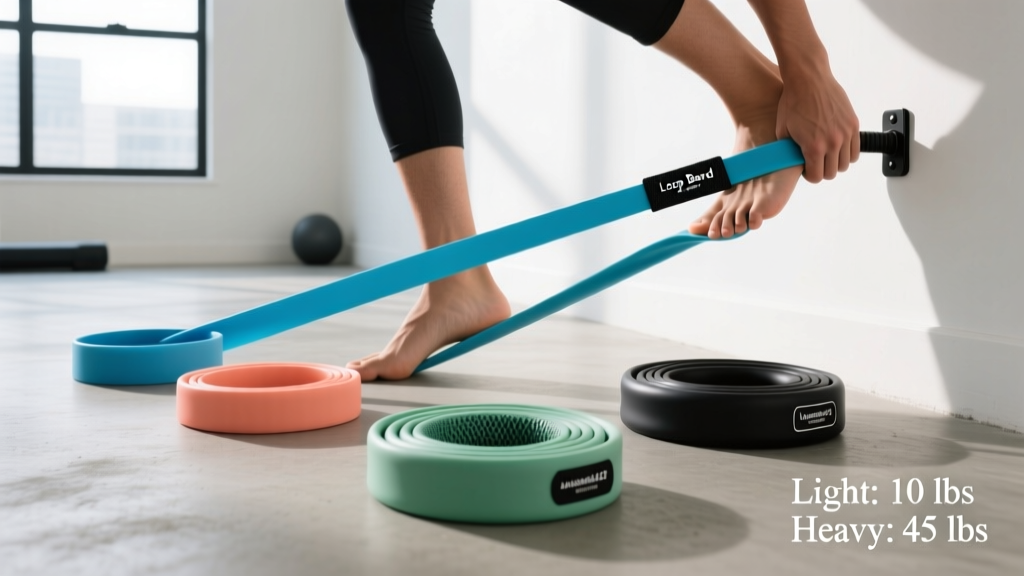
Loop bands (often called flat resistance bands or pull-up assist bands) are the undisputed kings of heavy load-bearing and compact storage. Because they lack metal hardware, they are significantly easier to roll up and tuck into a side pocket or mat sleeve.
1. Rogue Fitness Monster Bands
Price: $17.50 - $38.00 per band
Best For: Heavy compound movements, pull-up assistance, barbell speed work.
Rogue's Monster bands are constructed from layered natural latex, molded into a continuous loop. The 1/2-inch 'Echo' band provides 25-65 lbs of resistance and is our top pick for general fitness. Failure Mode Insight: Natural latex is highly susceptible to UV degradation and ozone cracking. If you leave these in the trunk of your car under direct sunlight, you will see micro-tearing along the edges within three months. Always store them in the dark interior of your bag.
2. TheraBand CLX (Consecutive Loops)
Price: $18.00 - $25.00
Best For: Clinical rehab, Pilates, grip-free isolation.
The TheraBand CLX features a unique loop-in-loop design that eliminates the need to wrap the band around your wrists or ankles, reducing joint friction. Made from latex-free TPE, it is ideal for users with latex allergies. While it maxes out at around 15 lbs of resistance, the TheraBand Academy notes that this specific geometry improves proprioceptive feedback during rotator cuff and ankle stabilization exercises.
Hands-On Review: Top Tube Band Systems
Tube bands utilize a hollow cylindrical core and terminate in plastic plugs that attach to handles via metal carabiners. They excel at mimicking the biomechanics of dual-cable crossover machines, making them superior for chest flyes, tricep pushdowns, and bicep curls.
1. Bodylastics Stackable Tube Bands (14-Piece Set)
Price: $49.95
Best For: Full-body hypertrophy, travel gym setups.
Bodylastics remains the gold standard for tube systems due to their patented Snap Guard technology. Inside every latex tube is a woven nylon safety cord that catches the handle if the latex sheath ruptures. Expert Critique: The included stamped-steel carabiners are the weak link. Under loads exceeding 70 lbs, the carabiner gate spring can fatigue, or the metal can warp. We highly recommend upgrading to the zinc-alloy carabiners sold separately for heavy pressing movements.
2. Undersun Fitness Resistance Bands
Price: $69.00
Best For: Advanced bodybuilding, TA2 program integration.
Undersun bands feature a thicker latex wall and higher-quality, ergonomically curved foam handles. The tension profile is noticeably stiffer at the beginning of the stretch compared to Bodylastics, providing a more aggressive peak contraction. However, the bulky handles and heavy-duty carabiners make them a nightmare to store loosely in a bag.
Expert Warning: The Snag HazardNever toss bare tube bands into the main compartment of your bag. The metal carabiners and hard plastic handles will easily scratch, puncture, or scuff the polyurethane (PU) or suede surface of premium yoga mats (like the Liforme or Manduka PRO). Always isolate hardware.
The Logistics: Packing a Gym Bag That Holds a Yoga Mat
Finding a high-quality gym bag that holds a yoga mat is only half the battle; organizing the interior so your equipment remains pristine is where most athletes fail. Modern duffels and studio backpacks typically feature an exterior compression strap sleeve or a dedicated ventilated mat compartment. Here is our step-by-step framework for packing your bands and mat together without damage.
- The Mat Sleeve Strategy (For Loop Bands): Because flat loop bands lack hardware, they are perfectly suited for mat sleeves. Fold your Rogue Monster bands into tight 4-inch squares and slide them directly into the exterior mat sleeve alongside your rolled mat. The compression of the rolled mat will keep the bands flat and prevent them from unfolding into a tangled knot.
- The Mesh Pouch Isolation (For Tube Bands): If you are packing tube bands like the Bodylastics set, you must neutralize the carabiners. Clip all carabiners together into a single 'daisy chain' to prevent them from scratching each other or your gear. Place the entire chained set into a heavy-duty mesh drawstring pouch before inserting it into your bag's shoe compartment or main cavity.
- Handle Placement: Never place rigid tube band handles against the face of your yoga mat. Store handles in the interior zippered mesh pockets of your gym bag, keeping them completely separated from the mat's delicate top layer.
Expert Decision Framework: Which Should You Buy?
Choosing between loop and tube bands ultimately depends on your primary training modality and how you commute to your workout.
- Choose Loop Bands If: You prioritize powerlifting, need pull-up assistance, perform heavy glute bridges, or have limited space in your gym bag that holds a yoga mat. They are indestructible when cared for and offer the highest weight-to-cost ratio.
- Choose Tube Bands If: Your routine heavily features bodybuilding isolation movements (flyes, lateral raises, tricep extensions), you require handles for grip fatigue management, or you are following a specific cable-replacement program like TA2.
- The Hybrid Approach: For the ultimate mobile gym, purchase a single heavy loop band (1/2 inch) for lower body and pull-up work, and a lightweight 3-tube stackable set for upper body isolation. This combination weighs less than 3 lbs and fits effortlessly into any studio bag.
Frequently Asked Questions
Can I use loop bands for chest presses instead of tube bands?
Yes, but the biomechanics change. To perform a chest press with a loop band, you must anchor it behind your back and thread your hands through the loops. This creates significant friction against your skin and armpits at the bottom of the movement. Tube bands with handles eliminate this friction, making them vastly superior for high-rep pressing.
How often should I replace my resistance bands?
According to guidelines from the Centers for Disease Control and Prevention (CDC) regarding safe strength training equipment, elastic bands should be inspected before every use. If you train 3-4 times a week, expect to replace natural latex loop bands every 8-12 months due to unavoidable oxidation, and tube bands every 6-8 months due to the stress placed on the plastic plug insertion points.
Will a yoga mat strap hold my resistance bands?
Most standard yoga mat straps are designed only to bear the 3-5 lb weight of the mat itself. If you attempt to clip heavy tube bands to the D-rings of a cotton mat strap, the stitching will tear under the dynamic load of a stretched band. Always carry bands inside the bag's dedicated compartments or pouches, rather than hanging them from the exterior mat strap.
More gear to consider
All reviews
Resistance Band Setup: Levels, Types & Sanitize Yoga Mat Base

Subway and Yoga Mats vs Foam Rollers: Density & Size Guide

Setup: Gaiam Classic Solid 5mm Yoga Mat & Foam Roller Selection

Compact Pilates Layout: Accessories & Yoga and Pilates Mat Guide

Jump Rope Types Compared & How to Clean Liforme Yoga Mat
