
Longevity Guide: Home Ice Baths, Cold Plunges & Massage Gun Tools
Maximize the lifespan of your home ice bath, cold plunge tub, and massage gun tools with expert maintenance protocols, sanitation tips, and battery care.

The Hidden Depreciation of At-Home Recovery Tech
Investing in premium recovery equipment is a significant financial commitment. A high-end home ice bath and cold plunge tub setup, such as the Plunge Evolve Series (starting around $6,990) or the Renu Therapy Cold Stoic ($9,450), represents a major investment in your physiological health. Similarly, top-tier massage gun tools like the Theragun PRO Plus ($599) are engineered for daily abuse. However, according to the National Center for Complementary and Integrative Health, the therapeutic benefits of cold therapy are only realized when the equipment functions optimally. Neglecting routine maintenance does not just degrade performance; it leads to catastrophic failure modes, voided warranties, and the growth of dangerous waterborne pathogens. This comprehensive guide outlines the exact maintenance protocols required to protect your investment in 2026 and beyond.
Cold Plunge Tub & Ice Bath Maintenance Matrix
To systematize your upkeep, use the following maintenance matrix. This framework applies to both standalone acrylic tubs and integrated chiller systems, ensuring you never miss a critical service interval.
| Frequency | Maintenance Task | Target Component | Est. Time / Cost | Skill Level |
|---|---|---|---|---|
| Weekly | Rinse filter & check water clarity | 20-micron pleated filter | 5 mins / $0 | Beginner |
| Monthly | Vacuum condenser coils & check ozone | Chiller exterior & Ozone check-valve | 15 mins / $0 | Intermediate |
| Bi-Annually | Deep clean fins & replace UV-C bulb | Chiller interior & Sanitation module | 45 mins / $45 | Advanced |
| Annually | Replace check-valves & acrylic polish | Plumbing & Tub shell | 1 hour / $30 | Intermediate |
Chiller Compressor & Condenser Coil Care
The chiller is the heart of your cold plunge tub. Most residential units utilize 1/2 HP to 1 HP rotary compressors. The most common point of failure is condenser coil fouling. Dust, pet hair, and pollen clog the aluminum fins, forcing the compressor to overwork and eventually trip the internal thermal overload switch.
Actionable Protocol: Every 30 days, use a soft-bristle brush and a shop vac to clean the exterior grill. Bi-annually, remove the chassis cover and use a specialized fin comb (designed for 18 fins-per-inch spacing) to straighten bent coils and flush them with a low-pressure, non-acidic coil cleaner. Ensure your chiller has at least 24 inches of clearance on all sides for proper airflow; placing a chiller flush against an exterior wall will reduce its cooling efficiency by up to 30% and drastically shorten the compressor's lifespan.
Water Sanitation: Ozone, UV, and Hydrogen Peroxide
Stagnant water at 45°F to 55°F is a breeding ground for Pseudomonas and Legionella. The CDC's guidelines for aquatic facilities emphasize that continuous sanitation is non-negotiable, even in cold water environments. Modern home ice baths rely on ozone generators paired with UV-C light.
Verify your ozone generator is outputting between 50 mg/hr and 100 mg/hr. If the water develops a cloudy film or a musty odor, the ozone check-valve has likely failed, allowing water to backflow into the generator and burn out the corona discharge tube. Replace check-valves annually. Furthermore, UV-C bulbs lose their germicidal efficacy after roughly 9,000 hours of use; replace them every 12 to 14 months, even if they still emit a visible blue light. For supplemental sanitation, use 35% food-grade hydrogen peroxide (1 tablespoon per 100 gallons weekly) rather than chlorine, which can degrade the acrylic shell and rubber seals over time.
⚠️ Critical Warning: Never mix hydrogen peroxide with trace amounts of chlorine or bromine in your cold plunge. This creates an exothermic reaction that can warp the tub's acrylic lining, destroy your ozone generator, and release toxic gas.Preserving Your Massage Gun Tools: Battery and Motor Longevity
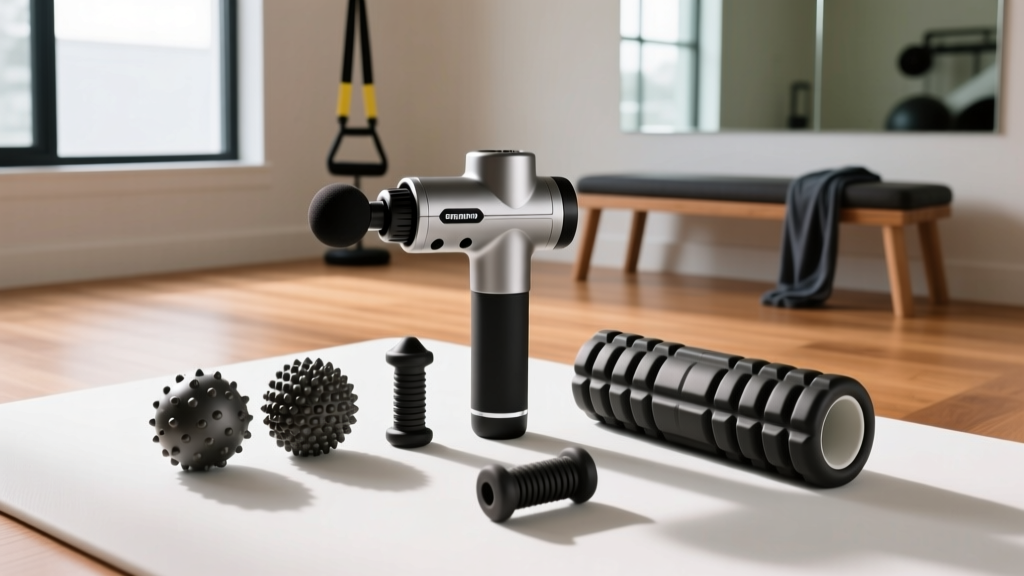
While your cold plunge handles systemic inflammation, your percussive therapy devices handle localized myofascial release. The internal mechanics of premium massage gun tools are highly sensitive to improper charging habits and physical neglect. Treating these devices as disposable will cost you hundreds of dollars annually in replacements.
Lithium-Ion Battery Cycle Management
Devices like the Hyperice Hypervolt 2 PRO utilize high-discharge 24V lithium-ion battery packs. According to research from Battery University, storing a lithium-ion battery at 100% charge accelerates capacity loss due to elevated internal voltage stress.
The 40-60% Rule: If you are not using your massage gun tools for more than two weeks, discharge or charge them to roughly 50% before storing them in a cool, dry place. Never leave the device plugged into the charger overnight once it reaches full capacity, as micro-cycling at 100% degrades the anode. Furthermore, avoid using the device while it is plugged into the wall; this generates excess heat that damages the battery management system (BMS) and limits the motor's peak torque output.
Attachment Head and Shaft Lubrication
The piston shaft of a massage gun operates at up to 3,200 RPM. Over time, the factory-applied grease dries out, leading to increased friction, louder operation, and premature motor burnout. Every six months, remove the attachment head, wipe the exposed metal shaft with a microfiber cloth, and apply a pea-sized amount of dielectric silicone grease. Avoid petroleum-based lubricants like WD-40, which will melt the internal plastic bushings, attract dust, and instantly void your manufacturer warranty.
Winterizing and Long-Term Storage Protocols
If you live in a climate where temperatures drop below freezing and your home ice bath is kept outdoors, winterizing is mandatory to prevent catastrophic pipe bursts. Ice expansion exerts over 100,000 PSI of pressure, which will easily rupture PVC plumbing and chiller heat exchangers.
- Power Down and Drain: Turn off the GFCI breaker. Open the primary drain valve and use a wet/dry vac to extract the remaining 2-3 gallons of water from the tub floor.
- Blow Out the Lines: Disconnect the hoses from the chiller. Use an air compressor set to a maximum of 30 PSI to blow out residual water from the internal plumbing and the chiller's titanium heat exchanger.
- Protect the P-Trap: Pour 1 cup of RV antifreeze (propylene glycol) into the drain to protect the P-trap from freezing and cracking.
- Chiller Storage: Disconnect the chiller, cap the water ports with threaded plugs to prevent insect infestation, and store the unit indoors in a climate-controlled garage.
Troubleshooting Edge Cases and Failure Modes
- Chiller Icing on Evaporator Coils: If the chiller runs constantly but water temperature rises, check for ice buildup on the internal copper coils. This usually indicates a refrigerant leak or a failing defrost thermistor. Do not chip the ice with metal tools; turn the unit off and let it thaw for 12 hours before calling a certified HVAC technician.
- GFCI Tripping on Cold Plunges: Nuisance tripping is often caused by moisture ingress in the outdoor outlet cover or a degrading heating element (if your unit has a heater/chiller combo). Replace the outdoor weatherproof cover with an extra-duty, in-use bubble cover rated for wet locations.
- Massage Gun Stalling Under Pressure: If your device stalls when applying moderate force (under the advertised 60 lbs of no-stall torque), the issue is rarely the motor. It is usually a depleted battery failing to deliver peak amperage, or a stripped internal drive belt. Contact the manufacturer for a BMS diagnostic before attempting a DIY teardown.
Frequently Asked Questions
How often should I change the cold plunge filter?
Standard 20-micron pleated filters should be rinsed weekly and replaced every 4 to 6 months. If you use the tub daily or have multiple users, upgrade to a 5-micron spun polypropylene filter and replace it every 60 days to maintain optimal water clarity and reduce strain on the circulation pump.
Can I leave my massage gun tools in a hot car?
No. The interior of a parked car can exceed 140°F in the summer. Exposing the lithium-ion batteries in your massage gun tools to extreme heat can cause the battery separator to melt, leading to thermal runaway, swelling, or even combustion. Always store your devices in a climate-controlled environment between 50°F and 77°F.
More gear to consider
All reviews
Trigger Point Tools & Massage Gun Accessories: 2026 Trends

Massage Gun Manufacturer Secrets: Infrared Sauna Beginner Guide

Compression Boots vs How to Use a Massage Gun After Workout (2026)

Hypervolt Plus Massage Gun & Stretching Tools: Fix 5 Common Mistakes
Trigger Point Tools & Massage Gun for Tight Calf Muscles: Space Guide
