Loadable Dumbbells: Space-Saving Dumbbell Exercises for Home Workout
Discover how loadable dumbbells with interchangeable plates optimize small home gym layouts for effective dumbbell exercises for home workout routines.

The Spatial Crisis: Why Fixed Racks Fail Small Rooms
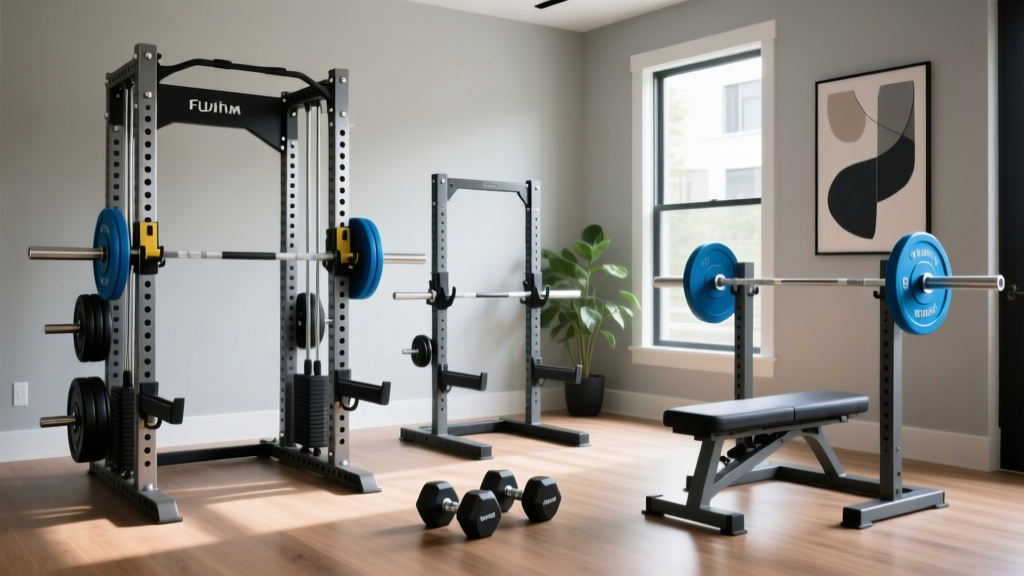
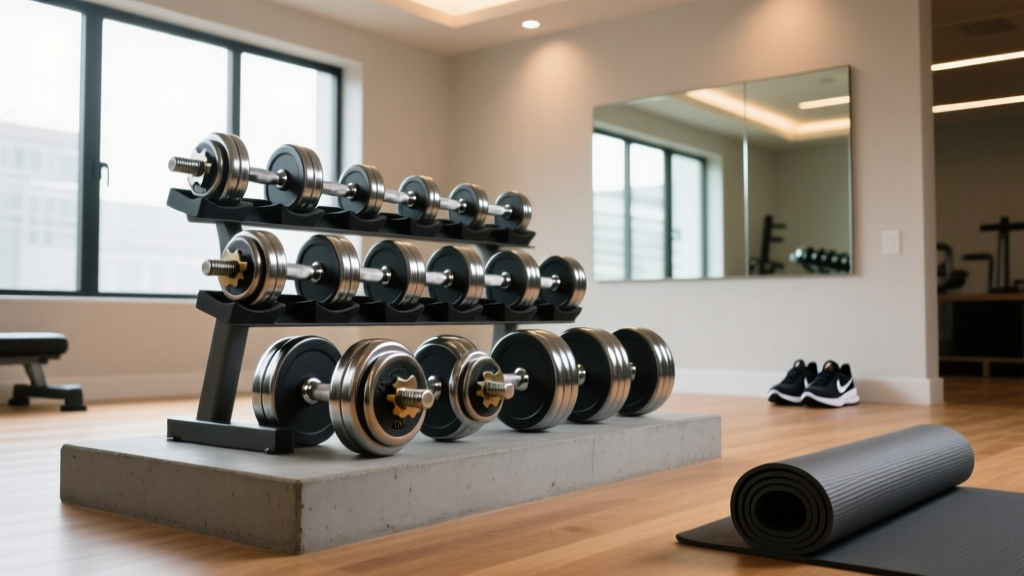
As urban housing footprints shrink and home gym real estate becomes increasingly premium in 2026, the traditional three-tier rubber hex dumbbell rack has become a spatial liability. A standard 5-to-50-pound fixed dumbbell set requires roughly 14 square feet of dedicated floor space, not including the clearance needed to actually pick up and maneuver the weights. For lifters dedicated to performing high-intensity dumbbell exercises for home workout routines, this footprint is often unsustainable.
The ultimate layout hack for compact training spaces is the loadable dumbbell with interchangeable plates. By utilizing Olympic or standard-sized sleeves that accept modular weight plates, you can replicate a 100-pound fixed dumbbell set in a fraction of the space. However, integrating loadable dumbbells requires a strategic approach to layout design, plate storage, and sleeve-length physics that most generic buying guides completely ignore.
Footprint Analysis: Fixed vs. Loadable vs. Dial-Adjustable
Before redesigning your gym layout, it is crucial to understand the spatial and financial trade-offs between the three primary dumbbell modalities. The data below illustrates why loadable setups dominate the space-to-utility ratio for serious lifters.
| Equipment Type | Total Footprint (Storage + Clearance) | Max Weight Capacity | Avg. Cost (2026) | Durability & Failure Risk |
|---|---|---|---|---|
| Fixed Hex Rack (5-50 lbs) | 14 sq. ft. (Rack) + 36 sq. ft. (Clearance) | 50 lbs per hand | $1,200 - $1,500 | High (Rubber degrades, handles snap) |
| Dial-Adjustable (e.g., Bowflex 552) | 1.5 sq. ft. (Tray) + 25 sq. ft. (Clearance) | 52.5 lbs per hand | $350 - $450 | High (Plastic dials break if dropped) |
| Loadable Olympic Dumbbells | 3 sq. ft. (Vertical Tree) + 36 sq. ft. (Clearance) | 100+ lbs per hand | $400 - $900 | Very Low (Solid steel, no moving parts) |
While dial-adjustable dumbbells win on pure storage footprint, they fail catastrophically if dropped during dynamic movements like dumbbell snatches or walking lunges. Loadable dumbbells offer the indestructible nature of fixed iron while maintaining a modular, space-efficient storage profile.
Top Loadable Handles for Compact Layouts
Not all loadable handles are created equal. The sleeve length and collar mechanism dictate how much weight you can load and how smoothly the dumbbell rotates during complex movements. According to BarBend's comprehensive testing on loadable dumbbells, sleeve tolerance and knurling depth are the primary differentiators.
Rogue Loadable Dumbbells (Olympic)
Priced at $195 per handle ($390 for a pair), the Rogue Loadable Dumbbells feature a massive 16.5-inch sleeve length. This allows you to load up to 120 pounds per hand using standard urethane plates. The hard chrome finish prevents rust in humid garage gyms, and the machined aluminum collars ensure plates never rattle loose. Layout Note: Because the sleeves are so long, these require wider plate storage trees to prevent the handles from clashing when hung vertically.
Titan Fitness Loadable Dumbbell Handles
At $89.99 per handle, Titan Fitness offers a budget-friendly alternative with a shorter 10-inch sleeve. The shorter sleeve makes the dumbbell feel more compact and closer to a traditional fixed dumbbell during pressing movements. However, the 10-inch sleeve severely limits maximum load capacity if you use thick bumper plates, forcing you to invest in thinner cast iron or urethane plates to maximize weight.
Layout Design: Creating a High-Efficiency Loading Zone
When programming dumbbell exercises for home workout routines, the transition time between sets can kill your heart rate and workout density. Your layout must minimize the distance between your lifting zone and your plate storage.
The 6x6 Lifting & Loading Matrix
Designate a 6-foot by 6-foot rubber-matted zone as your primary lifting area. Place a vertical A-frame plate tree exactly 18 inches outside the perimeter of your lifting mat. This specific 18-inch gap allows you to step off the mat, slide a plate off the vertical peg, and load the dumbbell resting on the floor without taking more than two steps. Avoid horizontal floor plate storage; bending over to pick up 45-pound plates from the floor repeatedly will fatigue your lower back before your actual workout even begins.
The Plate Thickness Problem: A Hidden Spatial Trap
The most common failure mode in small home gym layouts is buying the wrong type of interchangeable plates for loadable dumbbells. Many lifters attempt to use standard Olympic bumper plates on loadable dumbbell handles. This is a critical error for two reasons:
- Sleeve Real Estate: A standard 45-pound bumper plate is 2.5 inches thick. On a 10-inch sleeve (like the Titan Fitness model), you can only fit one 45-pound plate per side, leaving barely enough room to secure the collar. You are effectively capped at 110 pounds total.
- Clearance Interference: Bumper plates have a uniform 17.5-inch diameter regardless of weight. If you load 25-pound bumpers onto your dumbbells for deficit reverse lunges, the massive 17.5-inch diameter will strike the floor prematurely, ruining the range of motion and potentially damaging your flooring.
The Solution: Invest in Urethane Grip Plates or Calibrated Steel Plates. Urethane plates are incredibly dense, quiet when dropped, and feature a 3-finger grip design that makes loading and unloading them from a vertical tree significantly faster and safer in tight spaces.
Troubleshooting Dynamic Movements & Collar Security
Performing explosive dumbbell exercises for home workout sessions—such as dumbbell cleans, snatches, or farmer's carries—introduces severe lateral and rotational forces to the dumbbell sleeve. If your layout relies on cheap spin-lock collars, the vibration from these movements will inevitably cause the collar to unscrew mid-set, resulting in plates sliding off and destroying your floor (or your feet).
- Spin-Lock Collars: Only suitable for slow, controlled hypertrophy movements (e.g., bicep curls, chest presses). Never use them for dynamic lifts.
- Bolt-On Collars: Require an Allen key or wrench to tighten. Highly secure, but the time required to tighten them ruins workout density and supersets.
- Machined Aluminum Clamp Collars (Recommended): Using a lever-action clamp (similar to a barbell spring collar but sized for dumbbells) provides instant, rock-solid security. Allocate $40-$60 in your budget for high-quality quick-release dumbbell collars to maintain a seamless workflow in your compact gym.
Final Layout Recommendations for 2026
Optimizing a small room for free weights requires abandoning the commercial gym mindset. By anchoring your space with a pair of Olympic loadable dumbbell handles, pairing them with dense urethane grip plates, and utilizing a vertical A-frame tree positioned precisely 18 inches from your lifting zone, you can reclaim up to 10 square feet of valuable floor space. This spatial efficiency not only makes your home gym feel larger and less cluttered, but it also creates a frictionless environment where transitioning between heavy compound lifts and high-rep metabolic conditioning is seamless, safe, and highly effective.
More gear to consider
All reviews
Cast Iron vs Competition Kettlebells: Can You Use a Dumbbell for Swings?
Upgrade Your Dumbbell Arm Routine: Barbell Weight & Knurl Guide

Best Adjustable Dumbbells for the Trapezius Dumbbell Exercise (2026)
Wood Chop Exercise with Dumbbell: Best Neoprene Picks Compared

Troubleshooting Dumbbell Zottman Curls with Neoprene Home Weights