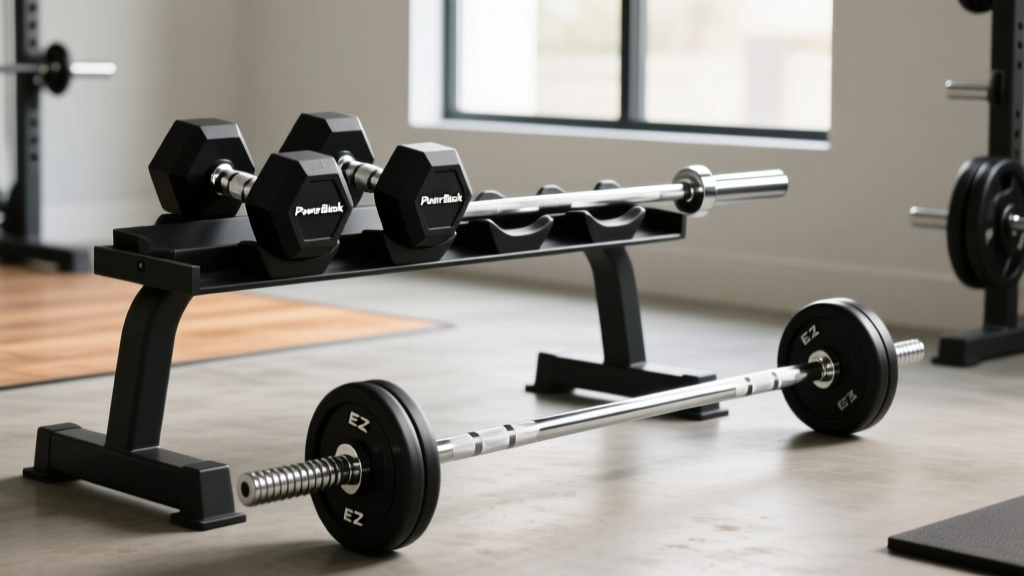
Incline Dumbbell Curl Bench Angle: Loadable Dumbbell Value Analysis
Discover how loadable dumbbells with interchangeable plates optimize your incline dumbbell curl bench angle. We break down the budget and value analysis.

The Biomechanical Tax: Why the Incline Dumbbell Curl Bench Angle Demands Precision
When building a home gym, the tendency is to prioritize heavy compound movements, often leaving isolation exercises as an afterthought. However, if your goal is maximum biceps brachii hypertrophy, the incline dumbbell curl is non-negotiable. The magic of this movement lies entirely in the incline dumbbell curl bench angle, which places the long head of the biceps under an extreme, stretch-mediated load. According to a comprehensive 2022 study published in the National Library of Medicine, training muscles at long muscle lengths (the stretched position) yields significantly superior hypertrophic adaptations compared to shortened positions.
But this biomechanical advantage comes with a hidden 'tax' on your equipment. At a 30 to 45-degree incline, the mechanical disadvantage at the bottom of the movement is severe. A standard 5-pound jump between fixed dumbbells can represent a 15% to 20% increase in torque on the distal biceps tendon at the very bottom of the stretch. This is where the loadable dumbbell with interchangeable plates transitions from a niche accessory to an absolute necessity for joint health and continuous progression.
The 30 vs. 45 Degree Dilemma and Tendon Stress
Setting your adjustable bench to 30 degrees maximizes the stretch on the long head but requires immense shoulder stability and places the biceps tendon under maximum tension at the initiation of the concentric phase. A 45-degree angle offers a slight mechanical advantage while still preserving the stretch. As detailed by the biomechanics experts at ExRx.net, the biceps brachii acts as both an elbow flexor and a powerful supinator. When you are locked into an incline, your ability to cheat the weight up using momentum is eliminated. You are entirely reliant on precise, incremental loading to avoid tendon micro-tears.
Fixed vs. Loadable Dumbbells: A 2026 Budget Breakdown
Let us look at the hard numbers. Outfitting a home gym with fixed dumbbells to accommodate the delicate progression required for incline curls is financially inefficient. Below is a comparative value analysis of fixed racks versus loadable dumbbell systems utilizing interchangeable Olympic plates.
| Equipment Setup | Estimated 2026 Cost | Cost Per Pound | Max Capacity (Per Hand) | Space Footprint |
|---|---|---|---|---|
| Fixed Urethane Dumbbells (5-50 lb set, 5lb jumps) | $1,250 - $1,600 | ~$2.80 / lb | 50 lbs | ~40 sq ft (Multi-tier rack) |
| Rogue Loadable Handles + 200 lbs Steel Plates | $415 - $450 | ~$1.10 / lb | 100+ lbs | ~12 sq ft (Single tree or floor) |
| Titan Fitness Olympic Handles + Bumper Plates | $320 - $380 | ~$1.25 / lb | 85 lbs (Sleeve limit) | ~12 sq ft |
The ROI of the loadable dumbbell with interchangeable plates is undeniable. For the price of a single mid-tier adjustable bench, you can purchase a pair of high-quality Olympic loadable handles and enough precision-machined steel plates to take your incline curls from a 10-pound warm-up to a 100-pound heavy working set.
The Micro-Loading Necessity for Isolation Movements
The true value of interchangeable plates is not just the maximum weight; it is the minimum increment. When optimizing your incline dumbbell curl bench angle, you need fractional plates. Adding a pair of 0.5 lb or 1 lb micro-plates to your loadable handles allows you to add just 1 or 2 pounds total to the movement. Over a 12-week hypertrophy block, this micro-loading prevents the stagnation and tendon inflammation that inevitably occurs when lifters are forced to jump from 25 lb to 30 lb fixed dumbbells on a steep 30-degree incline.
Pro-Tip: The Fractional Plate Stack
To perfectly load 22.5 lbs per hand for a highly specific incline curl working set, use a loadable handle (approx. 10-12 lbs empty) paired with one 5 lb plate, two 2.5 lb plates, and a 1 lb fractional plate on each side. This level of granularity is physically impossible with standard fixed hex dumbbells and prohibitively expensive with premium adjustable dial-systems.
Top Loadable Systems for Interchangeable Plates
Not all loadable handles are created equal. When performing supinating movements like the incline curl, the sleeve design and knurling pattern dictate the safety and effectiveness of the set.
- Rogue Fitness Loadable Dumbbell Handles (~$195/pair): Featuring a 1.25-inch diameter grip and deep, aggressive knurling. The 10.5-inch sleeve length accommodates a massive amount of plates. The zinc-plated finish prevents corrosion from sweat during high-volume hypertrophy blocks. These are the gold standard for serious lifters who treat their dumbbells like miniature barbells.
- Titan Fitness Olympic Dumbbell Handles (~$89.99/pair): The budget-friendly alternative. The knurling is milder, which some lifters prefer for high-rep bicep work to avoid tearing calluses. However, the sleeve length is slightly shorter, capping your maximum weight around 85 lbs per hand depending on the thickness of your interchangeable plates.
- Ironmaster Quick-Lock V2 (~$399+): While not a traditional 'Olympic sleeve' handle, it uses a proprietary interchangeable plate system with a screw-lock mechanism. It feels exactly like a fixed dumbbell, eliminating plate rattle, though it locks you into their specific plate ecosystem rather than utilizing standard gym plates.
Real-World Failure Modes and Edge Cases
Buying the gear is only half the battle. Understanding how loadable dumbbells fail during specific exercises is where true expertise lies. The incline dumbbell curl presents unique mechanical stresses that expose poorly configured loadable handles.
The Supination Torque and Collar Back-Off
This is the most critical edge case for loadable dumbbells. An effective incline curl begins with a neutral grip at the bottom of the stretch and finishes with full supination at the top. This rotational force, combined with the inertia of the interchangeable plates, creates a twisting torque on the sleeve. If you are using standard threaded spin-lock collars, this repeated supination will literally unscrew the collar by a fraction of a millimeter per rep. By rep eight, the plates rattle, shifting the center of mass laterally and placing uneven stress on the medial epicondyle.
The Fix: Never use threaded spin-lock collars for incline curls. Invest in snap-lock collars (such as Lock-Jaw or Ollie Collars) that grip the sleeve via high-tension polymer teeth, completely neutralizing rotational torque and keeping your interchangeable plates dead-silent and secure.
Handle Diameter and Grip Fatigue
Standard Olympic loadable handles typically feature a 1.25-inch to 1.3-inch grip diameter, which is thicker than the 1.1-inch handle found on most fixed urethane dumbbells. During heavy incline curls, this thicker grip will tax your forearm flexors and brachioradialis before your biceps reach true muscular failure. If grip is your limiting factor, utilize lifting straps for your heaviest working sets to ensure the distal biceps tendon and muscle belly absorb the mechanical tension dictated by your bench angle.
Final Verdict: Calculating Your ROI
If your training revolves around optimizing biomechanics and prioritizing joint longevity, the fixed dumbbell rack is an outdated relic for isolation work. The loadable dumbbell with interchangeable plates offers unmatched financial value, reducing your equipment footprint by 70% while cutting your cost-per-pound in half. More importantly, when paired with fractional plates and secure snap-lock collars, it provides the exact micro-increments required to safely conquer the extreme mechanical disadvantage of the 30-degree incline dumbbell curl bench angle. In 2026, smart home gym economics dictate that you load your own handles, control your own increments, and protect your tendons.
More gear to consider
All reviews
EZ Curl Bar vs Straight Bar Longevity: Care Tips & Single Dumbbell Good Morning Alternatives

Best Adjustable Dumbbells for Dumbbell Shoulder Exercises (2026)

Power Rack vs Squat Rack vs Stand for Dumbbell Glute Exercises

Beyond Dumbbell Exercises at Home: Bumper vs Iron Plate 2026 Trends
Loadable Dumbbells for Upright Rows: 2026 Value Breakdown