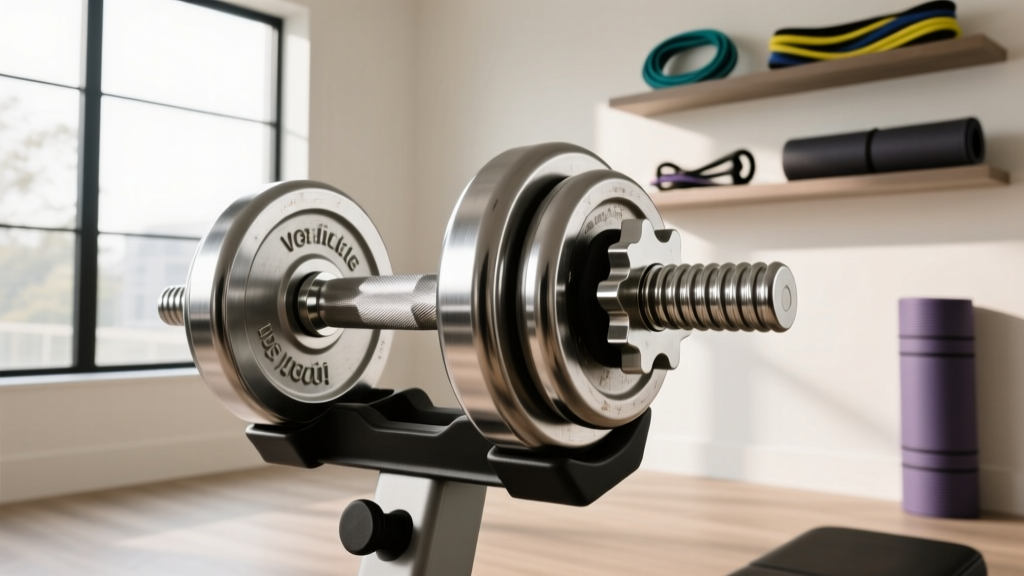
Loadable Dumbbell vs Dumbbell Machine: Maintenance & Care Guide
Master loadable dumbbell maintenance. Learn to prevent thread galling, sleeve scoring, and extend the life of your interchangeable plate handles.

The Mechanical Contrast: Loadable Handles vs. The Dumbbell Machine
In the modern home gym landscape of 2026, space efficiency and cost-per-pound are paramount. When building a free weight arsenal, lifters generally face a crossroads: invest in a selectorized dumbbell machine—a system relying on internal gears, magnetic pins, and fragile plastic housings—or opt for the rugged simplicity of a loadable dumbbell with interchangeable plates. While a mechanical dumbbell machine offers rapid weight changes, it introduces a host of maintenance nightmares, from jammed selector pins to cracked ABS plastic trays.
Conversely, a plate-loaded dumbbell handle is a masterclass in mechanical durability. Whether you are using the screw-lock mechanism of the Ironmaster Quick-Lock V2 (retailing around $389 for a base kit) or the Olympic sleeves of the Rogue Loadable Dumbbell ($145 per handle), the absence of internal moving parts means these tools can literally last a lifetime. However, 'indestructible' does not mean 'maintenance-free.' Improper care of loadable handles leads to thread galling, sleeve scoring, and bushing degradation. This guide details the exact maintenance protocols required to maximize the longevity of your plate-loaded dumbbells.
⚠️ Critical Warning: The WD-40 Myth
Never use standard WD-40 on your loadable dumbbell sleeves or locking threads. WD-40 is primarily a solvent and water displacer, not a long-term lubricant. It will strip existing factory grease, attract microscopic iron dust from your weight plates, and create an abrasive paste that accelerates metal wear. Always opt for dedicated machinery oils or dry PTFE sprays.
Anatomy of Failure: Where Loadable Dumbbells Break Down
To maintain your equipment, you must first understand how it fails. Unlike a selectorized dumbbell machine where failure usually means a broken cable or a stuck dial, loadable dumbbells suffer from metallurgical and friction-based degradation.
1. Thread Galling on Screw-Lock Systems
Models like the Ironmaster Quick-Lock or various Titan Fitness spin-lock handles utilize threaded locking pins or collars. Galling occurs when two metal surfaces (often stainless steel or zinc-plated carbon steel) slide against each other under high pressure, causing microscopic tearing and cold-welding. If you frequently drop your dumbbells on the locking collar, the impact can slightly deform the thread pitch. When you attempt to force the locking pin back in, the misaligned threads strip, rendering the handle unsafe.
2. Sleeve Scoring and Bushing Wear
For Olympic-style loadable handles (featuring 1.96-inch / 50mm sleeves), the inner sleeve surface rotates against bronze or composite bushings. If chalk dust, rust, or iron particulate from your bumper plates enters this gap, it acts like sandpaper. Over time, this scores the hard chrome or zinc plating on the sleeve. Once the plating is breached, the underlying carbon steel will oxidize rapidly, leading to pitting and a rough rotation that ruins the feel of dynamic movements like dumbbell snatches.
3. Spring Collar Metal Fatigue
If your loadable dumbbell relies on standard Olympic spring collars rather than screw-locks, leaving the collars compressed on the sleeve between workouts causes metal fatigue. The spring steel loses its tensile memory, resulting in a collar that can no longer provide the necessary lateral clamping force to keep plates secure during heavy incline presses.
The Lubricant & Cleaning Matrix
Selecting the correct chemical agent for your specific dumbbell finish and mechanism is critical. Refer to the matrix below to match your equipment with the correct maintenance supplies.
| Component / Finish | Recommended Agent | Application Tool | Frequency |
|---|---|---|---|
| Hard Chrome Sleeves | 3-IN-ONE Multi-Purpose Oil | Microfiber Cloth | Monthly |
| Zinc-Plated Threads | White Lithium Grease | Nylon Bristle Brush | Quarterly |
| Bare Carbon Steel Knurling | Mineral Oil / Rust Inhibitor | Brass Wire Brush | Bi-Weekly |
| Urethane/Rubber Plates | Mild Dish Soap & Water | Damp Sponge | As Needed |
The 4-Step Longevity Protocol
To keep your loadable dumbbells performing flawlessly, integrate this protocol into your gym routine. According to BarBend's equipment maintenance guides, consistent, light maintenance prevents 90% of catastrophic equipment failures in home gyms.
- The Dry Brush Purge (Pre-Workout): Before loading plates, take a stiff nylon brush and scrub the threading on the locking pin and the inner collar of the handle. This removes dried sweat, chalk, and environmental dust that cause cross-threading.
- The Sleeve Polish (Monthly): Apply 3 to 5 drops of 3-IN-ONE oil directly onto the bare metal sleeve. Slide a standard 5lb or 10lb iron plate back and forth across the sleeve 10 times. The plate acts as a lapping tool, distributing the oil evenly and polishing out microscopic surface rust. Wipe away the excess black residue with a clean rag.
- Thread Lubrication (Quarterly): For screw-lock systems, apply a pea-sized amount of white lithium grease to the male threads of the locking pin. Screw it in and out of the handle three times to distribute the grease into the female threads. This prevents galling and ensures the 1.5-turn lock remains buttery smooth.
- Collar Decompression (Post-Workout): Never leave your dumbbells loaded. Unload the plates and remove spring collars from the sleeves. Store collars hanging on a rack hook to preserve their spring tension.
Environmental Controls: The Invisible Enemy
The environment in which you store your interchangeable plates and handles dictates their lifespan. Basements and garages are notorious for humidity fluctuations.
"Zinc plating is a sacrificial anode. It will oxidize before the steel beneath it does. However, in environments where relative humidity (RH) consistently exceeds 60%, the zinc will develop 'white rust' (zinc oxide), which flakes off and exposes the vulnerable carbon steel core."
To combat this, maintain your gym space at an RH of 45% to 55% using a commercial dehumidifier. If you live in a coastal or high-humidity area and cannot control the ambient air, consider upgrading to handles with stainless steel or QPQ (Quench-Polish-Quench) black oxide finishes, which offer vastly superior corrosion resistance compared to standard bright zinc. Furthermore, following the Rogue Fitness official care instructions for all free-weight steel—regardless of brand—ensures you are treating the metallurgy with the respect it requires.
Frequently Asked Questions
Can I use my loadable dumbbell handles for drop sets?
While loadable dumbbells are incredibly robust, dropping them directly onto the locking collars is the primary cause of thread deformation. If you are performing heavy drop sets, drop the dumbbells onto the flat of the plates, not the ends. If your handles feature a specialized crash-bezel (like some high-end competition models), they can withstand end-impacts, but standard handles should be lowered or dropped flat.
Why do my plates rattle on the loadable handle compared to a fixed dumbbell?
Fixed rubber or urethane dumbbells are manufactured to exact tolerances where the plate is chemically bonded or friction-pressed to the handle. Loadable dumbbells require a slight clearance (usually 0.5mm to 1mm) so that standard Olympic plates can slide on and off easily. To eliminate rattle and increase safety, use precision-machined steel plates or add a thin rubber shim washer between the collar and the first plate.
Is a loadable dumbbell safer than a selectorized dumbbell machine?
From a structural integrity standpoint, yes. A high-quality loadable handle forged from 1095 carbon steel or 416 stainless steel has no plastic components, internal cables, or magnetic pins that can snap mid-rep. As long as you verify that your locking collars are fully secured before every set, a loadable system eliminates the catastrophic 'weight-dump' failures occasionally seen in aging selectorized machines.
More gear to consider
All reviews
Cast Iron vs Competition Kettlebells: Dumbbell Holds & Grip Guide

Zone Setup: Neoprene Gear for HIIT Dumbbell Exercises

EZ Curl Bar vs Straight Bar Care & Seated Military Press with Dumbbells
Cast Iron vs Competition Kettlebells & Dumbbell Exercises for Back of Arms

Beyond the Anime Dumbbell: Cast Iron vs Competition Kettlebells
