
Optimizing Gym Layouts for Loadable Dumbbell Shoulder Press
Maximize your home gym footprint. Learn how to design a compact layout for loadable dumbbells and master the dumbbell shoulder press safely.

The Footprint Math: Fixed Racks vs. Loadable Systems
When designing a home gym in a spare bedroom, garage bay, or apartment alcove, spatial efficiency is the ultimate bottleneck. Traditional fixed dumbbell racks are notoriously inefficient. A standard commercial 5-to-50-pound rubber hex dumbbell rack measures approximately 52 inches wide and 28 inches deep. When you factor in the mandatory 36-inch clearance aisle required to safely pick up and maneuver the weights, a fixed rack consumes roughly 32 square feet of usable floor space.
In contrast, a high-capacity loadable dumbbell system with interchangeable plates collapses that footprint dramatically. By utilizing a single pair of loadable handles and a compact vertical plate tree, you can achieve a weight range of 5 to 120 pounds per hand while occupying less than 4 square feet of total floor space. This 87% reduction in footprint is the cornerstone of modern micro-gym layout design, freeing up critical square footage for the actual execution of compound movements.
Space Optimization Data: A 10-pair fixed dumbbell set requires ~32 sq. ft. of operational space. A 120-lb loadable dumbbell kit with a vertical plate tree requires ~4.5 sq. ft. of operational space.Designing the "Strike Zone" for the Dumbbell Shoulder Press
While loadable dumbbells save floor space, they introduce a unique spatial challenge during lateral and overhead movements. The dumbbell shoulder press requires significant lateral elbow flare and vertical clearance. When performing a heavy shoulder press, the distance between your left and right elbows at the bottom of the eccentric phase can easily span 42 to 48 inches for an average-sized male lifter.
The complication arises from the physical length of loadable dumbbells. Unlike fixed hex dumbbells, which maintain a relatively compact profile, loadable dumbbells elongate as you add interchangeable plates. If your adjustable bench is positioned too close to a wall, the extended ends of the dumbbells will strike the drywall during the descent phase of the press, forcing you to compromise your range of motion or risk structural damage to your home.
Calculating Wall Proximity and Lateral Clearance
To optimize your layout for the dumbbell shoulder press, you must calculate the "Strike Zone" based on the specific loadable dumbbell model you own. The formula for minimum lateral wall clearance from the center of your bench is:
(Half of lifter's shoulder width + Full length of loaded dumbbell + 4 inches of safety buffer) = Minimum Wall Distance
| Dumbbell Model | Max Weight Capacity | Overall Length at Max Load | Min. Lateral Wall Clearance (Per Side) |
|---|---|---|---|
| Ironmaster Quick-Lock V2 | 120 lbs | ~14.5 inches | 38 inches |
| Nuobell Adjustable | 80 lbs | 15.7 inches (Fixed) | 39 inches |
| Titan Fitness Loadable | Variable (Olympic) | ~18.0 inches | 42 inches |
| Yes4All Spin-Lock | 100 lbs | ~16.5 inches | 40 inches |
If your gym space is only 8 feet wide, placing a bench in the exact center leaves 48 inches per side. This is sufficient for Ironmaster or Nuobell systems, but leaves virtually zero margin for error if you are using Olympic-style loadable handles with wide bumper plates.
2026 Market Analysis: Top Loadable Dumbbells for Compact Layouts
Choosing the right equipment is just as critical as measuring the room. In the current 2026 fitness equipment market, loadable dumbbells have evolved significantly in terms of plate density and locking mechanisms. Here is how the top contenders impact your spatial layout:
1. Ironmaster Quick-Lock V2 (The Heavy-Duty Standard)
Price Range: $429 (Base 75lb kit) to $799 (120lb add-on kit).
Spatial Profile: Ironmaster uses square, machined steel plates. This design is brilliant for space optimization because the dumbbells can be safely dropped on the floor without rolling away, eliminating the need for a dedicated rubber matting "drop zone." The square profile also allows them to be stacked flush against a wall when not in use. However, the locking screw mechanism requires an extra 10 seconds per dumbbell to adjust, which can disrupt superset flows in a tight space.
2. Nuobell (The Sleek Space-Saver)
Price Range: $329 (50lb set) to $429 (80lb set).
Spatial Profile: Nuobell utilizes a twist-handle mechanism that slides steel plates up and down a central rail. The footprint of the base tray is incredibly small (roughly 17 x 8 inches). The major layout advantage is the fixed 15.7-inch length, which mimics a standard fixed dumbbell, making the transition to the dumbbell shoulder press biomechanically seamless. The drawback is the delicate base tray; if you drop a Nuobell on a concrete garage floor, the internal alignment rails can bend, rendering the weight adjustment useless.
3. PowerBlock Elite USA (The Compact Cube)
Price Range: $319 to $419.
Spatial Profile: PowerBlock's caged, rectangular design offers the smallest overall volume. However, from a layout and biomechanics perspective, the closed cage restricts wrist extension and can interfere with the bar path during heavy shoulder presses and skull crushers. While it wins on raw cubic-inch storage, it loses on functional movement clearance.
Plate Storage Integration & Layout Flow
A loadable dumbbell system is only as space-efficient as its plate storage solution. Dumping interchangeable plates into a plastic bin creates a chaotic tripping hazard and ruins the operational flow of your gym.
Layout Pro-Tip: Never store loadable dumbbell plates on the floor. Invest in a vertical "A-frame" plate tree or wall-mount a pegboard specifically rated for 150+ lbs of sheer steel. Mounting the plate tree directly adjacent to the head of your adjustable bench reduces the "steps per set" to zero, keeping your heart rate up and your footprint tight.
For micro-gyms under 100 square feet, consider a "T-Shape" layout. Place the vertical plate tree against the center of the back wall. Position the head of your adjustable bench perpendicular to the plate tree, forming a T. This allows you to sit on the bench, reach backward to load or unload the dumbbells on the tree, and immediately execute your sets without ever standing up or navigating around the equipment.
Troubleshooting Common Layout Failures
Even with meticulous planning, compact gym layouts often suffer from specific edge-case failures during heavy compound lifts. Here is how to troubleshoot the most common spatial conflicts:
- The "Elbow Strike" Edge Case: During the dumbbell shoulder press, lifters often unconsciously flare their elbows wider as they fatigue. If your lateral wall clearance is exactly at the minimum threshold, your elbows will graze the wall on reps 6 through 8. Fix: Angle your adjustable bench 15 degrees away from the parallel wall line to artificially increase lateral clearance on the pressing side.
- Ceiling Height Restrictions: A standard 8-foot ceiling leaves roughly 96 inches of vertical space. If you are 6 feet tall and sitting on a 17-inch bench, your head is at 89 inches. Pressing a 15-inch tall loadable dumbbell overhead will result in a ceiling strike. Fix: Lower the bench backrest to 75 degrees (a slight incline) rather than a strict 90-degree vertical press. This shifts the bar path forward, clearing the ceiling while still heavily targeting the anterior deltoids.
- Collar Slippage on Spin-Locks: Budget loadable dumbbells with star-lock or spin-lock collars require significant thread engagement. In a tight space where you might bump the dumbbell against a rack while picking it up, the collar can loosen, causing plates to slide outward mid-rep. Fix: Always upgrade to spring-clip collars or micro-loadable quick-clamps that secure the plates without relying on threaded handles.
By treating your home gym not just as a collection of equipment, but as an integrated spatial system, you can safely execute heavy, expansive movements like the dumbbell shoulder press without compromising on square footage or safety. According to home gym layout guidelines discussed by experts at Garage Gym Reviews, prioritizing the operational envelope of the lifter over the storage footprint of the weights is the hallmark of a truly optimized training space.
More gear to consider
All reviews
Barbell Collar Types Compared: Beyond the 5 Day Dumbbell Workout

Power Rack vs Squat Rack vs Squat Stand & Dumbbell Pads Guide

Best Loadable Dumbbells 2026: Reviews & Dumbbell Exercises PDF
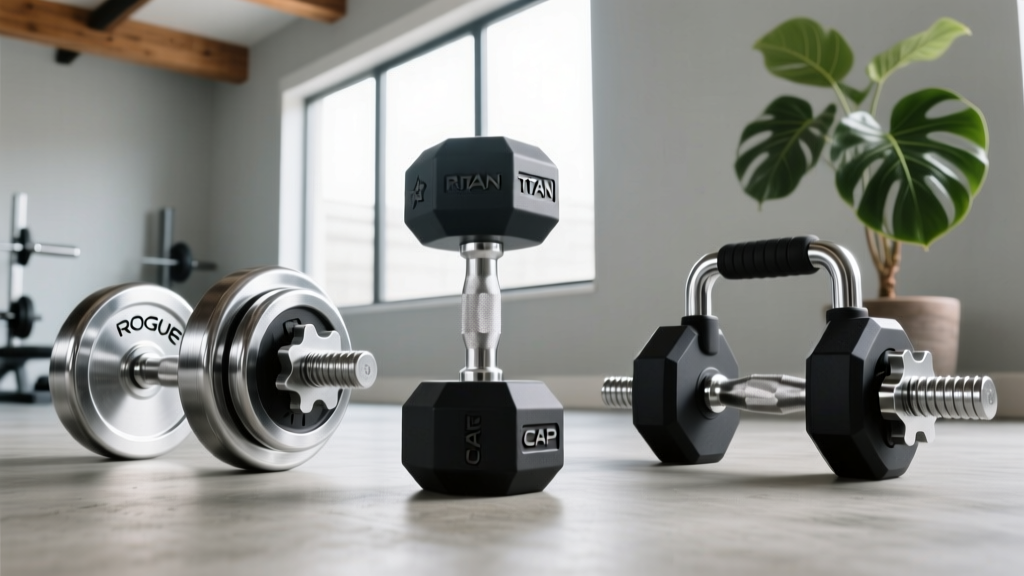
Top Loadable Dumbbells for Home Dumbbell Exercises (2026)
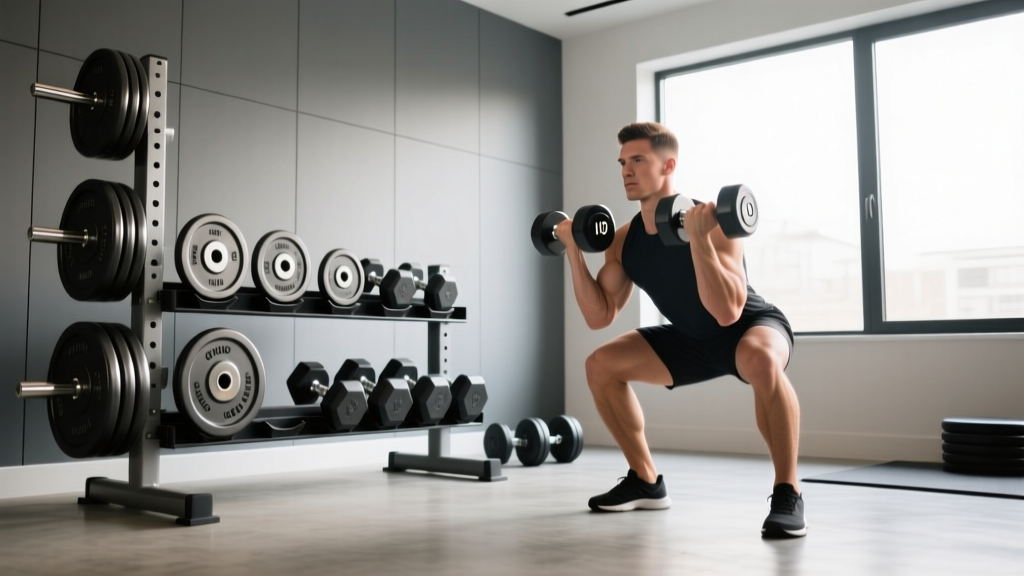
Home Gym Setup: Plate Types and Dumbbell Exercises for Beginners
