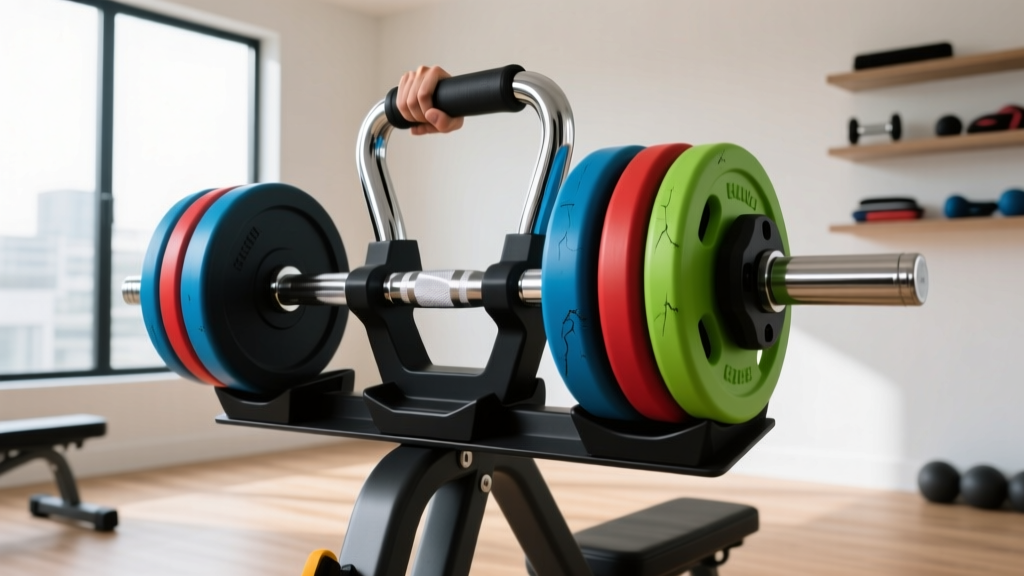
Loadable Dumbbell Care: Standing Skull Crushers with Dumbbells
Learn essential maintenance for loadable dumbbells with interchangeable plates to ensure safety during standing skull crushers with dumbbells.

The Hidden Dangers of Interchangeable Plate Systems
Loadable dumbbells with interchangeable plates have revolutionized the modern home gym. By allowing lifters to swap plates on a single handle, systems like the Ironmaster Quick-Lock V2 ($419 per pair), the Rogue Loadable Dumbbell ($195 per pair), and budget-friendly Yes4All Spin-Lock sets ($65 to $90) save thousands of dollars and massive amounts of floor space compared to full commercial urethane dumbbell racks. However, this mechanical modularity introduces a critical point of failure: the locking collar and sleeve interface.
While a failing collar during a floor press is an inconvenience, a failing collar during overhead or semi-overhead tricep isolation work is a severe safety hazard. When you are performing standing skull crushers with dumbbells, the equipment is suspended directly above your cranium and cervical spine. Understanding the biomechanical stress this specific movement places on your loadable dumbbells—and implementing a rigorous maintenance care protocol—is non-negotiable for long-term equipment longevity and personal safety.
Biomechanical Stress: Why Standing Skull Crushers with Dumbbells Test Your Gear
According to exercise biomechanics databases like ExRx, the standing skull crusher requires the shoulder to remain in a fixed state of flexion while the elbows undergo flexion and extension. Unlike a standard dumbbell press where the weight is stacked vertically over the wrist and the plates are compressed flush against the collar by gravity, standing skull crushers with dumbbells introduce complex lateral and rotational vectors.
The Physics of Plate Chatter
When you lower the dumbbells toward your forehead or slightly behind your head, gravity pulls the interchangeable plates laterally against the inner lip of the sleeve rather than compressing them against the locking nut. If there is even a 1-millimeter tolerance gap between the plates, the eccentric phase of the movement causes micro-vibrations. Over hundreds of reps, this 'plate chatter' degrades the plate hubs, strips the sleeve threads, and can cause spin-lock collars to incrementally back out.
Common Failure Modes in Loadable Dumbbells
To maintain your equipment for longevity, you must first understand how it fails under the unique torque of tricep extensions.
- Thread Galling (Spin-Lock Systems): When steel or chrome-plated locking nuts are repeatedly tightened against steel sleeves without proper lubrication, microscopic friction welding occurs. This galling destroys the thread pitch, making the nut impossible to tighten securely.
- Knurled Screw Backing Out (Quick-Lock Systems): Systems that use a threaded pin or knurled screw (like the Ironmaster) rely on exact thread engagement. The rotational torque applied when gripping the dumbbell handle tightly during a standing skull crusher can transfer micro-rotations to the sleeve, loosening poorly seated quick-lock screws.
- Urethane and Cast Iron Hub Deformation: Interchangeable plates with painted cast iron hubs or soft urethane centers will wear down at the insertion point. This creates a wider gap on the sleeve, increasing the sheer force applied to the locking collar during lateral movements.
The Ultimate Maintenance Protocol for Loadable Dumbbells
Proper maintenance care goes far beyond wiping down the knurling with a damp cloth. To ensure your loadable dumbbells remain safe for standing skull crushers with dumbbells and other overhead lifts, follow this advanced longevity protocol.
Step 1: Thread Degreasing and Debris Extraction
Factory grease on new loadable dumbbells is designed for shipping preservation, not high-friction lifting. It attracts chalk dust, dead skin, and microscopic metal shavings from the plates. Every 90 days, completely disassemble the dumbbell. Use a brass wire brush (never steel, which will damage the chrome or zinc coating) and a citrus-based degreaser to scrub the sleeve threads and the interior of the locking collars. Wipe completely dry with a microfiber cloth.
Step 2: Selecting and Applying the Right Lubricant
The biggest mistake home gym owners make is using WD-40 or standard 3-in-One oil on dumbbell threads. These wet lubricants attract particulate matter, creating an abrasive paste that accelerates thread wear. According to equipment maintenance guidelines highlighted by fitness hardware experts at BarBend, you must use a dry lubricant.
Apply a PTFE (Polytetrafluoroethylene) dry film lubricant or a dry graphite powder to the sleeve threads. Spray or dust the threads, spin the collar on and off three times to distribute the compound, and let it cure for 10 minutes. PTFE reduces the coefficient of friction to near zero without leaving a tacky residue, allowing you to torque the spin-lock nut down to the necessary 45-50 lbs of pressure without risking galling.
Step 3: Plate Tolerance Shimming
If your interchangeable plates rattle during the eccentric lowering phase of the skull crusher, the sleeve tolerance is too wide. Do not simply overtighten the collar, as this will strip the threads. Instead, use 5/8" ID Buna-N O-rings or specialized micro-bumper rings. Slide one or two O-rings onto the sleeve before loading your first plate. The rubber acts as a compressible shim, taking up the 1-2mm of dead space and completely eliminating lateral plate chatter, thereby saving your locking collar from shear stress.
Maintenance Matrix by Dumbbell Brand
Different loadable systems require tailored care. Use the table below to identify the specific maintenance needs of your equipment.
| Dumbbell Model | Locking Mechanism | Primary Failure Point | Recommended Care |
|---|---|---|---|
| Ironmaster Quick-Lock V2 | Threaded Quick-Lock Screw | Cross-threading if not seated flush | Monthly thread brushing; PTFE dry lube on screw threads. |
| Rogue Loadable Dumbbell | Standard Spin-Lock Nut | Thread galling and chrome flaking | Bi-weekly wipe down; dry graphite lubrication on sleeve. |
| Yes4All Spin-Lock | Star-Lock / Spin Nut | Star nut prongs bending under torque | Inspect star nut prongs monthly; replace nuts annually. |
| PowerBlock (Urethane) | Selector Pin / Welded Cage | Selector pin O-ring degradation | Replace internal O-rings every 2 years; check welds. |
Safety Callouts for Overhead Tricep Extensions
Even with meticulous maintenance care, lifters must employ strict safety protocols when executing standing skull crushers with dumbbells using modular equipment.
The 'Click of Death' Rule: If you hear a metallic clicking or shifting sound during the eccentric (lowering) phase of the skull crusher, do not attempt to finish the set or press the weight back up. The clicking indicates the locking collar has backed out and the plates are shifting on the sleeve, altering the center of mass. Immediately bend your knees, tuck your elbows to your ribs, and safely lower the dumbbells to the floor or a bench. Inspect the collar before your next set.
Furthermore, always utilize a redundant grip. When holding the dumbbell vertically for skull crushers, wrap your thumb securely around the handle (do not use a false/suicide grip). If a plate shifts and the handle rotates in your palm, a full wrap grip provides the friction necessary to prevent the dumbbell from slipping backward onto your face.
Prolonging the Lifespan of Your Interchangeable Plates
The longevity of your loadable dumbbell system is heavily dependent on how you treat the plates themselves. Dropping loadable dumbbells is the fastest way to destroy the inner hubs of interchangeable plates. When a 10lb cast iron plate is dropped from shoulder height, the kinetic energy transfers directly into the hub, causing it to oval out. An ovaled hub will never sit flush on a cylindrical sleeve again, guaranteeing permanent plate chatter during standing skull crushers with dumbbells.
Always lower your loadable dumbbells to the floor or a thick rubber mat under control. If you are performing high-rep tricep extensions and fatigue sets in, transition to a seated position on a bench with back support. This not only isolates the triceps more effectively by removing the stabilizing demands of the core and lower back, but it also reduces the distance the dumbbells must travel when you safely set them down at the end of the set.
Final Thoughts on Equipment Longevity
Loadable dumbbells with interchangeable plates are an incredible investment for the home gym, offering unparalleled versatility and cost-efficiency. However, they demand a higher standard of maintenance care than fixed commercial dumbbells. By understanding the unique lateral shear forces generated by standing skull crushers with dumbbells, implementing a strict PTFE lubrication schedule, and utilizing O-ring shimming to eliminate plate chatter, you can ensure your equipment remains safe, silent, and structurally sound for decades of heavy lifting. For more detailed manufacturer specifications, always refer to the official care documentation provided by brands like Ironmaster to keep your warranty valid and your lifting safe.
More gear to consider
All reviews
Rubber Hex vs Urethane Dumbbells: Layout and Dumbbell Recall Risks
EZ Bar vs Straight Bar: Beyond the Best Dumbbell Exercises for Biceps

Power Rack vs Squat Stand: Space for Dumbbell Box Step Overs?
2026 Dumbbell Racks for Chest Workouts With Dumbbells No Bench

EZ Bar vs Straight Bar & Underarm Dumbbell Exercises: 2026 Trends
