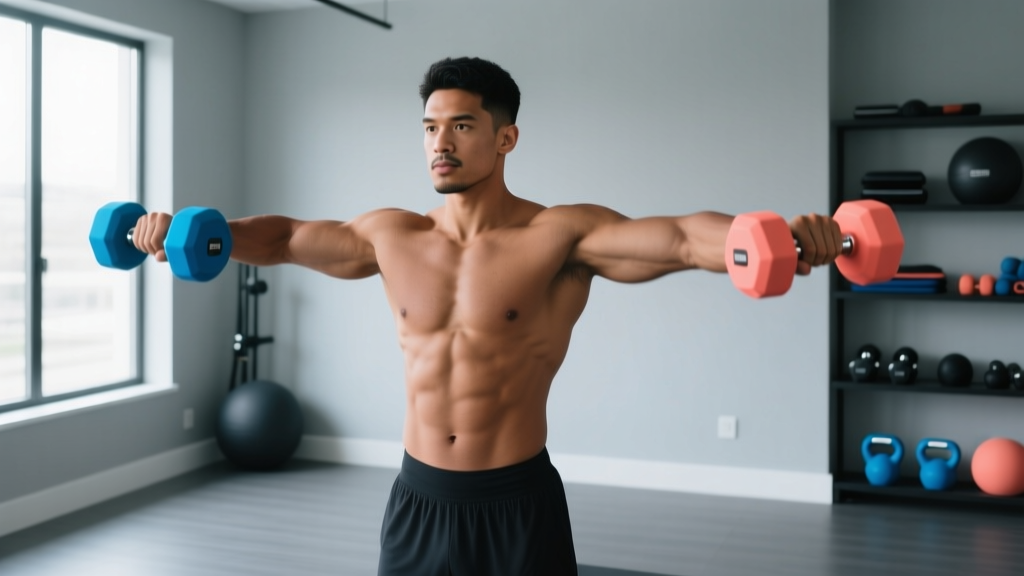
How to Do the Lateral to Front Dumbbell Raise: Beginner's Guide
Master the lateral to front dumbbell raise with our beginner step-by-step guide. Plus, learn why neoprene dumbbells are the best choice for home gyms.

Shoulder training for beginners often gets stuck in a rut of basic overhead presses. While presses are excellent for overall mass, they miss the nuanced, multi-planar development required for healthy, well-rounded deltoids. Enter the lateral to front dumbbell raise. This continuous-motion isolation exercise targets both the medial (side) and anterior (front) deltoid heads in a single, fluid repetition. However, executing this movement correctly requires the right equipment and a strict adherence to form.
For home gym enthusiasts, the tool of choice for this specific movement is the neoprene coated dumbbell. In this comprehensive, beginner-friendly guide, we will break down exactly why neoprene is the superior material for home isolation work, how to select the right weight, and provide a step-by-step masterclass on executing the lateral to front dumbbell raise with perfect biomechanics.
Why Neoprene Coated Dumbbells for Home Use?
When outfitting a home gym, the market is flooded with cast iron, hex rubber, and urethane options. So why specifically recommend a neoprene coated dumbbell for home use when performing isolation movements like the lateral to front raise?
The Material Science of Neoprene
Neoprene (polychloroprene) is a synthetic rubber that offers a distinctly matte, slightly porous finish. Unlike cheap hex rubber dumbbells that can off-gas volatile organic compounds (VOCs) and leave black residue on your hands, neoprene is odorless and clean. Furthermore, unlike premium urethane—which is designed for heavy commercial drops and can be slippery when your hands sweat—neoprene provides an exceptional tactile grip. This is crucial for high-rep, isolation-based shoulder work where grip fatigue can prematurely end a set.
2026 Market Pricing & Value
As of early 2026, the pricing landscape for free weights has stabilized. Urethane dumbbells command a premium of $4.00 to $6.50 per pound, which is overkill for exercises that require light loads. Neoprene dumbbells, conversely, sit in the sweet spot of $1.40 to $2.20 per pound. Brands like Yes4All, CAP Barbell, and Amazon Basics offer highly durable neoprene sets that are perfect for the 5 lb to 25 lb range required for the lateral to front dumbbell raise.
| Dumbbell Type | Avg. Cost / lb (2026) | Grip Texture | Best Use Case |
|---|---|---|---|
| Cast Iron | $1.10 - $1.50 | Knurled / Slippery | Heavy compound lifts |
| Hex Rubber | $1.30 - $1.80 | Sticky / Degrades | Floor exercises (push-ups) |
| Neoprene Coated | $1.40 - $2.20 | Matte / Sweat-Resistant | High-rep isolation & home gyms |
| Urethane | $4.00 - $6.50 | Smooth / Slick | Commercial heavy drops |
Anatomy of the Movement
Before picking up your neoprene dumbbells, it is vital to understand what you are targeting. According to biomechanics data cataloged by ExRx.net, the lateral raise primarily engages the lateral deltoid and the supraspinatus. By adding the forward sweep (the front raise component), you seamlessly transition the load onto the anterior deltoid and the upper pectoralis major (clavicular head). This continuous tension without a rest pause at the bottom forces the muscle fibers to adapt to sustained time-under-tension (TUT).
Step-by-Step Execution Guide
Follow this precise sequence to perform the lateral to front dumbbell raise safely and effectively. For beginners, we recommend starting with a pair of 5 lb or 8 lb neoprene dumbbells to master the motor pattern before increasing the load.
- The Stance: Stand with your feet hip-width apart. Maintain a slight bend in your knees (about 10-15 degrees) and hinge forward at the hips by just 5 degrees. Squeeze your glutes and brace your core to prevent lumbar hyperextension.
- The Grip: Hold a neoprene dumbbell in each hand down by your sides. Use a neutral grip (palms facing your thighs). The matte texture of the neoprene will allow you to hold the dumbbell securely without squeezing the life out of the handle, which prevents forearm fatigue.
- The Lateral Phase: Keeping a slight bend in your elbows (imagine you are hugging a large barrel), raise the dumbbells out to your sides. Lead with your elbows, not your hands. Stop when your upper arms are parallel to the floor (90 degrees). Exhale during this exertion.
- The Transition (Horizontal Adduction):strong> Without lowering the weights, smoothly sweep your arms forward until the dumbbells meet in front of your chest at shoulder height. Your palms should now be facing each other or slightly downward.
- The Return Path: Reverse the motion under strict control. Sweep the weights back out to the lateral 90-degree position, then slowly lower them down to your sides over a count of three seconds. Inhale as you lower.
Troubleshooting Common Form Breakdowns
Shoulder joints are highly mobile but inherently unstable. The American Council on Exercise (ACE) frequently notes that poor shoulder mechanics during isolation lifts lead to impingement. Watch out for these specific failure modes:
| Common Mistake | Why It Happens | The Fix |
|---|---|---|
| Shrugging / Trap Takeover | Using too much weight; weak lower traps. | Drop the weight by 5 lbs. Actively depress your scapulae (pull shoulders down) before initiating the lift. |
| Bending Elbows Too Much | Attempting to cheat the weight up by shortening the lever arm. | Lock your elbow angle at roughly 15-20 degrees of flexion. The angle should not change during the rep. |
| Internal Rotation (Pouring the Pitcher) | Outdated bodybuilding cue that jams the humerus into the acromion. | Keep a neutral or slightly externally rotated grip (thumbs slightly higher than pinkies) to clear the subacromial space. |
Beginner Programming & Progression Matrix
Because the lateral to front dumbbell raise is a multi-planar isolation exercise, it should be placed at the end of your workout, after heavy compound movements like the overhead press or push-ups. Below is a 6-week progression framework designed for beginners utilizing neoprene dumbbells.
- Weeks 1-2 (Neuromuscular Adaptation): 2 sets of 10 reps. Use 5 lb dumbbells. Focus entirely on the 2-1-2-1 tempo and the seamless transition between the lateral and front planes.
- Weeks 3-4 (Hypertrophy Base): 3 sets of 12 reps. Increase to 8 lb or 10 lb dumbbells. Rest exactly 60 seconds between sets to maintain metabolic stress.
- Weeks 5-6 (Endurance & Burnout): 3 sets of 15 reps. Keep the weight at 10 lbs, but add a 3-second isometric hold at the front-most position (when the dumbbells touch in front of your chest).
'The shoulders respond exceptionally well to time under tension and metabolic stress rather than pure mechanical overload. Using lighter, grippy neoprene dumbbells allows you to chase the pump and capillary engorgement without risking the connective tissue of the rotator cuff.'
Caring for Your Neoprene Equipment
To ensure your home gym gear lasts through years of training, proper maintenance is required. While neoprene is highly resistant to sweat and moisture, the iron core can still rust if the coating is punctured. Never drop neoprene dumbbells on hard surfaces like concrete or tile; always use a rubber mat. To clean them, simply wipe them down with a microfiber cloth and a mild solution of water and dish soap. Avoid harsh chemical cleaners or bleach, which can break down the polychloroprene bonds and cause the coating to peel over time.
Final Thoughts
The lateral to front dumbbell raise is a staple movement that deserves a permanent spot in your home gym routine. By pairing this precise, multi-planar exercise with the ergonomic, sweat-resistant benefits of neoprene coated dumbbells, you set yourself up for safe, effective, and consistent shoulder development. Start light, respect the tempo, and let the continuous tension do the work. For more foundational strength training principles and safety guidelines, refer to the Mayo Clinic's comprehensive guide to strength training.
More gear to consider
All reviews
Dumbbell Tenement Racks: 2026 Budget & Storage Guide

Kettlebell Guide: Cast Iron vs Competition & Dumbbell Behind Head

Dumbbell Chest Press Benefits: A Beginner's Neoprene Guide

Best Neoprene Dumbbells for Bicep Dumbbell Exercises: 2026 Home Guide
Olympic vs Standard Plates: Best Setup for Single Arm Dumbbell Rows
