
Cast Iron vs Competition Kettlebells & Pendlay Rows Dumbbell Guide
Compare cast iron vs competition kettlebells for your 2026 home gym. Plus, expert tips on kettlebell rows and pendlay rows dumbbell variations.

The Great Kettlebell Debate: Cast Iron vs. Competition
Building a comprehensive free-weight arsenal in 2026 requires more than just picking up the cheapest iron on the market. As home gym enthusiasts and elite coaches alike demand higher quality equipment, the kettlebell market has bifurcated into two distinct camps: traditional cast iron and standardized competition steel. Understanding the metallurgical and geometric differences between these two styles is critical for optimizing your grip, joint health, and overall training longevity.
Cast iron kettlebells are typically sand-cast, resulting in a denser, more compact bell that varies in physical size as the weight increases. A 12kg cast iron bell is significantly smaller than a 32kg bell. Competition kettlebells, on the other hand, are forged from steel and adhere to strict dimensional standards set by organizations like the International Union of Kettlebell Lifting (IUKL). Regardless of whether you are holding an 8kg or a 48kg competition bell, the dimensions remain exactly 280mm in height and 210mm in width, with a uniform 35mm handle diameter.
Expert Insight: The uniform size of competition kettlebells means your technique, rack position, and cleaning mechanics never have to adjust as you increase weight. However, the 35mm handle can be punishing for heavy, high-volume two-handed swings if you lack the grip conditioning for thicker implements.Hands-On Review: Top Cast Iron Picks for 2026
For general strength and conditioning, hypertrophy work, and grueling two-handed swing sessions, cast iron remains the undisputed king of the home gym. Here are our top-tested picks for this year.
1. Rogue Fitness Powder Coat Kettlebells
Rogue continues to dominate the cast iron space with their powder-coated line. The finish is applied at roughly 1.5 to 2.0 mils thick, creating a micro-textured surface that holds chalk exceptionally well without feeling like sandpaper. The handles are seamlessly blended into the bell, eliminating the dreaded 'seam' that tears calluses during high-rep snatches.
- Price: ~$68.00 (16kg / 35lbs)
- Handle Diameter: Varies by weight (approx. 30mm - 35mm)
- Best For: Two-handed swings, goblet squats, and general S&C.
2. Kettlebell Kings Powder Coat
Kettlebell Kings offers a slightly more aggressive knurl-like texture on their powder coat bells. The window (the gap between the handle and the bell) is generously sized, making double kettlebell front squats and cleans highly comfortable. According to Rogue Fitness's equipment specifications and comparative market data, premium powder coats are essential for preventing oxidation in humid garage gyms.
Competition Kettlebells: When Uniformity Matters
If your training involves heavy kettlebell sport (GS), juggling, or complex flow sequences, competition bells are mandatory. The 35mm handle and large window allow the bell to rest comfortably in the 'rack' position without crushing your forearm against your ribcage.
Top Pick: Eleiko Competition Kettlebell
Eleiko’s competition bells are machined to aerospace-level tolerances. The steel is painted in the traditional IUKL color-coding system (e.g., yellow for 16kg, green for 24kg). The base is completely flat and machined smooth, ensuring it won't scratch your platforms during renegade rows or push-ups.
- Price: ~$135.00 (16kg)
- Handle Diameter: Strict 35mm
- Best For: Snatches, clean and jerks, tactical flows.
Specification Matrix: Cast Iron vs. Competition
| Feature | Cast Iron (Powder Coat) | Competition (Steel) |
|---|---|---|
| Material | Cast / Ductile Iron | Machined Steel |
| Dimensions | Scales with weight | Uniform (280x210mm) |
| Handle Thickness | Variable (30-35mm) | Strict 35mm |
| Average Cost (16kg) | $60 - $75 | $110 - $140 |
Biomechanics Spotlight: Kettlebell Rows vs. Pendlay Rows Dumbbell
When programming for posterior chain and latissimus dorsi development, lifters frequently debate the merits of kettlebell gorilla rows versus strict pendlay rows dumbbell variations. Both are phenomenal tools for building a thick, resilient back, but their biomechanical profiles serve entirely different training adaptations.
The Kettlebell Gorilla Row
As highlighted by the coaches at StrongFirst, the gorilla row utilizes a deep hip hinge with two kettlebells placed between the feet. The movement relies on alternating unilateral pulls while maintaining immense anti-rotational core tension. Because the bells never return to a dead stop on the floor during a set, the lats and rhomboids are under constant time-under-tension (TUT). This is ideal for hypertrophy and grip endurance.
The Pendlay Rows Dumbbell Variation
Many athletes transitioning from barbell work search for pendlay rows dumbbell alternatives to isolate unilateral imbalances and reduce lower back shear force. The traditional Pendlay row, invented by Olympic lifting coach Glenn Pendlay, requires a strict dead-stop from the floor on every single repetition. The torso must remain perfectly parallel to the ground, eliminating all momentum and hip drive.
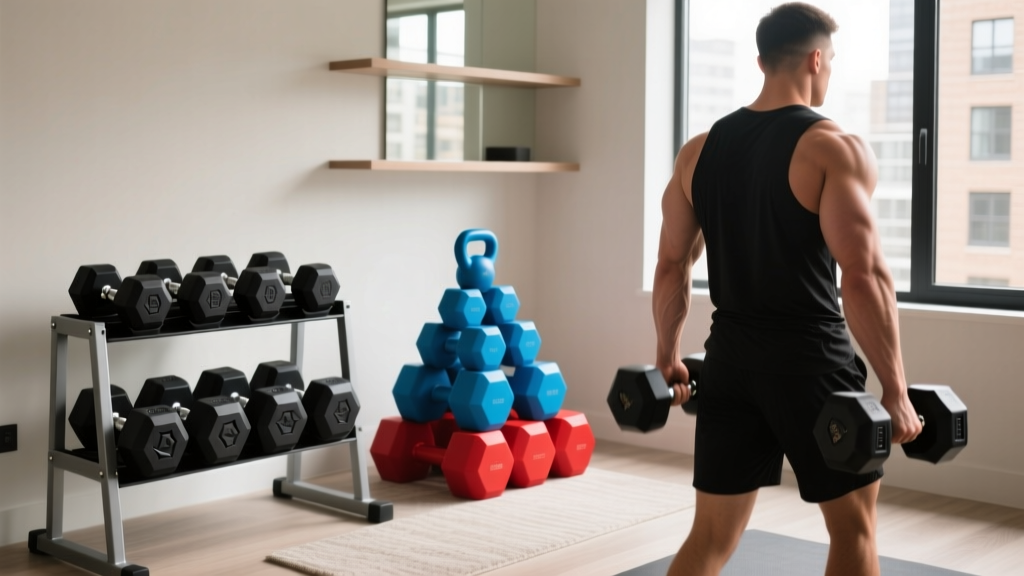
When adapting this to dumbbells, you must use hex-head dumbbells (like urethane hex bells) to prevent them from rolling away during the dead stop. The execution requires:
- The Hinge: Push the hips back until the hamstrings are fully loaded and the torso is parallel to the floor.
- The Dead Stop: Let the dumbbells rest completely on the floor for 1-2 seconds. This dissipates the stretch reflex.
- The Concentric Pull: Explosively pull the dumbbells toward the hip pocket (not the armpit), driving the elbows toward the ceiling while retracting the scapulae.
- The Eccentric: Lower the weight with control back to a complete dead stop.
Pro-Tip: The dead-stop nature of the dumbbell Pendlay row forces you to generate maximum rate of force development (RFD) from a static position. This translates directly to a stronger barbell deadlift and a more explosive first pull in Olympic weightlifting. For a deeper dive into rowing mechanics and muscle activation, refer to the ExRx bent-over row exercise directory.
Programming Framework: Integrating Both Tools
To maximize your 2026 training block, stop viewing kettlebells and dumbbells as mutually exclusive. Use this decision matrix to select the right tool for your specific training goal:
- Goal: Anti-Rotation & Core Stability → Choose Kettlebell Gorilla Rows (Cast Iron).
- Goal: Unilateral RFD & Strict Lat Isolation → Choose Pendlay Rows Dumbbell style (Hex DBs).
- Goal: High-Rep Cardio & Grip Endurance → Choose Kettlebell Swings (Cast Iron).
- Goal: Kettlebell Sport & Rack Endurance → Choose Competition Kettlebells (Steel).
Final Verdict: Building Your Free Weight Arsenal
If your budget only allows for one style of kettlebell, a high-quality powder-coated cast iron bell (16kg or 24kg) offers the most versatility for the average lifter. It accommodates two-handed swings, goblet squats, and heavy rows without the steep learning curve of a 35mm competition handle. However, if you are serious about kettlebell sport, or if you frequently program complex flows and double-kettlebell rack work, investing in competition steel is non-negotiable.
Finally, do not neglect your dumbbell training. Integrating strict pendlay rows dumbbell variations into your back days will expose and correct the unilateral weaknesses that bilateral kettlebell movements sometimes mask. By understanding the exact geometry, metallurgy, and biomechanical applications of your free weights, you can build a home gym that rivals any commercial facility in the world.
More gear to consider
All reviews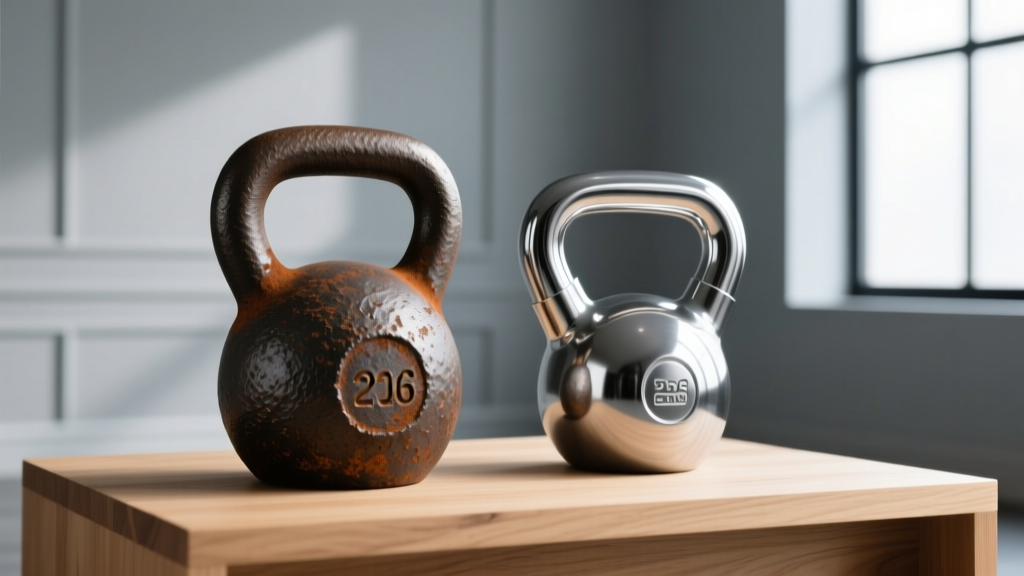
Cast Iron vs Competition Kettlebells: Beyond Dumbbell Piercing
Rubber Hex vs Urethane: Space Layouts & Farmers Carry With Dumbbells

York Dumbbell Review: Rubber Hex vs Urethane Weights

Rubber Hex vs Urethane Dumbbells for the Single Leg Dumbbell Row

Bumper vs Iron Plates: 2026 Market Trends & Dumbbell Back Workouts
