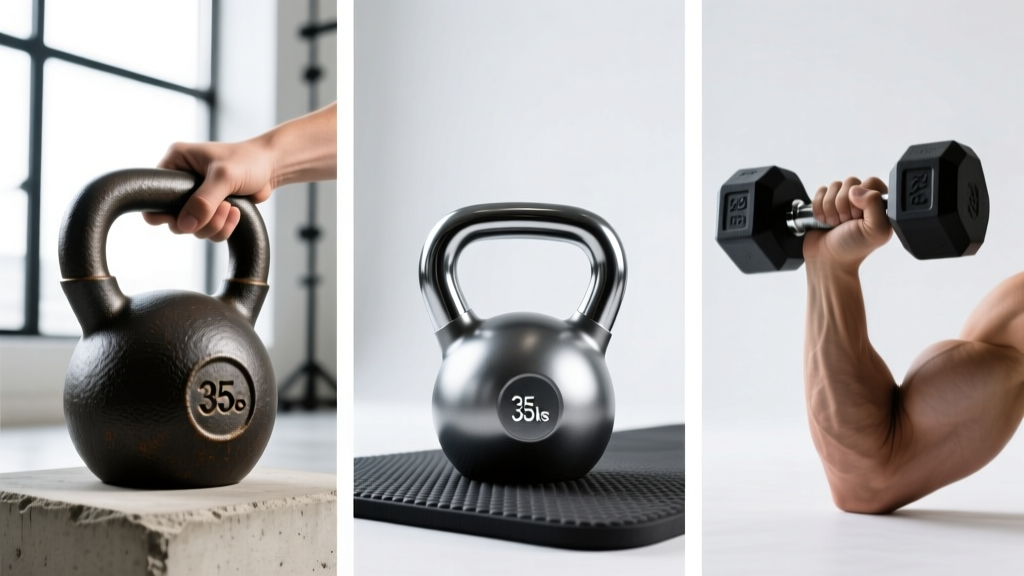
2026 Kettlebell Guide: Cast Iron vs Competition & Dumbbell Side Curl
Compare cast iron vs competition kettlebells in our 2026 buying guide. Plus, see how handle dimensions impact grip on the dumbbell side curl.

The 2026 Free Weights Landscape: Choosing Your Kettlebell Arsenal
Welcome back to the FitGearPulse testing lab. As we navigate the 2026 home gym equipment market, the debate between cast iron and competition kettlebells remains one of the most polarizing topics in strength training. While beginners often grab the cheapest cast iron bell they can find on clearance, seasoned lifters know that the metallurgy, handle geometry, and window dimensions of your kettlebell drastically alter exercise biomechanics.
In this comprehensive hands-on review, we are breaking down the exact specifications, current 2026 pricing, and real-world performance of cast iron versus competition kettlebells. Furthermore, we will explore a fascinating biomechanical crossover: how the handle diameter of your chosen bell dictates your success when adapting strict isolation movements—specifically analyzing the grip torque required for the dumbbell side curl and its kettlebell equivalents.
Anatomy of the Bell: Cast Iron vs. Competition Specifications
Before diving into specific brand reviews, it is critical to understand the structural differences between these two categories. According to the Kettlebell Kings Sizing Guide, the primary divergence lies in manufacturing intent. Cast iron bells are poured into molds, meaning their physical size and handle thickness scale with weight. Competition bells, designed for Girevoy sport, feature a hollow steel core filled with paint or ball bearings to maintain a uniform bell size regardless of weight.
| Feature | Traditional Cast Iron | Competition Style |
|---|---|---|
| Handle Diameter | Variable (30mm - 42mm+) | Strictly 33mm (All weights) |
| Bell Dimensions | Scales with weight | Uniform across all weights |
| Window Size (Horns) | Narrower, tighter fit | Wider, accommodates two hands |
| Center of Mass | Close to the handle | Slightly lower, more offset |
| Avg 2026 Cost (per lb) | $1.40 - $1.90 | $2.50 - $3.20 |
Hands-On Review: Top 2026 Kettlebell Picks
We spent the last three months testing the current market leaders in both categories. Here is what stood out in the rack.
Top Cast Iron Pick: Kettlebell Kings Powder Coat
The Kettlebell Kings Powder Coat line remains the gold standard for home gyms in 2026. The matte powder coat finish holds chalk exceptionally well without tearing up your calluses—a common failure point with cheap, glossy enamel bells. The handle on the 24kg (53lb) model measures roughly 35mm in diameter. This thickness is excellent for building crushing grip strength during heavy swings and goblet squats, but it demands a specific grip adaptation for isolation work.
Top Competition Pick: Onnit Competition Pro
Onnit's Competition Pro series features a premium steel shell with a color-coded plastic dip that resists chipping far better than traditional painted competition bells. The strict 33mm handle diameter is a revelation for high-repetition snatches and cleans, as it allows the bell to sit comfortably in the rack position without crushing the forearm. At roughly $2.85 per pound, it is an investment, but the uniform window size makes double-kettlebell front squats significantly more ergonomic.
Expert Insight: The Rack Position Reality
When testing 32kg bells, the cast iron model's narrower horn window forced our wrists into excessive extension during the rack position, leading to premature forearm fatigue. The competition bell's wider window allowed the forearm to remain neutral, transferring the load directly through the skeletal structure rather than the muscular system.
Biomechanics Deep Dive: Handle Thickness and the Dumbbell Side Curl
Why are we discussing the dumbbell side curl in a kettlebell buying guide? Because understanding handle diameter is the key to programming effective hypertrophy and isolation work with free weights. The dumbbell side curl (often executed as a hammer or cross-body variation) primarily targets the brachioradialis, brachialis, and the lateral head of the bicep. According to elbow kinesiology data from ExRx.net, maintaining a neutral or semi-supinated wrist angle is critical for maximizing torque on these specific muscle groups.
When lifters attempt to replicate the mechanics of the dumbbell side curl using a kettlebell, the handle diameter becomes the limiting factor. Here is how the two bell types compare during strict isolation curls:
- The Cast Iron Disadvantage: A heavy cast iron kettlebell (e.g., 24kg+) features a handle thickness exceeding 38mm. Gripping this thick handle forces the fingers into wide abduction, activating the forearm extensors and flexors isometrically just to maintain the hold. During a kettlebell side curl, your grip will fail before the brachioradialis reaches muscular failure. The thick handle essentially turns an isolation curl into a grip-endurance exercise.
- The Competition Advantage: The uniform 33mm handle of a competition bell closely mimics the standard 28mm-30mm handle of an Olympic hex dumbbell. This narrower profile allows the lifter to wrap their fingers securely, minimizing forearm pre-fatigue. When performing a kettlebell side curl or hammer curl variation with a competition bell, you can actually achieve the targeted hypertrophic stimulus in the upper arm without the grip bottleneck.
'If your training splits involve transitioning from heavy kettlebell ballistics to strict, joint-isolation movements like the dumbbell side curl, maintaining a consistent grip diameter is vital for central nervous system regulation and wrist tendon health.' — StrongFirst Training Principles
The FitGearPulse 2026 Decision Matrix
Not every gym needs both types of bells. Use this framework to allocate your 2026 equipment budget effectively.
Buy Cast Iron If:
- You are a Powerlifter or Strongman: The thicker handles of heavy cast iron bells (35mm+) translate perfectly to fat-grip training, improving your deadlock and axle press strength.
- You focus on Grinds and Squats: The compact, dense profile of a cast iron bell is superior for goblet squats and Turkish get-ups, where the bell needs to sit tightly against the chest or forearm without the bulky plastic shell of a competition bell getting in the way.
- Budget is a primary constraint: At $1.50/lb, outfitting a full rack from 8kg to 32kg will save you nearly $300 compared to competition sets.
Buy Competition If:
- You train Girevoy Sport or High-Rep CrossFit: The 33mm handle and wider window are non-negotiable for high-rep snatches, jerks, and double-kettlebell cleans. The steel shell also prevents the bell from resting heavily on your forearm bones in the rack position.
- You prioritize Arm Isolation Hypertrophy: As noted in our dumbbell side curl analysis, the 33mm handle allows for proper wrist mechanics during curls, tricep extensions, and lateral raises, making competition bells surprisingly excellent tools for bodybuilding-style accessory work.
- You value spatial consistency: Because every competition bell is the exact same physical size, your muscle memory for the clean and snatch remains identical whether you are warming up with a yellow 8kg bell or maxing out with a red 32kg bell.
Final Verdict and Maintenance Tips
Ultimately, the 'best' kettlebell is dictated by your exercise selection. If your programming is heavily skewed toward explosive ballistics, strict Olympic-style lifting, or upper-body isolation work like the dumbbell side curl, the competition kettlebell is the superior biomechanical tool. If you want a rugged, budget-friendly workhorse for heavy carries, squats, and grip building, cast iron remains undefeated.
2026 Maintenance Reminder: Never store competition kettlebells in direct sunlight or unventilated sheds; the UV rays will degrade and chalk the plastic color-coating within a single summer. Conversely, cast iron bells require a light coating of 3-in-One oil or mineral oil every six months to prevent micro-oxidation, especially if you use liquid chalk frequently.More gear to consider
All reviews
Bala Dumbbells vs Rubber Hex & Urethane: 2026 Market Trends

Olympic vs Standard Plates for Your Full Body Dumbbell Routine

Kettlebell Buying Guide: Cast Iron vs Competition & Walmart Dumbbells
Power Rack vs Squat Rack vs Squat Stand: Setup for Lateral Raises with Dumbbells
Top Loadable Dumbbells for Dumbbell Rows Both Arms (2026 Picks)
