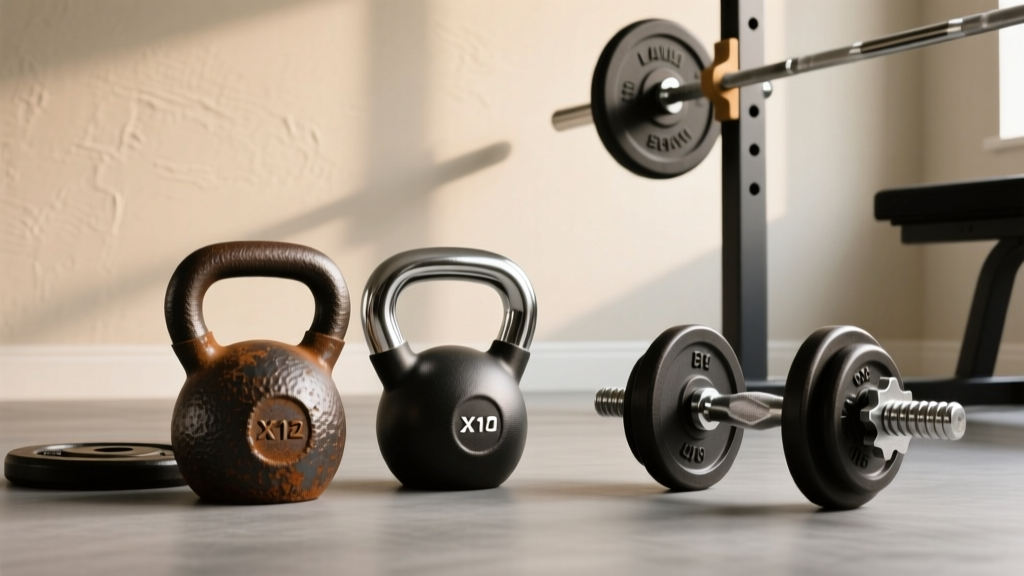
Cast Iron vs Competition Kettlebells & Lat Pullover with Dumbbells
Analyze the 2026 budget breakdown of cast iron vs competition kettlebells, plus why a lat pullover with dumbbells remains essential for home gyms.

The Core Dilemma: Cast Iron vs. Competition Kettlebells in 2026
When outfitting a home gym or upgrading a commercial facility, the debate between cast iron and competition kettlebells is often reduced to aesthetics. However, as a senior equipment analyst, I can tell you that this choice fundamentally dictates your training biomechanics, grip failure points, and overall budget efficiency. In 2026, with global steel prices stabilizing but freight surcharges fluctuating, understanding the exact cost-per-pound and manufacturing differences is critical for maximizing your free-weight ROI.
Cast iron kettlebells are gravity-cast from a single piece of iron or steel alloy, machined down, and typically finished with a powder coat or e-coat. Their dimensions scale with weight; a 32kg cast iron bell is significantly larger and features a thicker handle than an 8kg bell. Competition kettlebells, conversely, are constructed from a steel outer shell filled with a dense aggregate (often a mix of steel shot, lead, and iron). This manufacturing process ensures that every competition bell—from 8kg to 48kg—shares the exact same physical dimensions, including a standardized 33mm handle diameter and a 28cm height.
Quick Budget Summary: 2026 Market Rates
- Cast Iron: $1.50 to $2.50 per pound (Best for general strength, grinds, and budget builds).
- Competition: $4.50 to $8.00 per pound (Best for sport-specific conditioning, high-rep snatches, and uniform technique).
Dimensional Differences and Grip Failure Modes
The most overlooked factor in kettlebell procurement is how dimensional scaling impacts grip endurance. According to biomechanical analyses of kettlebell movements, the displacement of the center of mass requires significant wrist stabilization during ballistic exercises like the swing and snatch.
| Feature | Cast Iron (Standard) | Competition (Steel Shell) |
|---|---|---|
| Handle Diameter | Scales from 30mm (8kg) to 40mm+ (32kg) | Uniform 33mm (IWF Standard) |
| Bell Size | Increases with weight | Uniform across all weights |
| Primary Failure Mode | Grip tearing on heavy swings due to thick handles | Forearm bruising during cleans due to wide bell |
| Coating | Powder coat, E-coat, or Enamel | Painted Steel (color-coded by weight) |
| Avg Cost (16kg) | $55 - $80 | $140 - $180 |
For athletes focusing on heavy double kettlebell front squats or slow grinds, the thicker handle of a heavy cast iron bell builds immense grip strength. However, for high-repetition ballistic work, the uniform 33mm handle of a competition bell prevents premature grip failure, allowing the posterior chain to be the true limiting factor.
The Isolation Gap: Why You Still Need Dumbbells
While kettlebells are unparalleled for ballistic power and offset-loaded core stability, they are fundamentally flawed for strict, isolated hypertrophy work. This brings us to a critical programming and budgeting reality: no kettlebell can replace the biomechanical efficiency of a lat pullover with dumbbells.
When attempting a pullover with a kettlebell, the bulbous body of the bell creates a severe range-of-motion restriction. At the bottom of the movement (maximum shoulder flexion), the kettlebell will physically strike the bench or floor before the latissimus dorsi reaches a full stretch. Furthermore, the displaced center of mass of a kettlebell places extreme, potentially injurious torque on the wrist extensors when the arms are fully extended overhead.
Expert Insight: The lat pullover with dumbbells allows for independent arm tracking and a neutral grip, aligning the resistance vector directly through the wrist and elbow joints. As detailed in exercise biomechanics databases, this alignment is crucial for safely loading the lats and serratus anterior through a full 180-degree range of motion without compromising joint integrity.
Therefore, a smart 2026 equipment budget does not force you to choose entirely between kettlebells and dumbbells. Instead, it allocates funds strategically: investing in kettlebells for what they do best (swings, cleans, snatches, goblet squats) and utilizing dumbbells to fill the isolation gap (pullovers, lateral raises, skull crushers).
Biomechanics of the Lat Pullover with Dumbbells
To execute the lat pullover with dumbbells safely and effectively, specific equipment parameters are required. You need dumbbells that allow for a secure neutral grip and micro-loading. Adjustable dumbbells are the most budget-friendly solution here, as buying a full rack of fixed hex dumbbells solely for isolation work destroys your cost-per-pound efficiency.
2026 Budget Allocation Framework
How do we translate this analysis into a concrete purchasing strategy? Below is a practical, actionable budget breakdown for a $1,000 free-weight allocation, designed to provide maximum versatility without sacrificing movement quality.
- Allocate 45% to Cast Iron Kettlebells ($450): Skip the expensive competition bells unless you are specifically training for Girevoy Sport. Purchase high-quality, powder-coated cast iron bells. A recommended 2026 setup includes pairs of 16kg ($150) and 20kg ($180), plus a single 24kg ($110) for heavy goblet squats and single-arm rows. Brands like Rep Fitness or Rogue offer excellent durability in this tier.
- Allocate 35% to Adjustable Dumbbells ($350): Invest in a high-quality adjustable dumbbell set (e.g., Nuobell or PowerBlock Pro series) that ranges from 5lbs to 50lbs per hand. This single purchase replaces an entire rack of fixed dumbbells and provides the exact tools needed for the lat pullover with dumbbells, heavy renegade rows, and precise isolation work.
- Allocate 10% to Grip and Joint Care ($100): Kettlebell training destroys the hands. Budget for high-quality leather gymnastics grips, finger tape, and a heavy-duty pumice stone for callus management.
- Allocate 10% to Storage and Maintenance ($100): Purchase a basic A-frame kettlebell storage rack to keep your floor clear and prevent tripping hazards. Use a wire brush and 3-in-1 oil to maintain the cast iron handles and prevent oxidation in humid environments.
Final Verdict: Maximizing Your Free-Weight ROI
The choice between cast iron and competition kettlebells should be driven by your specific training modalities, not marketing hype. For 90% of home gym owners and strength enthusiasts, cast iron offers vastly superior value, providing the necessary handle thickness variations for heavy grinds at a fraction of the cost per pound.
However, recognizing the limitations of kettlebells for strict isolation movements is the mark of an educated consumer. By strategically pairing a budget-friendly cast iron kettlebell setup with a versatile set of adjustable dumbbells, you ensure that foundational power movements and precise hypertrophy exercises—like the lat pullover with dumbbells—are both executed with optimal biomechanics and financial efficiency.
More gear to consider
All reviews
Cast Iron vs Competition: Value & the Kettlebell Swing with Dumbbell

Best Dumbbell Racks 2026: Supersets & Upright Row with Dumbbells

Bumper vs Iron Plate Cost Analysis: Deadlifts to Dumbbell Chest Row

Olympic vs Standard Plates: Full Body Circuit with Dumbbells

Dumbbells vs Bench Press: Olympic Barbell Buying Guide
