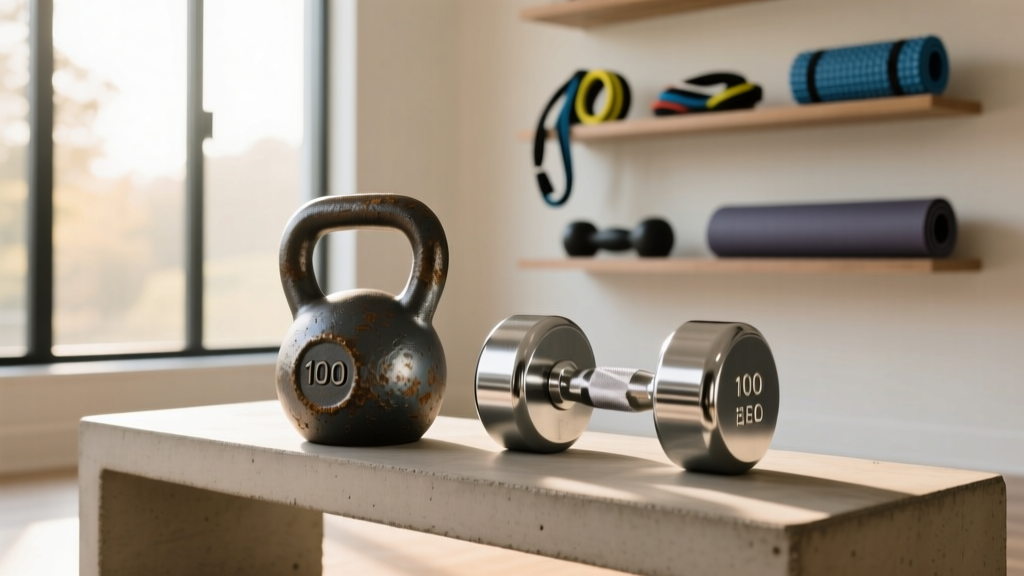
Iron Longevity: Kettlebell & 100 lb Dumbbell Bench Press Care
Master heavy free weight maintenance. Compare cast iron vs. competition kettlebell care and learn to preserve gear for a 100 lb dumbbell bench press.

When building a commercial facility or a high-end home gym, the initial purchase price of free weights is only the beginning of the financial equation. Heavy iron requires heavy maintenance. Whether you are evaluating a kettlebell buying guide to choose between cast iron and competition models, or you are trying to preserve the structural integrity of fixed-weight dumbbells used for a 100 lb dumbbell bench press, the metallurgical realities remain the same: iron oxidizes, polymer coatings degrade, and mechanical tolerances fail without strict intervention.
As of 2026, the cost of premium free weights has surged, making proactive equipment care a mandatory skill for gym owners and serious lifters. This guide dives deep into the material science of free weight coatings, the mechanical vulnerabilities of heavy adjustable dumbbells, and the exact protocols required to extend the lifespan of your most expensive gym assets.
The Kettlebell Divide: Cast Iron vs. Competition Coatings
When navigating a kettlebell buying guide, the choice between traditional cast iron and competition-style kettlebells is usually framed around aesthetics or grip feel. However, from a longevity and maintenance perspective, the difference lies entirely in the surface treatment and manufacturing tolerances.
Traditional cast iron kettlebells (like those from Titan Fitness or Cap Barbell, typically priced around $1.20 to $1.80 per pound) are generally finished with an e-coat (electrodeposition) or a basic liquid paint. According to industry metallurgy standards detailed by Products Finishing, e-coats are exceptionally thin—usually between 0.5 and 1.5 mils. While this provides a smooth finish that highlights the cast iron's texture, it offers minimal impact resistance. Dropping a 24kg cast iron kettlebell onto a rubber mat can cause micro-fractures in the e-coat, exposing the raw iron substrate to ambient humidity and initiating sub-surface oxidation.
Conversely, competition kettlebells (such as Rogue Fitness or Onnit models, ranging from $130 to $220+ per bell) are machined from a single piece of steel to exact dimensional standards and finished with a high-grade powder coat or left as bare, polished steel with a clear sealant. Powder coating is applied electrostatically and baked, creating a thermoset polymer layer that is 2.0 to 4.0 mils thick. This coating is inherently flexible and highly resistant to the chipping and abrasion caused by repetitive racking and dropping.
| Feature | Traditional Cast Iron (E-Coat/Paint) | Competition Kettlebell (Powder Coat/Machined) |
|---|---|---|
| Coating Thickness | 0.5 - 1.5 mils | 2.0 - 4.0 mils (or bare machined steel) |
| Impact Resistance | Low (prone to chipping on concrete) | High (flexible thermoset polymer) |
| Primary Failure Mode | Sub-surface rust blisters | Surface scratching / clear coat wear |
| Maintenance Routine | Monthly oiling, wire brushing | Wipe down, occasional 3-IN-ONE application |
Surviving the 100 lb Dumbbell Bench Press: Dial & Urethane Care
Executing a 100 lb dumbbell bench press requires not only immense pectoral and triceps strength but also places extreme mechanical stress on the equipment itself. As noted in biomechanical analyses on ExRx, the stabilizing forces and the sheer kinetic energy generated when racking 100 lb dumbbells can easily compromise inferior gear. When maintaining heavy dumbbells, you must address two distinct failure zones: the handle mechanism and the weighted heads.
The Adjustable Dumbbell Vulnerability
If you are using adjustable dumbbells (like the PowerBlock Elite USA or Nuobell 80/100 lb sets, which retail between $450 and $700 per pair) to progress toward heavy presses, the internal mechanisms are highly sensitive to environmental contaminants. The most common cause of catastrophic failure in dial-and-pin adjustable dumbbells is the intrusion of gym chalk (magnesium carbonate) and metallic dust.
⚠️ CRITICAL WARNING: Chalk Dust & Adjustable DialsNever use loose gym chalk when handling adjustable dumbbells. The fine particulate matter works its way into the dial tracks and selector pins. Over time, this creates a grinding paste that strips the internal O-rings and jams the weight plates. If you must use chalk for your 100 lb dumbbell bench press, use a liquid chalk alternative, and immediately blow out the dumbbell mechanisms with compressed air (at 30-40 PSI) after every session.
Urethane vs. Rubber Heads: The UV and Ozone Threat
For fixed-weight dumbbells, the material of the weighted heads dictates the maintenance schedule. Cheap rubber dumbbells off-gas volatile organic compounds (VOCs) and dry-rot over time, eventually cracking and crumbling. Premium urethane dumbbells (like those from Rogue or Rep Fitness) are vastly superior, but they are not invincible. Urethane is susceptible to photodegradation from UV light and hydrolysis from high humidity. If your gym is exposed to direct sunlight, the urethane chains will break down, resulting in a sticky, tar-like residue on the surface of your heaviest bells.
Environmental Baselines: Humidity, Racks, and Storage
The longevity of your free weights is inextricably linked to your facility's environmental controls. The National Strength and Conditioning Association (NSCA) guidelines for facility management emphasize that ambient humidity is the primary driver of equipment degradation. You must maintain your gym's relative humidity (RH) strictly between 40% and 50%. Anything above 60% RH will cause raw iron and compromised e-coats to flash-rust within 48 hours.
Furthermore, how you store your heavy dumbbells directly impacts their lifespan. Storing 100 lb dumbbells on a standard 3-tier rack concentrates immense point-load stress on the bottom tier.
"Always inspect the UHMW (Ultra-High Molecular Weight) plastic liners on your dumbbell rack saddles. When these wear through, steel-on-steel contact will strip the urethane coating and knurling off your heaviest dumbbells within weeks. Replace UHMW strips annually in high-traffic commercial gyms."
Step-by-Step Rust Remediation Protocol
If you have acquired neglected cast iron kettlebells or your dumbbell handles have developed surface oxidation from sweat and humidity, do not reach for standard WD-40. Standard WD-40 is a solvent and water displacer, not a long-term lubricant or rust preventative. Instead, follow this professional remediation protocol:
- Mechanical Removal: Use a brass wire brush attachment on a rotary tool or a hand-held brass brush. Never use a steel wire brush on cast iron or chrome handles; steel bristles will embed microscopic iron particles into the surface, which will oxidize and create secondary rust spots.
- Chemical Neutralization: Wipe the stripped area with a 50/50 solution of white vinegar and water to neutralize any remaining oxidation, followed immediately by an isopropyl alcohol wipe to displace moisture.
- Surface Sealing: Apply a thin, even coat of Boeshield T-9 or 3-IN-ONE Multi-Purpose Oil. These products contain paraffin wax and specialized solvents that penetrate the micro-pores of the iron and leave a dry, protective wax film that will not transfer to the lifter's hands.
- Knurling Preservation: For the knurled handles of your heavy dumbbells, use a stiff nylon brush to work the oil deep into the diamond grooves, then wipe the surface completely dry with a microfiber cloth to preserve grip tackiness.
By understanding the material science behind your equipment—from the powder-coated resilience of competition kettlebells to the mechanical fragility of adjustable dumbbells used for a 100 lb dumbbell bench press—you can protect your investment and ensure your gear performs flawlessly for decades.
More gear to consider
All reviews
Smart Dumbbell Rack Storage & the Best Calf Exercise with Dumbbells

Best Loadable Dumbbells for Close Grip Dumbbell Chest Press in 2026
Olympic vs Standard Plates & Amazon Basics Rubber Hex Dumbbell Hand Weight

Compact Gym: EZ vs Straight Bar & Workout Pecs with Dumbbells

EZ vs Straight Bar Maintenance: Caring for Captain America Dumbbells
