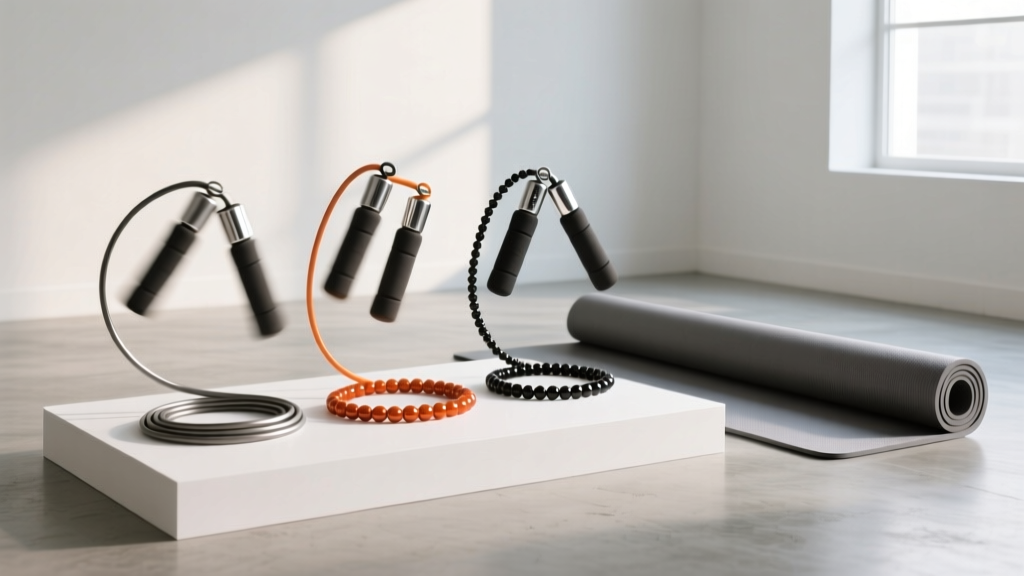
Speed, Weighted, Beaded Jump Ropes & Standard Yoga Mat Dimensions
Compare speed, weighted, and beaded jump ropes. Plan your home gym layout using standard yoga mat dimensions for the ultimate 2026 cardio zone.

The 2026 Home Gym Blueprint: Cardio vs. Mobility Footprints
Building a hybrid home gym in 2026 requires more than just buying gear; it demands spatial intelligence. When athletes design their workout zones, they frequently clash over the floor space required for high-intensity cardio versus the dedicated zones needed for mobility and recovery. To solve this, we must analyze the equipment mechanics of the three primary jump rope types—speed, weighted, and beaded—and map their spatial requirements against the baseline metric of home fitness: standard yoga mat dimensions.
Whether you are outfitting a 150-square-foot spare bedroom or a dedicated garage gym, understanding how your cardio footprint interacts with your flexibility zone is critical for avoiding drywall dents and optimizing your workflow. Below, we break down the exact specifications, pricing, and spatial math you need to make an informed purchase.
Head-to-Head Matrix: Speed, Weighted, and Beaded Ropes
Not all jump ropes are created equal. The cable thickness, handle weight, and rotational mechanics dictate not only your workout stimulus but also how the rope behaves in confined spaces. Here is how the top three categories compare.
| Feature | Speed Ropes | Weighted Ropes | Beaded Ropes |
|---|---|---|---|
| Primary Use | Double unders, agility, fast-twitch cardio | Muscular endurance, upper-body strength | Beginners, tricking, tactile feedback |
| Cable Material | Bare steel or thin PVC (1.5mm - 2.5mm) | Braided steel core wrapped in PVC | Nylon cord with polyurethane beads |
| Avg. Weight | 0.10 - 0.20 lbs | 0.25 - 2.00 lbs | 0.25 - 0.40 lbs |
| Price Range (2026) | $12 - $35 | $99 - $149 | $15 - $35 |
| Spatial Clearance | High (Requires strict vertical form) | Medium (Wider arc, slower rotation) | Medium (Beads limit whip effect) |
Deep Dive: Rope Mechanics and Real-World Pricing
Speed Ropes: The Double-Under Specialists
Speed ropes are engineered for minimal air resistance and maximum RPM. Models like the Elite SRS Fit+ ($14.95) or the Rx Smart Gear Rapid ($32.00) utilize aerospace-grade aluminum handles with precision ball-bearing swivels. The cable is typically a 2.0mm bare steel wire or a stiff PVC coating. Because the rope is incredibly light, it offers zero tactile feedback; if your form breaks down and you whip your shins, it stings. According to the Rx Smart Gear Sizing Guide, proper sizing requires the cable to reach your armpit when stepped on, ensuring a tight rotational arc that demands strict vertical posture and minimal lateral drift.
Weighted Ropes: Resistance Cardio
Weighted ropes shift the stimulus from pure cardiovascular output to muscular endurance. The CrossRope Get Lean Set ($119.00) is the industry benchmark, featuring a patented fast-clip system that lets you swap between a 1/4 lb and a 1/2 lb braided steel cable. The added mass slows your cadence but dramatically increases engagement in the forearms, shoulders, and core. The heavier cable also creates a wider, more predictable arc, making it slightly more forgiving in rooms with lower ceilings, provided you maintain a tight elbow tuck.
Beaded Ropes: The Tactile Feedback Kings
Beaded ropes, such as the Buddy Lee Aero Speed ($29.99), string polyurethane cylinders over a nylon cord. The beads provide exceptional aerodynamic drag and acoustic feedback—you can literally hear the rhythm of your jumps. They are highly durable, won't kink in cold garages, and are the undisputed choice for beginners learning timing, or advanced athletes practicing complex footwork and mic releases.
⚠️ Spatial Warning: Ceiling ClearanceBefore buying any rope, measure your ceiling. The minimum safe clearance is your height plus 36 inches. If you are 6'0" (72"), you need a minimum ceiling height of 9'0" (108"). Speed ropes require the most precise clearance due to the high-velocity whip effect at the apex of the arc.
Spatial Mapping: Jump Rope Zones vs. Standard Yoga Mat Dimensions
How do we quantify the space needed for a jump rope station? In home gym design, the universal unit of measurement is the yoga mat. Yoga Journal's Mat Guide and industry standards dictate that standard yoga mat dimensions are 68 inches long by 24 inches wide (173 cm x 61 cm), yielding a total surface area of roughly 11.33 square feet. (Extra-large mats push this to 72" x 26", or 13 sq ft).
To safely swing a jump rope without striking walls, furniture, or lighting fixtures, you need a minimum operational footprint of 10 feet by 10 feet (100 square feet).
- The Math: 100 sq ft (Jump Zone) ÷ 11.33 sq ft (Standard Yoga Mat Dimensions) = 8.8 Mats.
- The Layout: Your dedicated jump rope zone requires the equivalent of nearly 9 standard yoga mats laid out in a 3x3 grid.
- The Hybrid Solution: If you are space-constrained, you cannot permanently leave your jump rope zone empty. Design your room so the 10x10 cardio square overlaps with your mobility zone. When not jumping, this 8.8-mat equivalent space serves as your sprawling area for Vinyasa flows, kettlebell deadlifts, and foam rolling.
By visualizing your room in terms of standard yoga mat dimensions, you can easily tape off the floor to test clearances before committing to heavy equipment placement.
Surface Wear and Tear: Protecting Your Floors
High-velocity cables destroy surfaces. A bare steel speed rope striking a hardwood floor or epoxy garage coating at 120 RPM will leave permanent black scorch marks and gouges within weeks.
The Fix: You must use a high-density EVA foam interlocking mat or a specialized jump rope mat (like the CrossRope Mat, priced around $49). If you are mapping this out using standard yoga mat dimensions, be aware that standard PVC or TPE yoga mats are not thick enough to absorb the impact of a weighted or steel cable; they will tear. You need a minimum 8mm thickness for dedicated rope slams, whereas standard yoga mats usually range from 3mm to 5mm.
Cardio Output and Health Guidelines
Why dedicate 100 square feet to this specific modality? The cardiovascular ROI is unmatched. The American Heart Association recommends at least 150 minutes of moderate-intensity or 75 minutes of vigorous aerobic activity per week. Ten minutes of vigorous jump rope intervals is broadly recognized as equivalent to running an 8-minute mile, making it the most time-efficient tool for hitting AHA guidelines in a home setting.
Frequently Asked Questions
Can I use a speed rope on carpet?
Yes, but it will drastically reduce the lifespan of your cable. Carpet fibers create friction that shreds PVC coatings and dulls bare steel. Furthermore, the plush surface absorbs kinetic energy, increasing the strain on your Achilles tendons. Always use a dense mat over carpet.
How do standard yoga mat dimensions affect my rope length?
They don't affect the rope length directly, but they affect your stance. A standard yoga mat is 24 inches wide. If you practice jumping with your feet confined to the width of a yoga mat, you will naturally develop the tight, efficient footwork required for speed ropes and double unders, preventing the wide, sloppy stance that leads to tripping.
Which rope is best for a garage gym with low clearance?
If your ceiling clearance is under 9 feet, avoid speed ropes. Opt for a 1/4 lb weighted rope or a beaded rope. The added weight and drag force you to slow your cadence and widen your arc slightly, reducing the violent vertical whip that causes ceiling strikes.
More gear to consider
All reviews
Lululemon Reversible Yoga Mat & Pilates Accessories Longevity Guide

How to Maintain Your Gruper Yoga Mat & Pilates Gear

Beyond the Normal Yoga Mat Size: 2026 Block & Strap Budget Guide

Stability Ball vs BOSU Ball Maintenance: Beyond the Yoga Mat Basket
Resistance Band Set Buying Guide & Arch Yoga Mat Pairing
