
Breaking Down the True Home Gym Renovation Cost by Feature
Analyze the true home gym renovation cost by feature. Discover exact pricing for HVAC, electrical, flooring, and soundproofing upgrades in 2026.

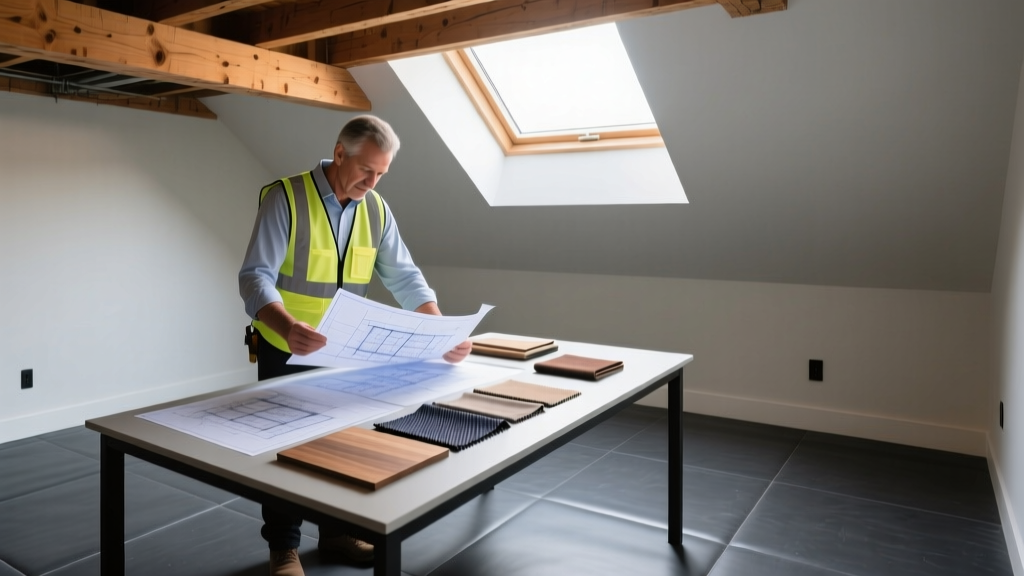
Calculating the true home gym renovation cost requires looking far beyond the price of a power rack and a set of adjustable dumbbells. When you factor in structural upgrades, electrical rewiring, and climate control, the final home gym renovation cost can easily double your initial equipment budget. Most homeowners focus on the aesthetic finishes, but the hidden infrastructure—specifically HVAC load balancing, dedicated amperage, and acoustic decoupling—dictates whether your space is a functional training facility or an unusable, overheated garage.
2026 National Cost Baselines
Basic Conversion (Garage/Spare Room): $1,500 - $3,500 (Flooring, basic lighting, paint)
Mid-Tier Buildout: $4,000 - $8,500 (Adds dedicated circuits, mini-split HVAC, mirrors)
Premium Custom Facility: $12,000 - $25,000+ (Soundproofing, subfloor reinforcement, smart lighting, saunas)
Breaking Down the Average Home Gym Renovation Cost by Feature
To build a space that supports high-intensity training without degrading your home's infrastructure, we must analyze the specific features that drive expenses. Below is a research-backed breakdown of the core renovation elements.
Climate Control & Ventilation (The Invisible Budget Eater)
Standard residential HVAC systems are engineered for sedentary living, not for a 200-pound athlete generating 400+ watts of thermal output on an assault bike. According to indoor air quality guidelines established by the Environmental Protection Agency (EPA), high-exertion spaces require enhanced ventilation to prevent CO2 buildup and excessive humidity, which can rust iron plates and degrade electronics.
For a standard 400-square-foot garage or basement gym, you need a minimum of 100 to 150 Cubic Feet per Minute (CFM) of fresh air exchange. Extending your home's central ductwork is often inefficient and expensive ($1,200–$2,500) due to static pressure drops. The most cost-effective and efficient solution in 2026 is a ductless mini-split heat pump. As noted by the U.S. Department of Energy, modern mini-splits avoid the energy losses associated with ductwork, which can account for more than 30% of energy consumption for space conditioning.
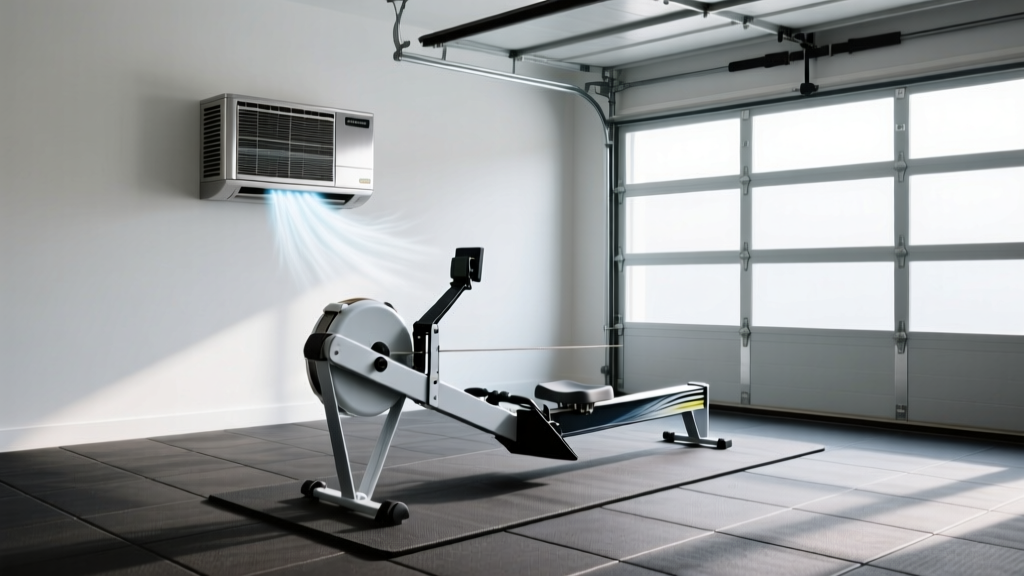
- Equipment Cost: $800 - $1,400 for a 12,000 BTU, 18+ SEER2 rated unit (e.g., Pioneer or Senville).
- Installation Cost: $700 - $1,500 for professional mounting, refrigerant line routing, and electrical whip connection.
- Total Feature Cost: $1,500 - $2,900.
Electrical Infrastructure & Dedicated Circuits
Modern smart fitness equipment is incredibly power-hungry. A high-end treadmill like the NordicTrack X32i or a Peloton Tread can draw 12 to 15 amps continuously under heavy incline and speed loads. Plugging these into a shared 15-amp bedroom or garage circuit is a primary cause of breaker trips and degraded motor lifespans.
The Electrical Safety Foundation International (ESFI) emphasizes that overloading circuits causes thermal buildup in wiring, creating severe fire hazards. To manage your overall home gym renovation cost while ensuring safety, you must install dedicated 20-amp circuits for major motorized equipment.
- Cost per Dedicated 20-Amp Circuit: $250 - $450 (assuming the main panel has available slots and is within 50 feet of the gym space).
- Panel Upgrade (if needed): $1,500 - $3,000 if your home still operates on a 100-amp service and requires a 200-amp upgrade to support the gym and existing appliances.
Feature Comparison Matrix: Budget vs. Premium Tiers
| Feature Category | Budget Tier Approach | Premium Tier Approach | Long-Term ROI / Impact |
|---|---|---|---|
| Flooring | 3/8" EVA foam tiles ($1.50/sq ft) | 3/4" vulcanized rubber + MLV underlayment ($6.00/sq ft) | Prevents concrete spalling; essential for heavy deadlifts. |
| Lighting | Standard 60W LED bulbs in existing fixtures | 4000K daylight LED panels + smart dimmers ($400-$800) | Reduces eye strain; 4000K improves focus and alertness. |
| Wall Protection | Painted drywall ($0.50/sq ft) | 3/4" OSB sheathing + rubber wall mats ($4.50/sq ft) | Prevents $500+ drywall repair bills from dropped kettlebells. |
| Mirrors | Frameless glued wall mirrors ($8/sq ft) | Shatterproof acrylic or framed gym mirrors ($18/sq ft) | Acrylic eliminates the risk of dangerous glass shattering during lifts. |
Acoustic Isolation & Subfloor Protection
Dropping a 400-pound barbell generates an instantaneous impact force exceeding 1,500 pounds per square inch. If your gym is located above a finished basement, on a second floor, or shares a wall with a neighbor in a townhouse, acoustic isolation is not optional—it is a structural necessity. Standard rubber mats do not block low-frequency impact noise; they only dampen high-frequency vibrations.
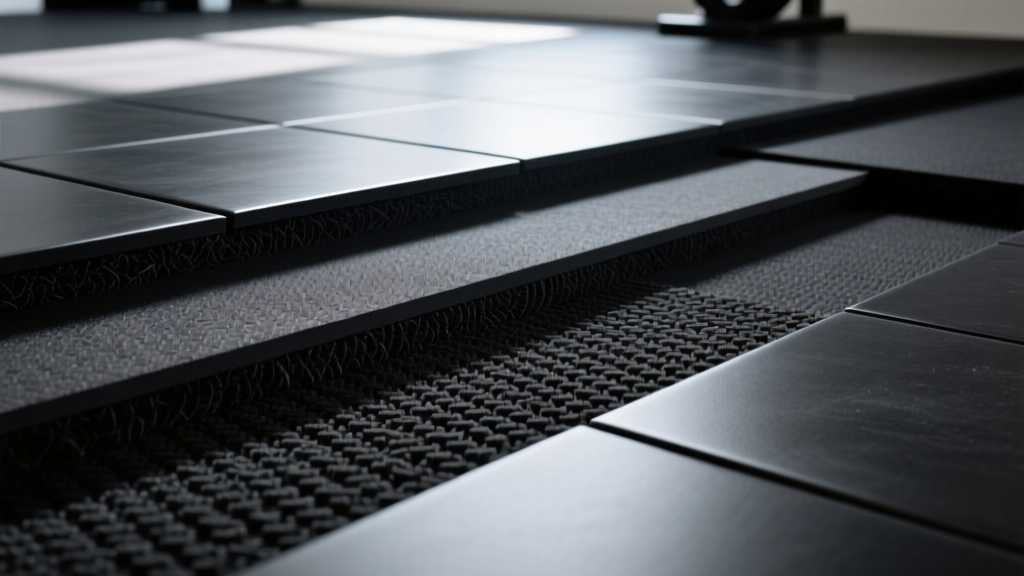
True soundproofing requires decoupling and mass. The industry standard for residential gym isolation is a layered flooring system:
- Base Layer: Mass Loaded Vinyl (MLV) at 1 lb per square foot. This adds the necessary density to block low-frequency sound waves. Cost: $1.50 - $2.00 per sq ft.
- Isolation Layer: 1/2" acoustic underlayment or resilient rubber pucks to decouple the floor from the subfloor. Cost: $1.00 - $1.50 per sq ft.
- Surface Layer: 3/4" vulcanized rubber tiles (e.g., Genesis or UltraTurf). Vulcanized rubber is non-porous, meaning it won't absorb sweat and degrade like standard crumb-rubber horse stall mats. Cost: $3.50 - $5.00 per sq ft.
Failure Mode Warning: Never install heavy gym equipment directly on unsealed concrete or standard 1/2" plywood. The micro-vibrations from treadmills and ellipticals will cause unsealed concrete to spall (dust and crumble) over time, and will delaminate cheap plywood subfloors. Always apply a penetrating silicate concrete sealer ($0.20/sq ft) before laying down any flooring system.
Calculating Your Specific Home Gym Renovation Cost
To generate an accurate budget for your specific space, follow this four-step calculation framework:
Step 1: Audit the Existing Infrastructure
Check your electrical panel for available amperage. Inspect the space for existing HVAC vents. If the space is an uninsulated garage, calculate the square footage of the walls and ceiling to determine insulation requirements (aim for a minimum R-19 in walls and R-38 in ceilings for climate control efficiency).
Step 2: Define the Load Profile
List every piece of motorized equipment. Multiply the amperage draw of each by 1.25 to find the required continuous circuit capacity. If you have two treadmills and a smart rower, you need at least two dedicated 20-amp circuits.
Step 3: Measure for Materials
Calculate the exact square footage of your floor space. Add 5% for waste and cutting errors. Multiply this by your chosen flooring tier cost (from the matrix above) to establish your baseline material cost.
Step 4: Factor in Labor Multipliers
If you are hiring licensed contractors, apply the following labor multipliers to your material costs: Electrical (1.5x material cost), HVAC (2x material cost), and General Carpentry/Flooring (1x material cost). DIY installation can reduce your total home gym renovation cost by 30% to 45%, but electrical and HVAC refrigerant work legally require licensed professionals in most municipalities.
Frequently Asked Questions
Does a home gym renovation increase property resale value?
A highly specialized, heavily modified home gym (like a fully mirrored room with bolted-down racks) rarely yields a 1:1 return on investment at resale, as it limits the room's appeal to non-lifting buyers. However, the underlying infrastructure upgrades—such as a new 200-amp electrical panel, upgraded insulation, and a new mini-split HVAC system—do add appraised value to the home. To maximize ROI, design the space so that equipment is modular and easily removed, leaving behind a well-conditioned, multi-purpose bonus room.
How can I reduce my home gym renovation cost without sacrificing safety?
The most effective cost-saving measure is performing the demolition, drywall patching, painting, and flooring installation yourself. Leave the high-liability tasks—specifically running new electrical circuits from the main panel and mounting heavy mirrors or pull-up rigs to wall studs—to professionals. Additionally, sourcing 3/4" horse stall mats from agricultural supply stores (like Tractor Supply Co.) instead of premium branded fitness tiles can save you up to 60% on flooring, though you must accept the initial rubber odor and slight dimensional inconsistencies.
More gear to consider
All reviews
Smart Equipment Alternatives for Beginners: Space-Saving, Budget-Friendly Strength Training Solutions

How To Start Equip Body Arms: A Practical, Space-Smart Guide for Home Gym Arm Training

Sports Maintenance Tools Checklist: Essential Gear for Home Gyms, Courts, and Outdoor Fitness Areas

Best Sport-Specific Home Gym Equipment for Real Value: Performance, Space, and Long-Term ROI

The Ultimate Plunge Guide: Building a Safe, Functional, and Aesthetic Cold Plunge Tub at Home
