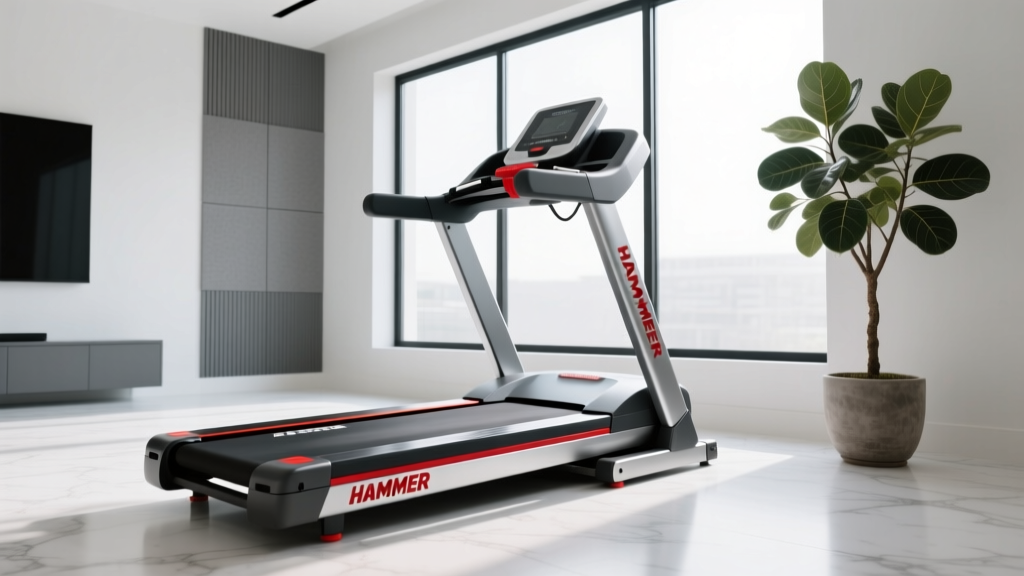
Hammer Strength Treadmill Motors: The Ultimate Horsepower & Sizing Guide
Master treadmill motor sizing with our in-depth horsepower guide. Compare residential CHP to commercial Hammer Strength treadmill AC motor benchmarks.

When evaluating cardio equipment for a home gym or commercial facility, the motor is the undisputed heart of the machine. Yet, as of 2026, the fitness industry remains plagued by misleading horsepower metrics that leave consumers with underpowered machines that stall, overheat, and ultimately fail. To truly understand treadmill motor size and horsepower, we must look past residential marketing gimmicks and examine the engineering benchmarks set by commercial giants. Specifically, analyzing the architecture of a Hammer Strength treadmill provides a masterclass in how continuous duty, alternating current, and biomechanical load management intersect to create indestructible fitness equipment.
The Great Horsepower Deception: Peak vs. Continuous Duty
The most common point of confusion in any treadmill motor size and horsepower guide is the distinction between Peak Horsepower and Continuous Duty Horsepower (CHP). Budget and mid-tier residential brands frequently advertise '4.0 Peak HP' to inflate their spec sheets. However, Peak HP is measured in a laboratory setting with zero load on the belt and only represents the motor's absolute maximum output for a fraction of a second before thermal limits are reached.
⚠️ The Peak HP Trap: A treadmill advertising 4.0 Peak HP may only possess a 2.25 CHP motor. When a 200 lb runner steps on the belt, a 2.25 CHP motor will struggle to maintain speed, causing the belt to hesitate or 'lag' with every footstrike. Always ignore Peak HP and base your purchasing decisions strictly on CHP or Commercial HP ratings.Continuous Duty Horsepower (CHP) measures the motor's ability to sustain a specific power output indefinitely under a standardized load. According to equipment testing standards referenced by the National Strength and Conditioning Association (NSCA), facility-grade equipment must sustain continuous load without thermal degradation, which is why commercial models exclusively list continuous ratings.
AC vs. DC Motors: The Commercial Advantage
Horsepower is only half the equation; the type of current powering the motor dictates its lifespan, maintenance schedule, and torque delivery. Residential treadmills almost universally use Direct Current (DC) motors, while premium commercial units utilize Alternating Current (AC) motors.
Why a Hammer Strength Treadmill Uses AC Power
The engineering synergy behind the Life Fitness umbrella, which manufactures the Hammer Strength cardio line, relies heavily on high-output AC motors. Here is why AC architecture is superior for heavy-duty applications:
- No Carbon Brushes: DC motors rely on carbon brushes that create physical friction against the commutator to transfer electricity. These brushes wear down and require replacement every 3 to 5 years. AC motors are brushless, eliminating this primary failure point.
- Thermal Efficiency: AC motors run significantly cooler under sustained loads. While a DC motor might require an internal cooling fan that whines at high speeds, an AC motor dissipates heat naturally through its heavy-duty copper windings and cast-iron housing.
- Consistent Torque at Low Speeds: AC motors deliver maximum torque instantly, even at 0.5 mph walking speeds, making them ideal for heavy users or sled-push training attachments.
Motor Size Matrix: Matching HP to Biomechanical Load
Sizing a treadmill motor is not a one-size-fits-all endeavor. The required CHP scales exponentially with user weight and intended speed. The friction coefficient between the user's footstrike and the deck requires the motor to draw more amperage to maintain belt velocity. Use the following matrix to determine your minimum CHP requirements:
| User Weight | Walking (Up to 4 mph) | Jogging (4 - 7 mph) | Running (7+ mph) |
|---|---|---|---|
| Under 150 lbs | 2.0 CHP | 2.5 CHP | 2.75 CHP |
| 150 - 200 lbs | 2.5 CHP | 3.0 CHP | 3.25 CHP |
| 200 - 250 lbs | 3.0 CHP | 3.5 CHP | 4.0 CHP |
| Over 250 lbs | 3.5 CHP | 4.0 CHP | 4.0+ HP (AC Motor) |
The Hidden Variable: Belt Friction and Amperage Draw
A critical, often overlooked factor in motor sizing is deck lubrication. A 4.0 CHP motor paired with a dry, high-friction belt will draw excess amperage and trip your home's 15-amp circuit breaker. Conversely, a properly waxed 2.5 CHP motor will run efficiently. Commercial facilities using heavy-duty units mandate silicone deck lubrication every 3,000 miles to keep amperage draw below 10 amps. When evaluating motor size, you must also commit to the maintenance required to let that motor operate within its designed electrical envelope.
Benchmarking the Gold Standard: Commercial vs. Residential
To contextualize these numbers, let us compare the motor architecture of a premier commercial machine against top-tier residential models available on the market today.
| Model | Motor Type & Size | Duty Cycle | Est. Price |
|---|---|---|---|
| Hammer Strength HST Series | 4.0 HP AC (Commercial) | 24/7 Continuous | $9,500+ |
| Life Fitness Club Series+ | 3.0 HP AC (Commercial) | 24/7 Continuous | $7,200+ |
| Sole F85 (Residential) | 4.0 CHP DC | 1-3 Hours/Day | $2,199 |
| NordicTrack Commercial 2450 | 4.25 CHP DC | 1-3 Hours/Day | $2,799 |
Real-World Failure Modes: When Undersized Motors Burn Out
When consumers ignore horsepower guidelines and subject undersized DC motors to heavy loads, specific mechanical and electrical failures occur:
- Thermal Overload Tripping: Modern treadmill motors contain internal thermal switches. If the internal temperature exceeds 110°C due to overexertion, the switch trips, shutting the machine down abruptly mid-stride to prevent a fire hazard.
- PWM Board Fry: The Pulse Width Modulation (PWM) board controls the voltage sent to the motor. When a motor struggles to turn the belt, it requests more amperage. This sustained high-amperage draw will eventually melt the capacitors on the PWM board, resulting in a $300+ repair bill.
- Demagnetization: Excessive heat inside a DC motor housing can permanently weaken the neodymium magnets surrounding the armature. Even if the motor cools down, it will suffer a permanent loss of torque, resulting in a sluggish belt that never quite recovers.
The FitGearPulse Decision Framework
Before finalizing your treadmill purchase, run your requirements through this expert checklist to ensure your motor sizing aligns with your biomechanical reality:
- Step 1: Calculate Maximum Load. Identify the heaviest user in the household. Add 10% to account for the dynamic force multiplier of running (footstrike impact).
- Step 2: Define the Duty Cycle. If multiple users will run back-to-back for more than 3 hours a day, bypass DC motors entirely and invest in a commercial-grade AC motor.
- Step 3: Verify the Drive System. A large motor is useless if paired with a small, 1.5-inch front roller. Ensure the treadmill features at least 2.5-inch crowned rollers to reduce the torque burden on the motor.
- Step 4: Check the Warranty. A manufacturer confident in their motor sizing will offer a lifetime warranty on the motor and drive components. Anything less than 10 years on a residential motor is a red flag indicating undersized components.
"A treadmill motor is an investment in kinetic consistency. Whether you are outfitting a high-performance athletic facility with a Hammer Strength treadmill or building a home gym, prioritizing continuous duty and proper current architecture ensures your equipment outlasts your fitness goals."
Frequently Asked Questions
Can I upgrade my treadmill's motor to a higher HP later?
No. Treadmill motors are paired specifically with the machine's PWM controller, wiring gauge, and roller ratios. Installing a larger motor without upgrading the entire electrical drive system will immediately blow the control board.
Does a heavier flywheel reduce the need for a larger motor?
Yes. A heavy, precision-balanced front flywheel stores rotational kinetic energy, helping the belt maintain momentum between footstrikes. This reduces the micro-adjustments the motor must make, effectively allowing a 3.0 CHP motor to perform like a 3.5 CHP motor with a lightweight flywheel.
More gear to consider
All reviews
ProForm 505 CST Treadmill: Setup Walkthrough & Feature Comparison

Walking Pad vs Treadmill Setup & Treadmill Calories

Treadmill Motor Setup: Sizing Guide & 100 Meters on a Treadmill Test

What Are METs on a Treadmill? 2026 Feature Buying Guide
ProForm Pro 2000 Treadmill vs Ellipticals: Value Guide
