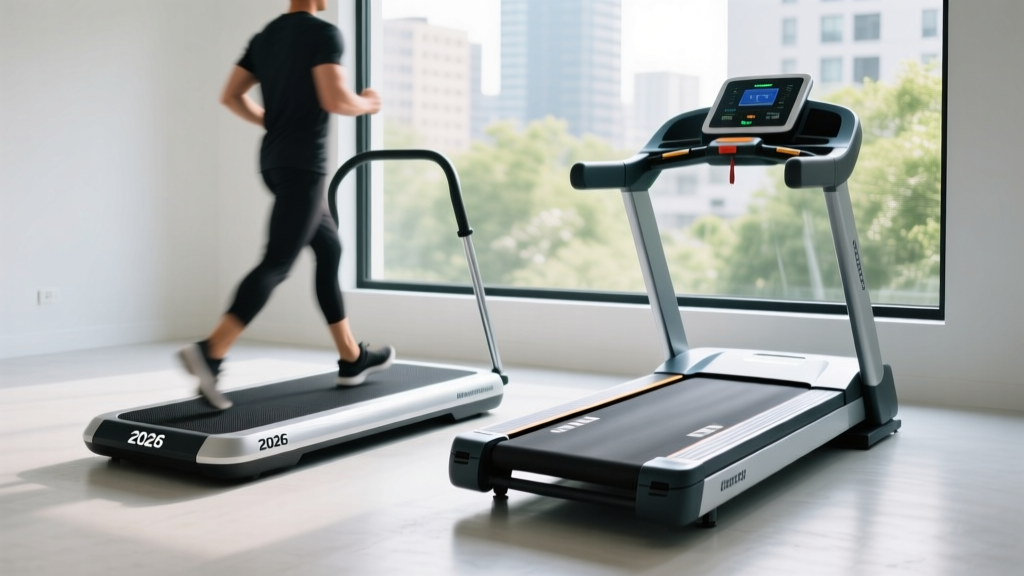
GymKit Treadmill to Rower: Buying Guide and Technique Mistakes
Transitioning from a GymKit treadmill to a rower? Avoid common buying mistakes, smart-tech syncing errors, and technique flaws with our 2026 guide.

The GymKit Treadmill Plateau: Why Athletes Are Pivoting to the Erg
For the past few years, the home fitness gold standard was the smart treadmill. If you invested in a premium model like the NordicTrack T-Series or a LifeFitness runner, you likely enjoyed the seamless Apple GymKit integration—stepping on the belt, tapping your Apple Watch to the console, and watching your heart rate and pace sync flawlessly. But as we move through 2026, a massive trend is emerging in home gyms: the pivot from high-impact running to low-impact, full-body rowing.
According to Mayo Clinic's guidelines on low-impact aerobic exercise, repetitive pounding on a treadmill belt frequently leads to plantar fasciitis, shin splints, and patellar tendinopathy. Rowing machines (ergometers) offer a zero-impact alternative that engages 86% of the body's musculature. However, transitioning from a digitally integrated GymKit treadmill to a rowing machine is fraught with purchasing blunders, connectivity frustrations, and severe technique errors. This guide will troubleshoot your transition, ensuring you don't waste thousands of dollars on the wrong machine or ruin your lower back with poor form.
The Smart Tech Shock: Troubleshooting GymKit Expectations
The number one complaint we see from former treadmill users is a perceived 'downgrade' in smart connectivity. Apple's GymKit natively supports treadmills, ellipticals, and indoor bikes, but it does not natively support rowing machines.
⚠️ Connectivity Troubleshooting Alert:If you buy a Concept2 RowErg with the PM5 monitor, your Apple Watch will not auto-pair via GymKit like it did on your treadmill. To broadcast heart rate from your Apple Watch to the PM5 monitor, you must use a third-party bridging app (like BlueHeart or HeartCast) on your iPhone to convert the Watch's Bluetooth signal into a standard ANT+/FTMS Heart Rate strap signal. Alternatively, use a dedicated chest strap like the Polar H10 ($249), which pairs natively with almost all rower monitors via Bluetooth Smart.
Rowing Machine Buying Guide: 3 Costly Purchasing Mistakes
When leaving the treadmill market, buyers often apply the wrong criteria to rowing machines. Here are the most common purchasing errors and how to avoid them.
Mistake 1: Choosing Water or Magnetic Resistance for High-Intensity Interval Training (HIIT)
Water rowers look beautiful in a living room, and magnetic rowers are whisper-quiet. However, if you are coming from a treadmill where you regularly did sprint intervals, air resistance is mandatory. Air rowers provide dynamic, infinite resistance—the harder you pull, the more the flywheel fights back. Water and magnetic rowers often 'top out' in resistance at high stroke rates, leaving advanced athletes without the necessary load for anaerobic threshold training.
Mistake 2: Ignoring the Monorail Length and User Height
Treadmills accommodate most heights as long as the ceiling is high enough. Rowers, however, are limited by the physical length of the monorail. If you are 6'2" or taller, a standard 54-inch rail will cause your shins to hit the front of the machine before you reach the optimal 'catch' position. Always verify the maximum inseam clearance.
Mistake 3: Overvaluing Built-In Touchscreens
Treadmill buyers are used to 24-inch HD touchscreens. In the rowing world, massive touchscreens (like those on the Hydrow) require expensive monthly subscriptions ($44/month in 2026) to function properly. If you prefer using your own iPad or following independent YouTube programming, a simple, data-rich LCD monitor (like the Concept2 PM5) is vastly superior and more reliable.
| Resistance Type | 2026 Flagship Model | Approx. Price | Noise Profile | Best For |
|---|---|---|---|---|
| Air | Concept2 RowErg (Tall Legs) | $1,195 | Loud (Wind noise) | HIIT, CrossFit, Competitive Data |
| Magnetic | Hydrow Pro | $2,495 | Whisper Quiet | Guided Classes, Shared Spaces |
| Water | WaterRower Oak (SmartRow) | $1,895 | Soothing (Water swoosh) | Aesthetics, Steady-State Cardio |
Technique Troubleshooting: The 'Big 4' Rowing Errors
Running on a treadmill is biomechanically intuitive; rowing is highly technical. According to Concept2's official technique archive, improper form doesn't just reduce your calorie burn—it actively risks lumbar disc herniation. Here is how to troubleshoot the most common errors.
Error 1: 'Shooting the Slide' (Hips Before the Handle)
The Flaw: During the initial drive phase, the athlete pushes with their legs, but their hips shoot backward while the handle and arms remain stationary. This places the entire load on the lower back.
The Fix: Think of your arms as ropes attached to your torso. The legs, hips, and handle must move together for the first 30% of the stroke. Practice 'legs-only' rowing with your arms kept completely straight and your torso locked at an 11 o'clock angle.
Error 2: Over-Gripping and 'Pulling the Bar Down'
The Flaw: Treadmill users are used to holding onto handrails or swinging their arms aggressively. On the rower, athletes often death-grip the handle and pull it down toward their lap.
The Fix: Hold the handle loosely with your fingers, not your palms. The handle should be pulled horizontally straight into your sternum (just below the chest), keeping your wrists completely flat.
Error 3: Hinging Too Early on the Recovery
The Flaw: After finishing the stroke, the user immediately bends their knees while the handle is still hovering over their knees, causing a collision.
The Fix: The recovery sequence is the exact reverse of the drive: Arms, Body, Legs. Push the arms out completely, hinge the torso forward past 1 o'clock, and only then allow the knees to bend.
The 60-20-20 Power Rule: A common myth is that rowing is an upper-body workout. Proper rowing biomechanics dictate that 60% of the power comes from the legs, 20% from the core/hip hinge, and only 20% from the arms. If your biceps are burning before your quads, your sequencing is flawed.
Hardware Troubleshooting: Maintaining Your Rower
Treadmills require belt lubrication and motor dusting. Rowers require a different maintenance protocol. Neglecting these steps will lead to a jerky stroke and degraded sensor accuracy.
- The Chain (Air Rowers): Wipe the chain with a paper towel and apply 3-in-One oil or purified mineral oil every 50 hours of use. Never use WD-40, as it strips existing lubricants and attracts micro-dust.
- The Monorail: The wheels on the seat carriage pick up sweat and dead skin, creating a gritty track. Wipe the stainless steel rail with a mixture of water and denatured alcohol after every third session to prevent pitting.
- Water Tank Maintenance: If you opted for a water rower, you must drop a chlorine purification tablet into the tank every 6 months. Algae buildup will cloud the polycarbonate tank and degrade the paddle's drag factor.
- Foot Strap Tearing: The plastic flex-plates on foot stretchers frequently crack near the top rivet. Inspect the plastic webbing monthly. If you see white stress lines, order replacement straps immediately to avoid mid-stroke snapping.
Final Verdict: Making the Switch Successfully
Leaving the familiar, high-tech ecosystem of a GymKit treadmill for the raw, mechanical demand of a rowing machine is one of the best cardiovascular decisions you can make in 2026. The CDC's physical activity guidelines emphasize the importance of varied, joint-sparing aerobic exercises for long-term longevity. By understanding the limitations of smart-tech pairing on rowers, selecting an air-resistance machine that fits your inseam, and strictly adhering to the 'legs-body-arms' sequencing, you will unlock a lifetime of pain-free, elite-level conditioning. Treat your first three weeks on the erg not as a workout, but as a technical practice, and the metabolic returns will far outpace your old treadmill routine.
More gear to consider
All reviews
Cardio Training Treadmill: Feature Comparison & Setup Guide

How Many Miles on the Treadmill to Lose Weight? 2026 Cycling Trends

Complete Setup: Finding a Treadmill That Fits Under Bed
Elliptical vs Treadmill Space: Air Assault Treadmill Layout Guide

Stair Climber Setup & WalkingPad P1 Foldable Walking Treadmill Reviews