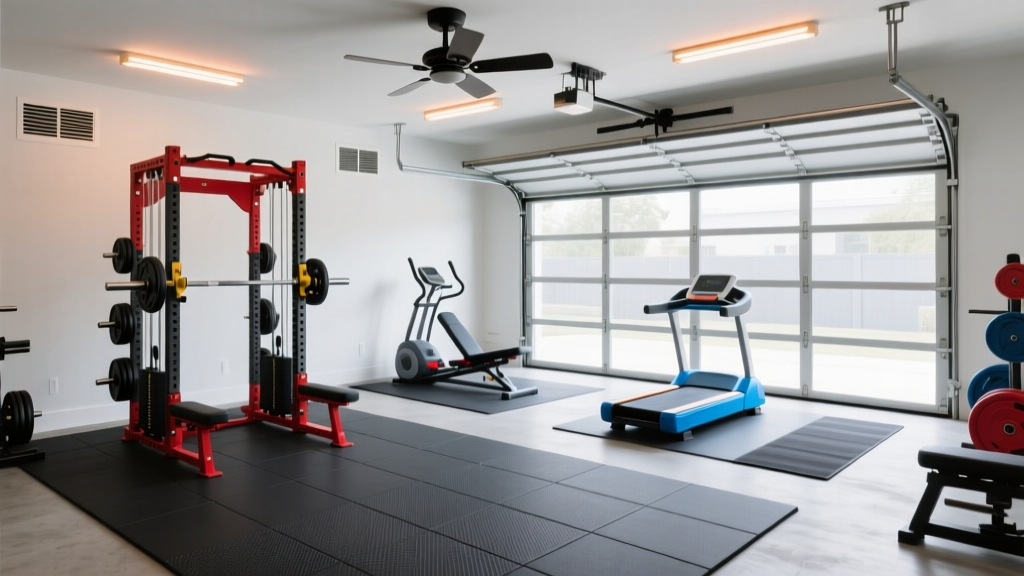
Garage Gym Setup: Flooring, Ventilation & Home Gym HSA Eligible
Avoid costly garage gym setup mistakes. Learn proper flooring, ventilation troubleshooting, and strict IRS rules for home gym HSA eligible expenses.

The Intersection of Structural Integrity and Tax Codes
Building a garage gym in 2026 requires more than just dropping a power rack onto bare concrete and opening the driveway door. The modern garage gym is a complex environment where building science, indoor air quality, and even healthcare financing intersect. Many lifters and fitness enthusiasts make critical errors during the planning phase that lead to ruined subfloors, toxic air quality, and rejected tax deductions.
One of the most frequent financial questions we receive at FitGearPulse is whether a garage build-out is considered a home gym HSA eligible expense. The short answer is: usually not, unless you navigate very specific IRS medical necessity protocols. In this troubleshooting guide, we will dismantle the most common physical mistakes regarding garage flooring and ventilation, while clarifying the strict financial rules surrounding Health Savings Account (HSA) funding for fitness infrastructure.
The Financial Trap: Navigating HSA Eligibility Rules
A pervasive myth in the fitness community is that you can use pre-tax HSA or FSA funds to buy squat racks, dumbbells, or rubber flooring simply because exercise is 'healthy.' The IRS strictly prohibits this for general wellness. According to IRS Publication 502, you can only use HSA funds for medical expenses that diagnose, treat, mitigate, or prevent a specific disease.
⚠️ The HSA Audit Warning
If you purchase a $3,000 Rogue Fitness rack or $800 in flooring and attempt to reimburse yourself via your HSA without proper documentation, you risk a severe tax penalty. General fitness equipment is never home gym HSA eligible on its own.
How to Legitimately Qualify Fitness Expenses
To make any part of your garage gym setup home gym HSA eligible, you must obtain a Letter of Medical Necessity (LMN) from a licensed physician. This letter must explicitly state that the equipment is prescribed to treat a specific, diagnosed medical condition (e.g., severe obesity, hypertension, or a prescribed physical therapy regimen for a spinal injury).
- Eligible with LMN: Treadmills, stationary bikes, or specific ergonomic flooring if prescribed for joint rehabilitation.
- Rarely Eligible: Power racks, barbells, and standard rubber horse stall mats (considered general fitness or structural home improvements).
- Ventilation/Air Purification: If you suffer from severe asthma, a dedicated HEPA air purification system for your garage gym may be partially HSA eligible with an LMN, as it treats a specific respiratory condition.
Subfloor Sabotage: Flooring Mistakes That Ruin Concrete
The most catastrophic physical mistake in a garage gym setup is laying rubber flooring directly over an uninsulated, unsealed concrete slab. Concrete is highly porous and acts like a sponge for ground moisture. When you cover it with dense, non-breathable vulcanized rubber, you trap moisture against the slab.
The Consequences of Trapped Moisture
Within 6 to 12 months, trapped moisture leads to efflorescence (a white, powdery salt deposit that degrades the concrete surface) and creates a breeding ground for black mold beneath your mats. Furthermore, the moisture can wick up into your drywall if the garage is attached to your home, causing structural rot.
The Fix: Proper Vapor Barriers and Mat Selection
Before laying down 3/4-inch thick rubber mats (like the popular Rogue RMG mats at ~$75 each or Tractor Supply stall mats at ~$55), you must install a vapor barrier.
- Clean and Etch: Sweep and vacuum the concrete. Use a concrete etcher if the surface is heavily sealed.
- Lay the Barrier: Roll out a 6-mil polyethylene vapor barrier (costing roughly $0.15 per square foot). Overlap seams by 6 inches and seal them with moisture-resistant Tyvek tape.
- Add a Subfloor (Optional but Recommended): For heavy Olympic dropping, lay down 3/4-inch OSB or plywood over the vapor barrier to distribute point loads and protect the concrete from cracking under 500+ lb drops.
- Install Rubber: Lay your 3/4-inch rubber mats on top. Use double-sided carpet tape only on the perimeter to prevent shifting, leaving the center seams unglued to allow for thermal expansion.
The 48-Hour Moisture Test Protocol
Not sure if your garage slab emits moisture? Perform this simple test before buying materials:
Tape a 2x2 foot square of clear 6-mil plastic sheeting to the bare concrete using duct tape, sealing all four edges completely. Leave it for 48 hours. If you see condensation under the plastic, or if the concrete beneath it is visibly darker than the surrounding area, your slab is emitting moisture and requires a vapor barrier before flooring installation.
Suffocating Your Space: Ventilation and Air Quality Failures
Garages are essentially sealed concrete boxes. They lack the HVAC return vents found in the rest of your home. The second major mistake lifters make is relying on a standard 20-inch box fan sitting in the driveway to cool a 400-square-foot garage during intense summer sessions.
The VOC and Carbon Monoxide Threat
Cheap rubber mats (especially those made from recycled tire crumb) off-gas Volatile Organic Compounds (VOCs) for months. According to the EPA's guidelines on indoor air quality, VOCs can cause headaches, respiratory irritation, and long-term health issues when concentrated in unventilated spaces. Furthermore, if you park a vehicle in the garage, residual carbon monoxide (CO) can linger in the porous concrete and off-gas into your workout space.
Designing a Cross-Ventilation System
To properly ventilate a garage gym, you must create negative pressure to pull stale, VOC-heavy air out, and introduce fresh make-up air.
- Exhaust: Install a high-CFM (Cubic Feet per Minute) exhaust fan high on the wall opposite your driveway. For a standard 2-car garage (approx. 400 sq ft with a 10ft ceiling = 4,000 cubic feet), you need a fan rated for at least 1,200 to 1,500 CFM to achieve adequate air exchanges per hour. The Hunter Industrial 60-inch ceiling fan or a hardwired Panasonic WhisperCeiling exhaust are excellent choices.
- Intake: Crack a side window or install a louvered intake vent near the floor on the opposite side of the room to create a cross-breeze that sweeps the breathing zone.
- Air Purification: If you live in a climate where opening windows isn't viable (extreme heat, cold, or high pollen), invest in a commercial-grade HEPA/Carbon scrubber. The BlueDri BD-AS-550 (approx. $450) features a massive activated carbon filter specifically designed to neutralize rubber VOCs and garage odors.
Pro-Tip: If you are attempting to get an air purification system approved as a home gym HSA eligible expense due to exercise-induced asthma, ensure your LMN specifically prescribes the carbon-activated HEPA filtration required to remove the VOC triggers from the garage environment.
Troubleshooting Matrix: Symptoms, Causes, and Fixes
Use this diagnostic table to identify and resolve the most common garage gym environment failures.
| Symptom | Root Cause | The Fix |
|---|---|---|
| White, chalky powder under rubber mats | Efflorescence caused by trapped moisture migrating through unsealed concrete. | Remove mats, clean with muriatic acid solution, apply penetrating concrete sealer, and install a 6-mil poly vapor barrier before relaying mats. |
| Persistent 'burning tire' smell and morning headaches | VOC off-gassing from cheap recycled rubber mats combined with zero cross-ventilation. | Upgrade to low-VOC vulcanized rubber (e.g., Rogue RMG), install a 1,500 CFM exhaust fan, and run a carbon-scrubbing air purifier. |
| Condensation dripping from garage ceiling/rafters | High humidity from heavy breathing and sweat hitting an uninsulated, cold roof deck. | Install closed-cell spray foam insulation on the ceiling deck to raise the dew point surface temperature, and add a dehumidifier rated for 50 pints/day. |
| HSA reimbursement rejected for gym equipment | Lack of a specific medical diagnosis and missing Letter of Medical Necessity (LMN). | Consult your physician for an LMN detailing the specific ICD-10 diagnosis code, and submit it alongside your itemized receipts to your HSA administrator. |
Expert Verdict: Prioritizing Health and Structural Integrity
A successful garage gym setup is about more than just the weight on the bar; it is about creating a safe, sustainable, and financially sound environment. By installing a proper 6-mil vapor barrier beneath high-quality, low-VOC rubber flooring, you protect your home's structural integrity from moisture damage. By engineering true cross-ventilation with high-CFM exhaust systems, you protect your lungs from toxic off-gassing and carbon monoxide risks.
Finally, when evaluating the financial side of your build, approach the concept of a home gym HSA eligible expense with extreme caution and proper medical documentation. Do not rely on internet forums for tax advice; rely on IRS Publication 502 and your physician's Letter of Medical Necessity. Build smart, breathe easy, and lift heavy.
More gear to consider
All reviews
Outdoor Gym Weather Care & Home Gym Club Training App Tracking

Best Home Gym Wall Colors for Strength Training & Equipment Care

Weatherproofing Your Outdoor Home Gym Wall: Longevity Tips

Vectra 1800 Home Gym Layout: A Beginner's Design Guide

Essential Starter Kit for a Complete Home Gym Leg Workout
