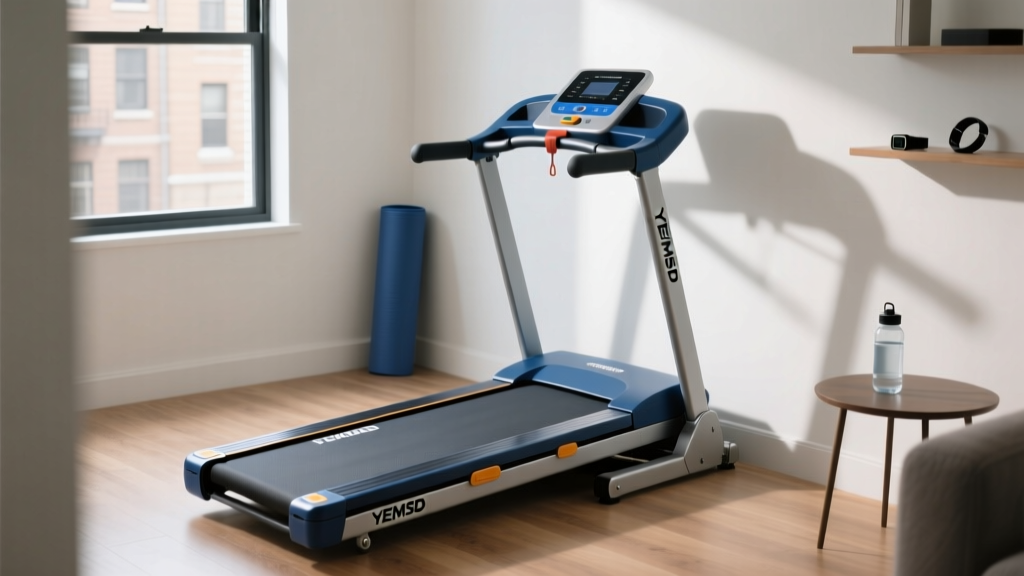
Folding Treadmill Engine Care: Small Space Longevity Guide
Discover how to maintain your folding treadmill engine in small spaces. Expert tips on heat, dust, and motor longevity for compact cardio gear.

The Small-Space Compromise: How Folding Designs Impact the Treadmill Engine
Living in a compact apartment, condo, or multi-use room often dictates your fitness equipment choices. Folding treadmills are the undisputed champions of small-space living, allowing you to reclaim your square footage post-workout. However, as a senior reviewer at FitGearPulse, I must highlight a critical engineering trade-off that most buyers overlook: the compromised thermal envelope of the motor hood.
When manufacturers design a folding treadmill for small spaces, the primary casualty is the motor compartment's volume. To keep the deck foldable and the base slim, engineers shrink the hood. This restricted airflow directly impacts the treadmill engine (the drive motor). In a compact hood, heat dissipation is severely limited. If you pair this with the high-ambient temperatures of a small, poorly ventilated room, your treadmill engine is forced to operate near its thermal ceiling. Over time, this accelerates the degradation of the motor's internal windings, the drive belt, and the electronic control board.
According to equipment longevity data analyzed by Consumer Reports, treadmills that consistently operate in high-heat, low-airflow environments experience motor and board failures up to 30% faster than those in climate-controlled, spacious home gyms. To protect your investment, you must adopt a rigorous, small-space-specific maintenance protocol.
2026 Folding Treadmill Review: Engine Specs & Thermal Profiles
Not all folding treadmill engines are created equal. When reviewing the top compact models for 2026, we look specifically at Continuous Duty Horsepower (CHP), cooling fan placement, and the physical footprint required for safe heat exhaust. Below is a comparison of three market leaders and how their engines handle small-space constraints.
| Model (2026) | Engine (CHP) | Cooling Design | Small-Space Verdict | Price Range |
|---|---|---|---|---|
| Sole F63 | 3.25 CHP DC | Dual-flywheel rear exhaust | Excellent. High-torque engine runs cooler under load, but requires strict rear clearance. | $1,199 - $1,299 |
| Horizon T101 | 2.75 CHP DC | Side-vented lateral cooling | Good. Lateral vents prevent wall-bounce heat, ideal for pushing near corners. | $799 - $899 |
| NordicTrack T Series 10 | 2.6 CHP DC | Top-mounted intake fan | Fair. Top intake is easily choked by dust in small apartments; requires frequent cleaning. | $599 - $699 |
Note: Always look for a minimum of 2.5 CHP for walking/jogging in small spaces. An undersized treadmill engine will draw excessive amperage to maintain speed, generating massive amounts of waste heat.
Critical Maintenance Routines for Compact Treadmill Engines
To maximize the lifespan of your folding treadmill engine in a tight footprint, you must move beyond basic wipe-downs. Implement these three advanced maintenance routines.
1. The 12-Inch Exhaust Clearance Rule
The most common mistake small-space users make is folding the treadmill, or pushing it against a wall immediately after a run. The treadmill engine retains heat long after the belt stops moving. If the rear exhaust port is within 12 inches of a wall, the expelled hot air bounces back into the motor hood, baking the internal components.
- Action: Never store the treadmill in its folded position until the motor hood is cool to the touch (usually 20-30 minutes post-workout).
- Action: Ensure a minimum of 12 inches of clearance behind the motor hood and 4 inches on both sides during operation to allow for cross-ventilation.
2. Mitigating the "Floor Dust" Effect
Small apartments concentrate human dander, pet hair, and fabric fibers near the floor. Because folding treadmills sit low to the ground, their engine intake fans act like vacuums, pulling this micro-dust directly into the motor compartment. This dust coats the engine's copper windings and the control board, acting as an insulator that traps heat and causes short circuits.
- Weekly: Use a vacuum with a soft brush attachment to clean the floor directly beneath and around the motor hood.
- Bi-Annually: Unplug the machine, remove the motor hood cover (usually 4 to 6 Phillips-head screws), and use compressed air to blow out the engine fins and control board. Always do this in a well-ventilated area or outdoors.
3. Belt Friction and Amp Draw Management
A dry running belt creates immense friction. To overcome this friction and maintain your set speed, the treadmill engine must draw significantly more electrical current (amperage). Higher amp draw equals higher heat output. In a small, unventilated room, this is a recipe for thermal throttling or a blown thermal breaker.
The Smart Plug Test: Plug your treadmill into a smart energy-monitoring plug (like a Kasa or Wyze plug). A healthy, well-lubricated treadmill walking at 3.0 mph should pull between 300 and 450 watts. If you see spikes above 800 watts during a standard walking pace, your belt is dry, and your treadmill engine is suffocating under the mechanical load.
Experts at the Treadmill Doctor emphasize that using 100% silicone treadmill lubricant every 130 miles or 3 months is non-negotiable. Avoid petroleum-based products or WD-40, which will destroy the belt's cotton underlayer and force the engine to work twice as hard.
⚠ Warning: The Folding Mechanism HazardNever engage the folding hydraulic piston while the treadmill engine is running or immediately after a high-intensity sprint. The sudden shift in deck angle can cause the heavy motor assembly to torque against the frame, potentially stripping the folding hinge bolts or damaging the engine mount brackets.
Troubleshooting Engine Overheating in Tight Quarters
How do you know if your small-space environment is already damaging your treadmill engine? Watch for these specific failure modes:
- The Ozone Smell: A sharp, metallic, or "burning plastic" odor near the front of the deck indicates the motor brushes are arcing excessively due to heat expansion, or the control board is overheating.
- Sudden Speed Drops (Thermal Throttling): If the belt abruptly slows down during a run without you touching the console, the engine's internal thermal sensor has tripped to prevent a fire. Stop immediately and let the unit cool for an hour.
- Console Flickering: High amp draw from a struggling, overheated engine can cause voltage drops that starve the console display of power, causing it to flicker or reset mid-run.
Expert Verdict: Balancing Footprint and Motor Longevity
A folding treadmill is a brilliant solution for small-space living, but it demands a higher level of mechanical empathy than a massive, commercial-grade club treadmill. By respecting the thermal limitations of a compact motor hood, enforcing strict clearance zones, and monitoring your belt friction via amp draw, you can easily extend the life of your treadmill engine well past the standard 3-to-5-year warranty window. Remember: in a small room, airflow is just as important as horsepower.
More gear to consider
All reviews
Under Desk Treadmill Review: Beyond the Viral Treadmill Video Clip

ProForm C950 Treadmill vs. Rivals: 2026 Feature Comparison Guide
Budget Folding Treadmills for Virtual Treadmill Trails

2026 Bike Types & P1 Compact Treadmill Reviews: Market Trends

2026 Under Desk Treadmill Review: Does Treadmill Belt Size Matter?