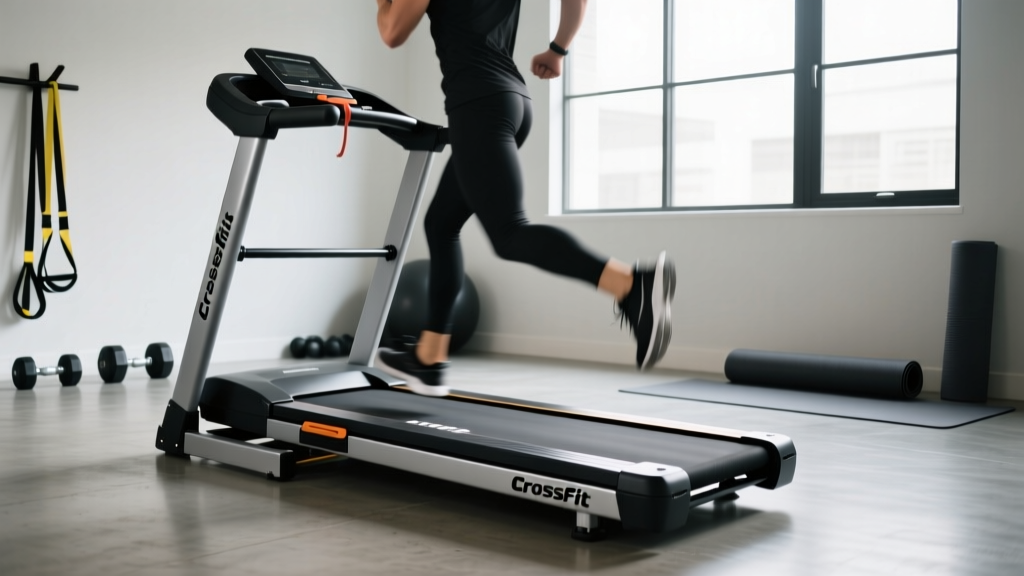
Best Folding CrossFit Treadmill for Small Spaces 2026
Need a folding crossfit treadmill for small spaces? We review heavy-duty motorized models that survive sprint WODs and fold away in your home gym.

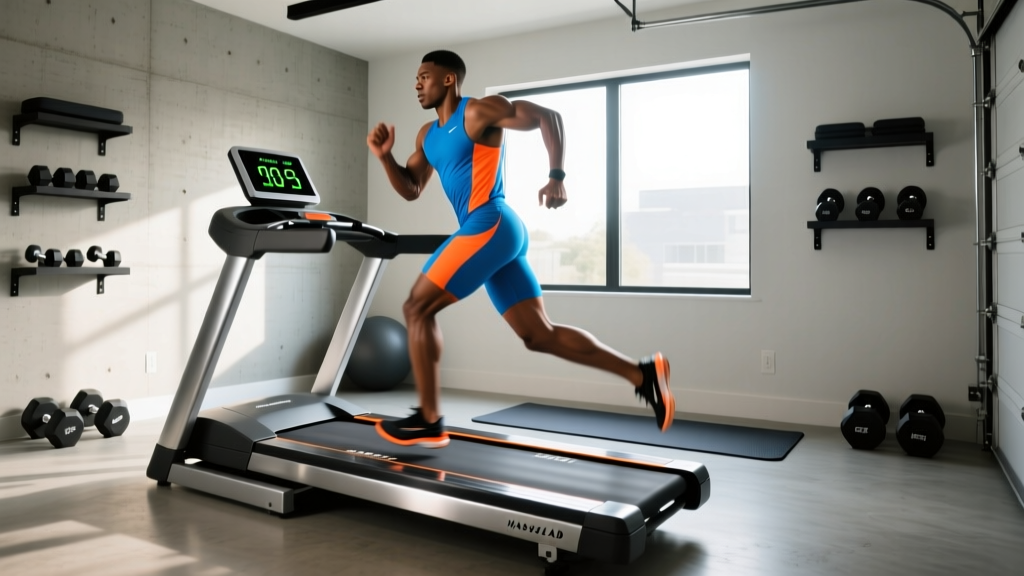
Finding a reliable crossfit treadmill that actually folds is one of the most frustrating equipment hunts in the home gym world. Standard functional fitness programming demands brutal sprint intervals, high-incline grinds, and rapid transitions between the rig and the runner. Yet, the gold-standard manual curved runners (like the Rogue Echo or AssaultRunner) feature rigid, non-folding steel frames that permanently dominate a two-car garage. If you are searching for a folding crossfit treadmill to maximize a small space without sacrificing the durability needed for daily WODs, you are navigating a highly specialized market.
This 2026 guide breaks down the exact heavy-duty motorized folding treadmills that can survive high-impact functional fitness. We will also cover the biomechanical compromises you must accept when swapping a curved manual runner for a motorized folding deck, and how to adapt your programming to get the same metabolic stimulus.
The Physics Problem: Why Most Folding Treadmills Fail CrossFit WODs
To understand why you cannot simply buy a $600 budget folding treadmill for high-intensity interval training (HIIT), you have to look at the mechanical stress of a typical metcon. In a standard CrossFit environment, athletes frequently perform burpee-to-sprint transitions. On a curved manual treadmill, the belt only moves when you push it, meaning you can jump on and off safely at a dead stop or full sprint.
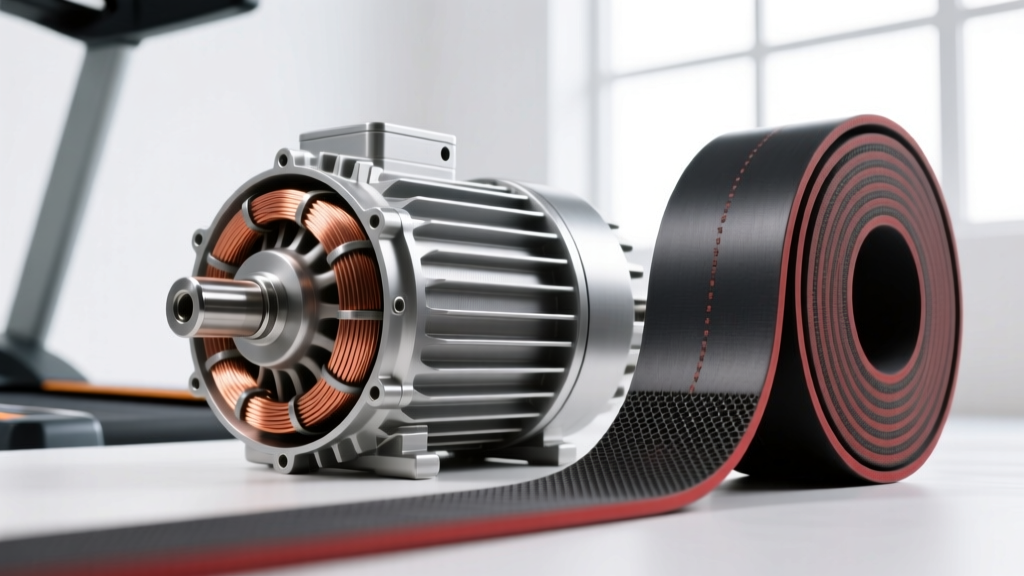
On a motorized treadmill, the belt is driven by a motor at a constant speed. The primary failure mode in budget folding treadmills is the deck hinge and the motor controller. When a 200-pound athlete jumps onto a belt moving at 10 mph, the sudden braking force sends a massive spike of amperage back into the motor controller. Over time, this fries the logic board. Furthermore, the lateral torque applied when stepping onto the side rails and launching back onto the deck can warp cheap steel folding hinges, causing the belt to track off-center and eventually tear.
Therefore, a true crossfit treadmill that folds must possess a high-torque Continuous Horsepower (CHP) motor, a heavy-gauge steel folding mechanism, and an extended warranty that explicitly covers commercial or high-impact use.
Top Heavy-Duty Folding Treadmills for CrossFit WODs
Based on 2026 market availability, motor durability, and folding footprint, these are the top contenders for small-space home gyms that demand serious performance.
1. Sole F85 (2026 Edition)
The Sole F85 remains the undisputed king of heavy-duty folding treadmills. It features a massive 4.0 CHP motor that easily absorbs the shock of jump-on sprint intervals without tripping the thermal overload switch. The 400-pound weight capacity and 22-inch by 60-inch belt provide enough surface area for aggressive sprinting mechanics.
- Top Speed: 12 mph (Crucial for 400m sprint scaling)
- Incline: 15 levels for uphill lunges and sled-push simulations
- Folded Dimensions: 35 x 30 x 66 inches
- Estimated Price: $1,999
2. NordicTrack Commercial 1750
If your programming leans heavily into incline grinds and hill sprints, the Commercial 1750 offers a -3% decline to 15% incline. The decline feature is exceptional for eccentric hamstring conditioning and mimicking outdoor terrain variations. However, the integrated HD touchscreen requires an active subscription for full manual mode access on some firmware versions, which can be annoying when you just want to smash a 5K time trial.
- Top Speed: 12 mph
- Motor: 3.5 CHP (Adequate for most, but requires 5-minute cool-downs after max-effort sprints)
- Folded Dimensions: 34 x 31 x 73 inches
- Estimated Price: $2,499
3. Horizon 7.4 at 14
Horizon's 7.4 series is built for rapid transitions. The rapid-incline motor adjusts the deck angle in real-time, making it ideal for WODs that call for alternating between flat sprints and steep hill climbs. The deck cushioning is slightly firmer than the Sole, which is actually preferable for heavy athletes who need a stable base for plyometric bounding.
- Top Speed: 12 mph
- Weight Capacity: 350 lbs
- Folded Dimensions: 38 x 30 x 64 inches
- Estimated Price: $1,499
Adapting Your Programming: Motorized vs. Manual Curved Runners
When you transition from a gym box with curved runners to a home gym with a motorized folding unit, you must adjust your expectations and your scaling. According to a study published in the Journal of Strength and Conditioning Research, curved non-motorized treadmills elicit a significantly higher heart rate, oxygen consumption, and perceived exertion compared to standard motorized treadmills at the exact same speed. The friction and the need to manually drive the belt curve account for roughly a 20% to 30% increase in metabolic demand.
The 2% Incline Rule
To replicate the energy expenditure of outdoor running or a curved manual treadmill on your folding motorized unit, always set the incline to 1.5% or 2.0% for flat-pace WODs. This compensates for the lack of wind resistance and the motor doing the work of pulling your foot back.
Scaling Distance WODs
If a WOD calls for a 400m run on an Echo Bike or curved runner, and you are using a motorized treadmill, cap your speed at 85-90% of your max sprint. The biomechanical reality of treadmill sprinting mechanics dictates that over-striding on a moving belt can lead to severe hamstring strains, especially when fatigued from heavy deadlifts or cleans.
Critical Specs to Demand in a Treadmill for CrossFit
Not sure if the folding treadmill you are looking at can handle the volume? Use this checklist before purchasing:
| Specification | Minimum Requirement for CrossFit | Why It Matters |
|---|---|---|
| Motor Size | 3.5 CHP (Continuous) | Peak horsepower is a marketing myth. CHP dictates how the motor handles sustained heavy loads without overheating. |
| Belt Length | 60 inches minimum | Shorter belts (55 inches) force you to shorten your stride during sprints, altering mechanics and risking injury. |
| Side Rails | Textured, wide, non-slip | You will be standing on the rails during rest periods of EMOMs. Smooth plastic rails are a slip hazard with sweaty shoes. |
| Folding Hinge | Hydraulic soft-drop, steel-reinforced | Prevents the deck from slamming down and warping the chassis over years of heavy use. |
Safety Protocols for High-Intensity Interval Transitions
The most dangerous aspect of using a motorized treadmill for CrossFit is the transition. In a WOD like Fran or a custom metcon involving burpees and sprints, athletes are tempted to jump directly onto a moving belt. Never do this on a motorized treadmill.
- The Straddle Method: Always leave the belt running at your target speed. Step onto the stationary side rails, grip the handrails, and straddle the moving belt. Gradually lower one foot, then the other, to match the belt speed before letting go.
- The Hard Stop: When your sprint distance is complete, do not jump off. Grab the handrails, lift your weight onto the side rails, and then hit the emergency stop or pause button.
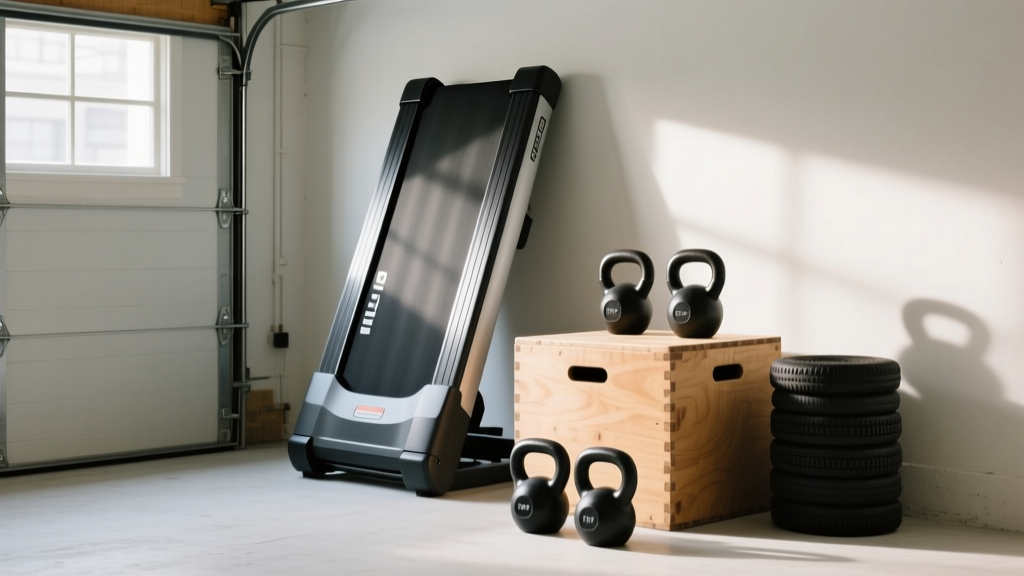
- Clear the Zone: Ensure your plyo boxes, kettlebells, and barbells are at least 4 feet behind the treadmill. If you slip off the back of the deck during a max-effort sprint, you need a clear runoff zone.
Frequently Asked Questions (FAQ)
What is the best treadmill for CrossFit?
The absolute best treadmill for CrossFit is a non-motorized curved runner like the Rogue Echo or AssaultRunner, as they allow for self-paced sprinting, instant stops, and mimic outdoor running mechanics. However, if you require a folding unit for a small space, the Sole F85 is the best motorized alternative due to its 4.0 CHP motor and robust folding hinge.
Can I use a folding treadmill for CrossFit WODs?
Yes, but with strict safety modifications. Because folding motorized treadmills run on a continuous belt, you cannot jump on and off them safely during high-heart-rate metcons. You must use the side-rail straddle method for transitions and avoid programming lateral movements (like side-shuffles) on a motorized deck.
How do I scale running WODs on a motorized treadmill for CrossFit?
To match the metabolic output of a curved manual treadmill or outdoor running, set your motorized treadmill to a 1.5% or 2.0% incline. Additionally, because treadmill running removes the need for wind resistance and terrain stabilization, athletes often complete treadmill WODs 10-15% faster than outdoor runs. Consider scaling the distance down slightly or adding a weighted vest to maintain the intended stimulus of the workout.
Will jumping on a treadmill void the warranty?
Most residential treadmill warranties explicitly exclude damage caused by 'commercial use' or 'abusive practices,' which manufacturers often define as jumping onto a moving belt. To protect your investment, always use the straddle method and ensure you are buying a machine with a high continuous horsepower (CHP) motor that can handle the amperage spikes of sudden weight loading.
More gear to consider
All reviews
Stair Climber Home Guide vs Life Fitness Treadmill Models by Year

Maintaining Spin, Upright & Recumbent Bikes, Dogs and Treadmills
Space-Saving Layouts & UREVO Cyberpad Smart Treadmill Belt Care

Beyond the x22i Treadmill: 2026 Home Stair Climber Guide

Can You Hold On To Treadmill Rails? Compact Layouts & Belt Care
