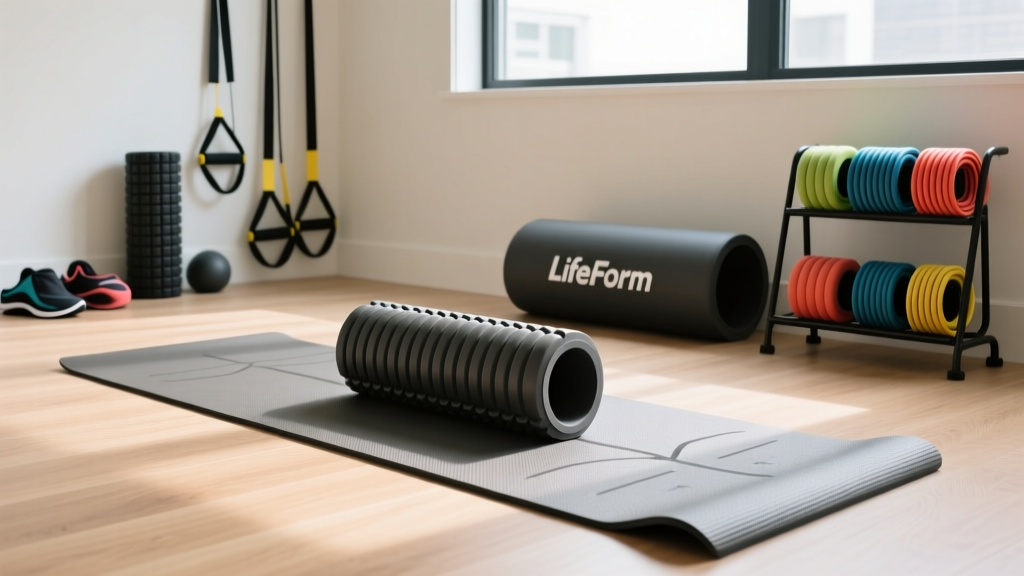
Foam Roller Sizing Guide & How to Clean LifeForm Yoga Mats
Master foam roller density and size selection for optimal recovery. Plus, learn how to clean LifeForm yoga mats to keep your fitness gear pristine.

The Complete Beginner’s Guide to Recovery Gear: Selection and Maintenance
Building a sustainable home gym in 2026 requires more than just picking out the flashiest equipment; it demands an understanding of recovery tools and proper gear maintenance. Whether you are trying to alleviate delayed onset muscle soreness (DOMS) or maintain the hygiene of your studio accessories, knowing the technical specifications of your gear is paramount. This guide will walk you through the exact science of foam roller density and size selection, before transitioning into a crucial maintenance tutorial on how to clean lifeform yoga mat surfaces without degrading their eco-friendly polymers.
Step 1: Decoding Foam Roller Density
When beginners shop for myofascial release tools, they often confuse texture with density. Texture refers to the surface ridges designed to mimic a massage therapist's thumbs, while density refers to the core material's resistance to compression. Selecting the wrong density can either render your recovery session useless or cause acute bruising.
Expert Insight: Density is measured in pounds per cubic foot (lb/ft³). A standard EVA foam roller sits around 2.0 lb/ft³, while high-density EPP rollers exceed 3.0 lb/ft³. Always match the density to your pain tolerance and tissue adaptation level, not just your fitness level.Density Comparison Matrix
| Density Level | Core Material | Best Use Case | Avg. Price (2026) |
|---|---|---|---|
| Soft (Low) | EPE (Expanded Polyethylene) | Acute injury rehab, Pilates, elderly users | $15 - $25 |
| Medium (Standard) | EVA (Ethylene-Vinyl Acetate) | General fitness, beginners, daily maintenance | $20 - $35 |
| Firm (High) | EPP (Expanded Polypropylene) | Deep tissue, athletes, heavy muscle mass | $30 - $50 |
| Extra-Firm / Hybrid | ABS Core + EVA Shell | Targeted trigger point therapy (e.g., TriggerPoint GRID) | $40 - $70 |
According to research published by the National Institutes of Health (NIH), utilizing a medium-density EVA roller provides the optimal balance for improving range of motion (ROM) without negatively impacting acute muscle performance prior to a workout.
Step 2: Selecting the Correct Size and Length
Size dictates leverage, stability, and the surface area you can treat simultaneously. Here is the breakdown of standard dimensions and their specific applications:
- 12-Inch (Travel/Targeted): Perfect for packing in a gym bag. Ideal for isolated work on the calves, forearms, and neck. Top 2026 Pick: RumbleRoller Beastie ($45).
- 18-Inch (Standard): The most versatile size for home gyms. Allows for unilateral quad and hamstring rolling while maintaining enough width to prevent slipping off the edge.
- 24-Inch (Mid-Length): Excellent for IT band sweeps and lateral glute work. Provides a wider base of support for side-lying positions.
- 36-Inch (Full-Length): Mandatory for spinal alignment and thoracic extension. A 36-inch roller allows you to lie vertically with the roller parallel to your spine, opening the chest and correcting postural kyphosis. Top 2026 Pick: OPTP PRO-ROLLER Soft 36" ($55).
"Beginners should always start with a 36-inch medium-density EVA roller. The extra length provides a psychological and physical safety net, preventing the anxiety of rolling off the edge during thoracic extensions." — FitGearPulse Recovery Lab
Step 3: Gear Maintenance and Hygiene
While foam rollers can generally be wiped down with standard antibacterial sprays, your yoga accessories require a much more nuanced chemical approach. Many premium mats on the market utilize advanced polymers that react poorly to standard household cleaners.
How to Clean LifeForm Yoga Mat Surfaces Safely
LifeForm and similar premium brands frequently utilize TPE (Thermoplastic Elastomer) or eco-friendly natural rubber blends. TPE is a closed-cell material that offers incredible grip, but it is highly susceptible to lipid-based degradation. If you are searching for exactly how to clean lifeform yoga mat materials without ruining the polymer matrix, you must avoid essential oils, tea tree oil, and harsh alkaline detergents. These substances break down the TPE bonds, leading to flaking, dry rot, and a permanent loss of traction.
The 4-Step TPE Cleaning Protocol
- Dry Particulate Removal: Before applying any liquid, use a microfiber cloth to wipe away dust, dead skin cells, and chalk residue. Friction from particulates can cause micro-tears in the mat surface.
- Mix the Correct Solution: In a glass spray bottle, combine 3 parts distilled water, 1 part white vinegar, and exactly one drop of unscented liquid castile soap (like Dr. Bronner's). Do not use tap water, as the minerals can leave a slippery film on TPE.
- Mist and Wipe: Lightly mist the mat. Do not soak it. Using a separate, clean microfiber towel, wipe the mat in circular motions to lift embedded sweat salts and sebum.
- UV-Protected Drying: Hang the mat to air dry in a shaded, well-ventilated area. Warning: Direct UV sunlight will rapidly oxidize and degrade TPE and natural rubber, causing the edges to curl and crack within weeks.
Building Your Weekly Recovery Routine
Integrating your new foam roller and maintaining your gear should be a seamless part of your weekly fitness programming. The American Council on Exercise (ACE) recommends 90 to 120 seconds of rolling per muscle group, moving at a pace of roughly one inch per second. When you hit a trigger point (a localized knot of fascial adhesion), pause and apply static pressure for 20-30 seconds until the tissue releases.
Pair this rolling routine with your post-workout mat cleaning. By dedicating 5 minutes to rolling your calves and quads, followed by 2 minutes to properly mist and wipe down your mat using the TPE-safe protocol above, you ensure that both your body and your equipment remain in peak condition for your next session. Investing in the right density and length, combined with meticulous chemical-safe hygiene, is the hallmark of a mature, sustainable home-gym practice in 2026.
More gear to consider
All reviews
Resistance Band Set Buying Guide & Arch Yoga Mat Pairing
2026 Pilates Accessories Guide & Best Teal Yoga Mat Picks

Medicine Ball Weight Guide: Troubleshooting Yoga Mat Camo Drops

Pull-Up Assist Band Sizing & Cork Yoga Mat Troubleshooting

Space and Treadmill Compared: Engineering, Physiology, and Real-World Performance of NASA’s Advanced Exercise Systems
