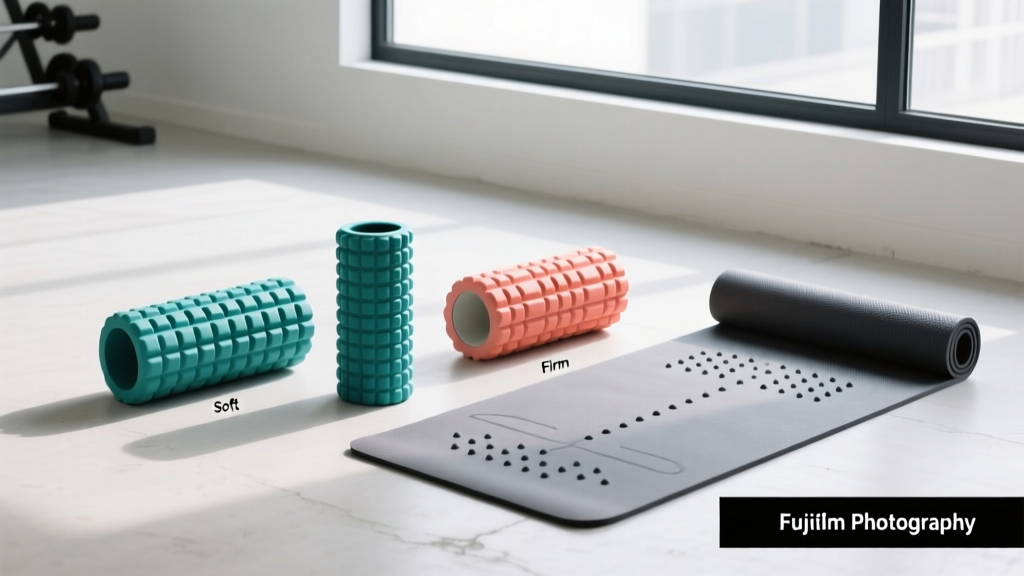
Foam Roller Density vs. Yoga Mat Point Therapy: Head-to-Head
Compare foam roller density and size selection against yoga mat point therapy. Discover which myofascial recovery tool fits your specific training needs.

The Recovery Dilemma: Mechanical Compression vs. Neurological Stimulation
In the modern sports science and physical therapy landscape, myofascial release has evolved far beyond simple stretching. Athletes and weekend warriors alike are constantly searching for the optimal recovery stack. This brings us to a fascinating head-to-head comparison: the mechanical, broad-sweeping compression of the foam roller versus the localized, neurological stimulation of the yoga mat point array (widely known as the acupressure mat).
While both tools aim to alleviate muscle soreness, improve tissue perfusion, and down-regulate the central nervous system, their mechanisms of action are fundamentally different. To build an effective recovery protocol in 2026, you must understand the nuances of foam roller density and size selection, and how they stack up against targeted acupressure therapy.
Expert Insight: According to the American Council on Exercise (ACE), self-myofascial release (SMR) works by stimulating the Golgi tendon organ, which triggers autogenic inhibition. However, the tool you use dictates whether you achieve mechanical tissue deformation or neuro-vascular reflex responses.Decoding Foam Roller Density and Size Selection
Selecting the right foam roller is not a one-size-fits-all endeavor. The market is segmented by material composition, durometer (hardness) ratings, and physical dimensions. Choosing incorrectly can lead to ineffective recovery or, worse, protective muscle guarding that exacerbates tension.
The Density Spectrum: Soft, Medium, and Firm
Density determines how deeply the roller penetrates the fascial layers. Here is the breakdown of the three primary density categories available on the market:
- Soft Density (30-40 Shore A Durometer): Typically constructed from low-density EVA (Ethylene-Vinyl Acetate) foam. These are ideal for beginners, acute injury rehabilitation, or direct spinal alignment work. Top Model: OPTP PRO-ROLLER Soft ($45-$60). It compresses easily, preventing the nervous system from triggering a protective stretch reflex.
- Medium Density (50-60 Shore A Durometer): Often featuring an ABS (Acrylonitrile Butadiene Styrene) hollow core wrapped in a multi-density EVA shell. This provides structural integrity while allowing surface give. Top Model: TriggerPoint GRID 13" ($35-$45). The zoned surface mimics the palm, fingers, and fingertips of a massage therapist.
- Firm Density (70+ Shore A Durometer): Made from high-density EPP (Expanded Polypropylene) or featuring aggressive tactile bumps. These are designed for dense, fibrotic tissue and advanced athletes. Top Model: RumbleRoller ($75-$90). The deep-tissue knobs bypass superficial fascia to target deep trigger points, though they are poorly suited for the lumbar spine.
Size Selection: Matching Dimensions to Anatomy
The length of your roller dictates its utility. A comprehensive gym bag should ideally feature two distinct sizes:
| Size | Best Use Case | Limitations |
|---|---|---|
| 36-Inch | Thoracic spine extension, bilateral lat sweeps, full-body longitudinal rolling. | Cumbersome for travel; difficult to isolate single limbs. |
| 18-Inch | Standard quad, hamstring, and IT band (adjacent) work. The goldilocks size for most home gyms. | Too short for safe, supported T-spine extension. |
| 12-Inch | Travel, localized calf work, TFL (tensor fasciae latae), and targeted glute release. | Lacks the surface area for broad sweeping motions. |
Enter the Yoga Mat Point: Acupressure Mechanics
When evaluating the efficacy of a standard foam roller against a yoga mat point array, we are comparing mechanical shearing force with localized neurological stimulation. An acupressure mat utilizes thousands of sharp, ABS plastic rosettes to stimulate the skin and superficial fascia.
The mechanics of the yoga mat point rely heavily on the Gate Control Theory of Pain. The mild nociceptive input from the spikes overrides deeper, chronic pain signals traveling to the brain. Furthermore, a comprehensive review in the Journal of Athletic Training highlights that localized pressure stimulates vasodilation, increasing blood flow and triggering a massive release of endogenous endorphins and oxytocin.
Market Leaders in Point Therapy
As of 2026, the premium acupressure market is dominated by precise spike counts and eco-friendly textile covers:
- Shakti Mat Original ($69-$89): Features exactly 6,210 individual points distributed across 230 lotus rosettes (27 spikes per rosette). The cotton cover is removable and washable, providing a firmer, more intense point penetration.
- Pranamat ECO ($109-$149): Utilizes slightly wider, blunt-tipped lotus flowers made from bioplastic, paired with a thick linen and coconut fiber base. It offers a more gradual onset of the hyperemic (blood flow) response, making it better for beginners.
Head-to-Head Comparison Matrix
How do these tools compare when placed side-by-side in a clinical or athletic setting? The following matrix breaks down their performance across critical recovery metrics.
| Metric | High-Density Foam Roller | Yoga Mat Point Array |
|---|---|---|
| Primary Mechanism | Mechanical compression & fascial shearing | Neurological stimulation & vasodilation |
| Target Area | Deep muscle bellies, broad fascial slings | Superficial back muscles, scalp, neck, soles |
| Spinal Safety | Low (Risk of lumbar hyperextension) | High (Conforms to natural spinal curves) |
| DOMS Reduction | High (Flushes metabolic waste via pumping) | Moderate (Relies on passive blood pooling) |
| Active Effort Required | High (Requires core engagement & movement) | Zero (Passive static lying) |
Real-World Scenarios: Which Tool Wins?
The 'best' tool is entirely dependent on the physiological demand of your training session and your specific tissue adaptations.
Scenario A: The Heavy Powerlifter (Post-Squat Day)
Winner: Firm Foam Roller (18-inch). Following heavy axial loading, the quads, adductors, and glutes require deep mechanical shearing to restore sliding surfaces between fascial layers. A high-density EPP roller or a RumbleRoller is necessary to physically manipulate the dense, fibrotic tissue of the lower body. A yoga mat point array cannot penetrate deeply enough through the thick muscle bellies of the legs to effect change.
Scenario B: The Desk-Bound Endurance Athlete
Winner: Yoga Mat Point Therapy. For a runner or cyclist suffering from chronic upper-cross syndrome (tight pecs, overactive upper traps, and thoracic stiffness from desk work), lying passively on an acupressure mat for 20 minutes forces the parasympathetic nervous system to take over. The thousands of micro-points melt superficial trap spasms that a foam roller often aggravates through excessive pressure.
Common Failure Modes and Edge Cases
As with any recovery modality, improper application leads to negative outcomes. Understanding these failure modes is a hallmark of advanced programming.
- The IT Band Fallacy: Rolling directly on the lateral thigh (IT band) with a firm foam roller is a pervasive error. The IT band is a thick connective tissue that does not contract or relax; compressing it against the femur causes severe bursitis and nerve irritation. Correction: Use a medium-density roller on the TFL and gluteus medius (the muscles that pull on the IT band) instead.
- Lumbar Hyperextension: Using a 36-inch firm roller horizontally across the lower back forces the lumbar spine into hyperextension, risking facet joint impingement. The lower back lacks the ribcage support of the thoracic spine. Correction: Reserve foam rolling for the T-spine (mid-back) and use a yoga mat point mat for passive, supported lower back relaxation.
- Acupressure Contraindications: Never use a spike mat over open wounds, sunburns, or if you suffer from peripheral neuropathy or are on heavy blood-thinning medication, as the micro-trauma to capillaries can cause excessive bruising or infection.
Final Verdict: Building a Hybrid Recovery Stack
The debate between foam roller density and yoga mat point therapy is not a zero-sum game; it is a study in complementary physiology. For a complete 2026 recovery arsenal, you need both.
Invest in a medium-density, 18-inch ABS-core roller (like the TriggerPoint GRID) for pre-workout tissue prep and post-workout lower-body flushing. Pair it with a premium acupressure mat (like the Shakti Mat Original) to down-regulate your nervous system, address superficial upper-back tension, and promote deep, restorative sleep. By matching the tool to the specific tissue depth and neurological state required, you transform passive recovery into an active performance enhancer.
More gear to consider
All reviews
Medicine Ball Weight Selection Guide: How Long Is a Yoga Mat Needed?

Speed, Weighted & Beaded Ropes: Beyond the Dior Yoga Mat

Elevate Your Yoga Mat Workout: 2026 Material & Grip Comparison

Stability Ball vs BOSU: 2026 Elastic Band Workout Equipment Trends

Care for Pilates Gear & 1/4 Extra Thick Deluxe Yoga Mat Accessories
