EZ Curl vs Straight Bar Value: Plus Sit Up With Dumbbell Core Work
Compare EZ curl bar vs straight bar costs and versatility for 2026 home gyms, plus a guide to maximizing core ROI with the sit up with dumbbell.

The True Cost of Arm Day: EZ Curl Bar vs. Straight Bar
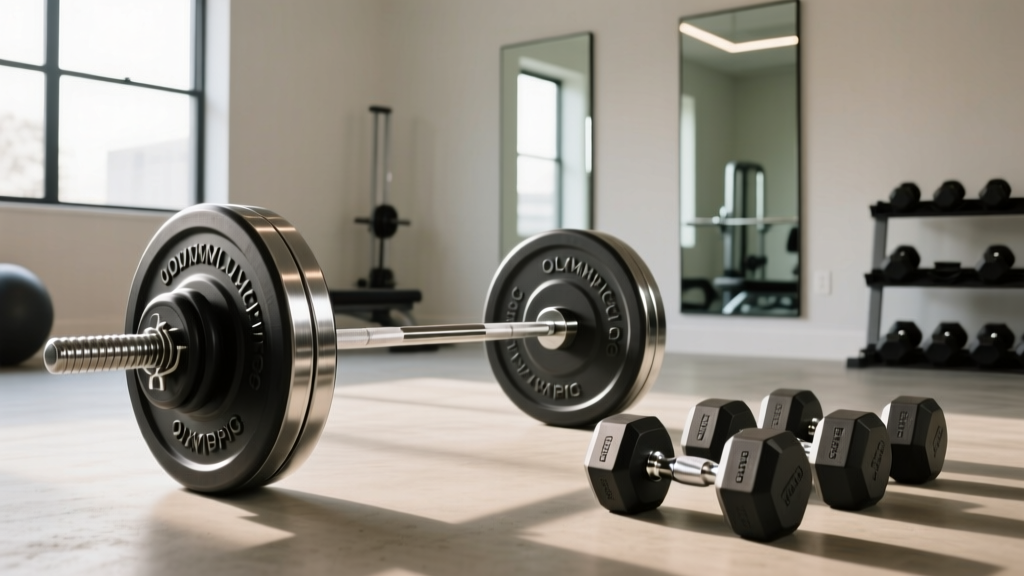
Building a functional home gym in 2026 requires ruthless budget prioritization. When outfitting your free weight station, lifters frequently hit a bottleneck when deciding between specialized isolation tools and generalist compound bars. The most common debate? Choosing between an Olympic EZ curl bar and a dedicated 6-foot or 7-foot straight barbell. While both can technically curl weight, their cost-per-use, biomechanical impact, and long-term value differ drastically.
This guide breaks down the exact budget tiers, hidden costs, and versatility metrics of EZ curl bars versus straight bars. Furthermore, we will explore how to maximize the return on investment (ROI) of your existing free weight plates and dumbbells by integrating high-yield core movements—specifically mastering the sit up with dumbbell resistance to build a bulletproof midsection without buying expensive cable machines.
Quick Budget Verdict
Straight Bar: Higher upfront cost ($140–$300+), but offers a 95% versatility score for full-body training (squats, deadlifts, presses, rows).
EZ Curl Bar: Lower entry cost ($55–$100), but limited to arm isolation and upright rows. Essential only if you are managing elbow tendonitis or prioritizing arm hypertrophy.
Biomechanics and Joint Longevity: The Hidden Value
Before analyzing 2026 pricing, we must assign a 'longevity value' to both bars. The primary argument for the EZ curl bar is joint preservation. The cambered bends of an EZ bar force your wrists into a semi-supinated (30-to-45-degree) angle. This slight shift dramatically reduces valgus stress on the medial epicondyle of the elbow and the ulnar collateral ligament.
According to clinical data on epicondylitis and elbow strain from the Mayo Clinic, repetitive stress in fully supinated (palms-up) positions can exacerbate micro-tears in the forearm flexor tendons. If you are a lifter over 35, or someone who spends 8 hours a day typing at a desk, the straight bar's demand for full supination can lead to medial elbow pain. In this context, the $90 investment in an EZ bar is essentially a pre-hab physical therapy tool, yielding massive long-term value by keeping you in the gym and out of the clinic.
Conversely, a straight barbell allows for maximum bicep supination, which biomechanically recruits the short head of the biceps brachii more aggressively. If your goal is pure peak contraction and you have healthy connective tissue, the straight bar remains the gold standard for heavy overload.
2026 Pricing & Value Matrix: Entry-Level to Premium
Let us look at the actual market pricing for Olympic-grade equipment (2-inch sleeves) this year. Note that cheap 'standard' 1-inch bars are excluded here, as their sleeve bend and poor knurling make them a false economy.
| Equipment Tier | EZ Curl Bar Option (Price / Specs) | Straight Bar Option (Price / Specs) | Versatility Winner |
|---|---|---|---|
| Budget | CAP Barbell 47" Olympic EZ (~$55) Weight: 15lbs | Sleeves: 9.5" |
CAP 6-Foot Solid Olympic (~$140) Weight: 35lbs | Sleeves: 12" |
Straight Bar |
| Mid-Tier | Titan Fitness Olympic EZ (~$95) Weight: 30lbs | Sleeves: 10" |
Titan 6ft Performance Bar (~$180) Weight: 45lbs | Sleeves: 16" |
Straight Bar |
| Premium | Rogue Curl Bar ($295) Weight: 35lbs | Sleeves: 14.5" | Cerakote |
Rogue Echo Bar 2.0 ($295) Weight: 45lbs | Sleeves: 16.4" | Zinc |
Straight Bar |
Hidden Costs: Rackability and Plate Compatibility
When budgeting for a straight bar, you must consider rackability. A standard 7-foot Olympic barbell (like the Rogue Echo or Ohio Bar) features a 51.5-inch shaft, allowing it to rest securely on standard power racks with 49-inch crossmembers. However, many budget-conscious lifters opt for 6-foot straight bars to save space and money. A 6-foot bar often has a shaft length of only 40 to 42 inches, meaning it cannot be safely racked on a standard power cage. You are limited to floor presses, deadlifts, and landmine variations.
The EZ curl bar is entirely unrackable for heavy compound movements. Its short shaft and cambered bends mean it is strictly a floor-and-bench tool. Therefore, if your budget only allows for one barbell, a 7-foot straight bar offers exponentially more value, provided you have the floor space to accommodate it.
Maximizing ROI: The Core Connection
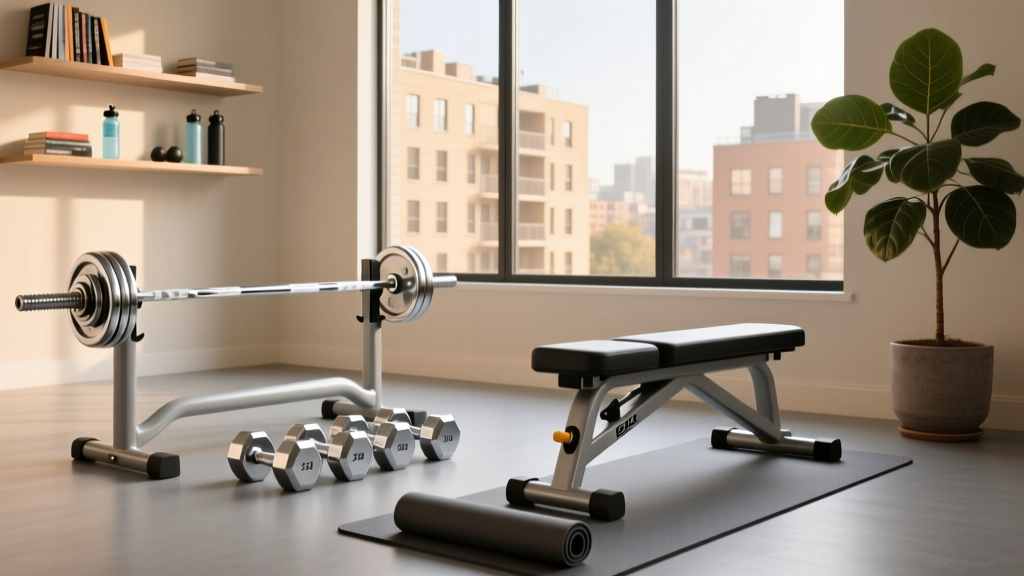
If you purchase a barbell and a set of bumper plates, or a rack of hex dumbbells, you have already paid for the equipment required to build an elite core. Too many lifters leave their money on the table by ignoring weighted abdominal work, assuming they need a $500 lat pulldown machine or cable crossover to do crunches.
To extract maximum value from your free weight investment, you must integrate heavy spinal flexion movements. This brings us to one of the most underutilized, high-ROI movements in fitness: the sit up with dumbbell resistance.
Mastering the Sit Up With Dumbbell
The rectus abdominis is a muscle like any other; it requires progressive overload to achieve hypertrophy and strength. Doing 100 bodyweight sit-ups builds endurance, not armor. By adding external load, you stimulate deep core fibers that stabilize the spine during heavy squats and deadlifts.
Here is the step-by-step framework for executing this movement safely and effectively:
- The Anchor: Hook your feet under a heavy kettlebell, a loaded barbell on the floor, or a dedicated wall anchor. Without an anchor, your hip flexors (psoas) will take over the movement, pulling on your lumbar spine and reducing abdominal activation.
- The Grip: Select a hex dumbbell (hexagonal ends prevent it from rolling off your chest). Start with 25 lbs and progress to 45 lbs or heavier. Hold the dumbbell horizontally, pressing it firmly against your sternum.
- The Ascent: Exhale sharply as you crunch your ribcage toward your pelvis. Focus on 'rolling' your spine off the floor vertebra by vertebra, rather than hinging at the hips like a hinge.
- The Descent: Inhale and lower yourself with a 3-second negative. Do not let gravity slam your shoulders into the mat; the eccentric (lowering) phase is where the most muscle damage and subsequent growth occurs.
Expert Progression Tip: Once a 45lb dumbbell held at the chest becomes easy for 3 sets of 15 reps, change the lever arm. Hold the dumbbell extended straight out in front of your chest, or eventually locked out overhead. According to ExRx biomechanics directories, increasing the distance of the load from your center of gravity exponentially increases the torque and demand on the rectus abdominis, turning a basic movement into an elite core builder.
Final Purchasing Framework: What Should You Buy First?
When allocating your 2026 home gym budget, use this decision matrix based on your total available capital:
- Under $200 Budget: Buy a mid-tier 7-foot straight barbell (e.g., Titan Fitness Performance Olympic Bar at ~$180). Pair it with a set of used iron plates. Use the straight bar for curls, rows, and presses, and use your dumbbells for the sit up with dumbbell core work. Skip the EZ bar for now.
- $300 - $400 Budget: Purchase a high-quality straight bar and a dedicated EZ curl bar from the budget tier (like the CAP 47" Olympic EZ). This gives you full-body compound capability while protecting your elbows during high-volume arm days.
- $600+ Budget: Invest in a premium straight bar (Rogue Ohio Bar) and a premium Cerakote EZ Curl Bar. The Cerakote coating on the EZ bar is highly recommended, as the tight grip positions used during curls cause standard zinc or bare steel knurling to wear down and oxidize rapidly from sweat and friction.
Ultimately, value in fitness equipment is not just about the price tag; it is about the intersection of joint health, exercise variety, and progressive overload. A straight bar builds the foundation, an EZ bar protects the joints, and mastering free-weight core movements ensures every dollar spent yields maximum physical returns.
More gear to consider
All reviews
Urethane vs Rubber Hex Dumbbells: Care for Pronated Dumbbell Curls

EZ Curl Bar vs Straight Bar: Beyond Bench Workouts with Dumbbells

Urethane vs Rubber Hex: 2026 Gear for the NYT Dumbbell Workout
Dumbbell Rack Value: Storing Weights for Quadricep Dumbbell Exercises

Olympic Barbell Guide: Weight, Knurling & Dumbbell Stickers