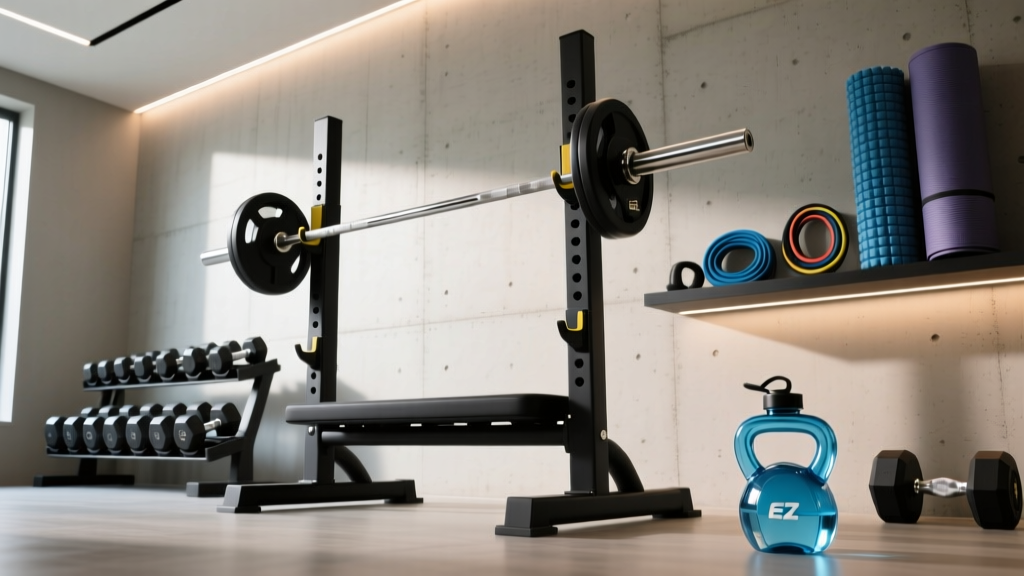
EZ Curl vs Straight Bar: Space Design & Dumbbell Shaped Water Bottle
Compare EZ curl bar vs straight bar dimensions for compact home gyms. Learn space-saving layouts, ergonomic grips, and desk accessory organization.

The Spatial Geometry of Barbells: Dimensions and Clearances
When designing a compact home gym in 2026, the choice between an EZ curl bar and a standard straight barbell extends far beyond muscle isolation. It is fundamentally a question of spatial geometry and layout efficiency. While a straight barbell is the undisputed king of compound movements, its footprint can dictate the entire flow of a small room. Conversely, the EZ curl bar offers a uniquely compact profile that can be the difference between a functional workout space and a cluttered garage.
To optimize your layout, we must first look at the raw dimensional data. Standard Olympic straight bars measure 2200mm (86.6 inches) in total length, with 51.5-inch shafts and 16.3-inch sleeves. EZ curl bars, by contrast, typically range from 1200mm (47.2 inches) to 1320mm (52 inches). This difference of nearly three feet drastically alters the clearance required for loading plates and executing movements.
Dimensional Comparison & Room Requirements
| Barbell Type | Total Length | Weight | Min. Wall-to-Wall Width | Storage Footprint |
|---|---|---|---|---|
| Standard Olympic Straight Bar | 86.6" (2200mm) | 44 lbs (20kg) | 102" (8.5 ft) | 9" x 9" (Vertical) |
| Rogue Curl Bar | 47.2" (1200mm) | 30 lbs (13.6kg) | 60" (5.0 ft) | 6" x 6" (Vertical) |
| 6-Foot "Space Saver" Straight Bar | 72.0" (1830mm) | 35 lbs (15.8kg) | 84" (7.0 ft) | 9" x 9" (Vertical) |
Layout Configurations for Compact Rooms (10x10 to 12x12)
In a standard 10x10 foot spare bedroom or single-car garage bay, placing a squat rack parallel to the longest wall is standard practice. However, if your lateral wall-to-wall clearance is under 8 feet, a standard straight barbell becomes a spatial liability. You will constantly risk drywall impacts when loading plates or performing floor-based movements like barbell rows.
The Vertical Storage Solution: For straight bars, wall-mounted vertical barbell holders (such as the Rogue Fitness Wall Mount Bar Holder, typically priced around $35) are non-negotiable in tight spaces. By storing the bar vertically in a corner, you reclaim 7 feet of horizontal floor space. EZ curl bars, due to their shorter shaft and angled grips, are notoriously awkward to hang on standard horizontal J-cups. They are best stored in dedicated vertical PVC pipe sleeves or specialized tiered rack slots located at the base of your power rack.
Ergonomics vs. Storage: The Biomechanical Reality
Space optimization should never come at the cost of joint health. The primary reason lifters purchase an EZ curl bar is to reduce wrist and elbow valgus stress. According to biomechanics research highlighted by the National Strength and Conditioning Association (NSCA), a straight barbell forces the wrists into full pronation (palms facing completely up). This locks the radioulnar joint and can exacerbate medial epicondylitis (golfer's elbow) during heavy flexion.
The EZ curl bar features angled grip zones—typically set at 45-degree and 30-degree cambers. This allows for semi-supination, aligning the wrist more naturally with the elbow joint. If your home gym layout restricts you to shorter bars, do not sacrifice a straight bar's pronated grip for heavy curls just to save space. Instead, invest in a high-quality 47-inch EZ bar for isolation work, and utilize adjustable dumbbells for heavy pressing movements to bypass the spatial requirements of a 7-foot barbell.
Hybrid Spaces: Managing Desk Clutter and Novelty Gear
In 2026, the modern home gym is rarely just a gym. It is frequently a hybrid office, guest room, or multi-use garage. When designing a layout for a hybrid space, the 'transition zone' between your desk and your lifting platform is a critical point of failure for both safety and aesthetics.
Floor clutter is the enemy of a compact layout. Novelty desk accessories and fitness-themed office gear—like a trendy dumbbell shaped water bottle, resistance band carabiners, or heavy grip strengtheners—often migrate from the desk to the gym floor. While a dumbbell shaped water bottle might serve as an excellent conversation piece on your standing desk or a fun gag gift for a lifting partner, leaving it near the drop zone of a squat rack is a severe tripping hazard.
📋 The 3-Foot Perimeter Rule
Establish a strict 3-foot 'dry zone' perimeter around your squat rack and deadlift platform. No desk accessories, hydration vessels, or novelty items are allowed inside this boundary during active lifting sessions. Install a dedicated 'gym desk' shelf or a pegboard above your workspace to house items like your dumbbell shaped water bottle, shaker cups, and lifting belts, keeping them visible but entirely out of the barbell's path of travel.
2026 Hardware & Storage Recommendations
To maximize your layout, invest in hardware specifically designed for multi-bar management. Here are the top spatial solutions for the current market:
- Titan Fitness Vertical Barbell Rack ($119.99): A freestanding unit that holds up to 10 Olympic bars. Ideal for garages where wall-mounting into drywall or cinderblock is structurally questionable. Footprint is just 24" x 24".
- Rogue 3-Bar Curl Bar Holder ($65.00): A specialized horizontal wall-mount designed specifically for the shorter shafts and odd center-knurling of EZ bars, keeping them off the floor and out of the way of your straight barbell storage.
- DIY PVC Sleeve Storage ($15.00): For extreme space optimization, purchase a 10-foot length of 4-inch Schedule 40 PVC pipe, cut it into three 3-foot sections, and mount them vertically to a wall stud. This perfectly houses EZ curl bars and protects the chrome from humidity.
Frequently Asked Questions
Can I use an EZ curl bar for squats to save space?
No. The center knurling on most EZ bars is either non-existent or poorly positioned for back squats. Furthermore, the cambered bends make it impossible to achieve a stable, symmetrical rack position on your traps. The load capacity of standard EZ bars (usually maxing out around 300-400 lbs) also makes them unsafe for heavy lower-body compound movements.
Is a 6-foot straight bar a good compromise for small rooms?
A 6-foot barbell (like the CAP Barbell OB-60) is an excellent compromise for rooms with 7 to 8 feet of lateral clearance. However, be aware that the sleeves are shorter (usually 8-10 inches), meaning you can only fit two or three bumper plates per side before running out of sleeve space. It is ideal for bench pressing and landmine work, but limiting for heavy deadlifts.
How should I layout a power rack in a room with low ceilings?
If your ceiling height is under 84 inches, standard power racks will not allow for overhead pressing or pull-ups. In this layout, opt for a 'short' rack (typically 72 inches tall) and utilize an EZ curl bar for floor-based or seated movements, completely eliminating the need for vertical barbell storage clearance.
Ultimately, designing a highly optimized home gym requires balancing the biomechanical needs of your joints with the physical constraints of your walls. By understanding the exact spatial requirements of your barbells and strictly managing hybrid-space clutter, you can build a facility that is both highly functional and exceptionally safe.
More gear to consider
All reviews
Gear Guide: Full Body Circuit Workout With Dumbbells (2026)
2026 Market Trends: Bumper vs Iron Plates & Skull Crusher Dumbbell

Olympic Barbell Knurling Guide & York Dumbbells Setup

Kettlebells vs the 10 Minute Dumbbell Workout Women Do: Space Guide

How to Maintain Loadable Dumbbells for Dumbbell Oblique Crunches
