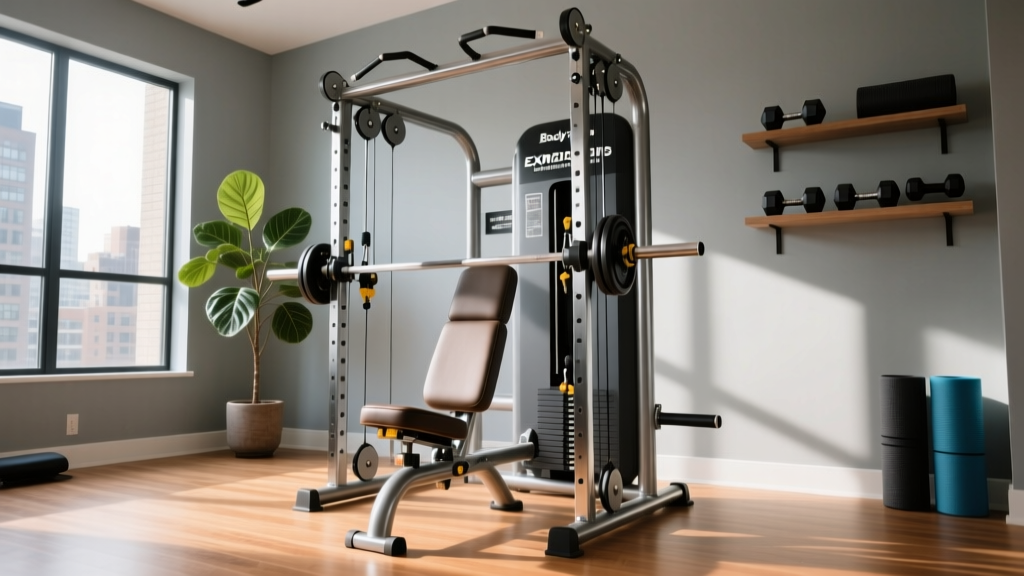
Body Solid EXM3000LPS Multi Station Home Gym & Compact Space Care
Master maintenance for the Body Solid EXM3000LPS multi station home gym and compact small-space machines to maximize longevity and prevent cable failure.

The Small-Space Dilemma: Massive Multi-Stations vs. Compact Footprints
In the 2026 home fitness landscape, maximizing square footage without sacrificing resistance training quality is the ultimate puzzle. The Body Solid EXM3000LPS multi station home gym is a legendary piece of equipment, boasting a triple-stack design, 11-gauge steel construction, and a commercial-grade biomechanical footprint. However, its massive dimensions (83" H x 83" L x 53" W) present a unique challenge for small-space dwellers. When you cram a machine of this caliber into a 10x10 spare bedroom or a tight garage corner, you introduce severe environmental and mechanical stressors that accelerate wear and tear.
According to equipment longevity guidelines highlighted by Consumer Reports, spatial constraints directly impact equipment lifespan. Poor airflow traps sweat-induced humidity against weight stacks, while proximity to walls increases the ingestion of drywall dust into open pulley bearings. If the EXM3000LPS is too large for your layout, transitioning to dedicated compact home gym machines for small spaces requires an entirely different maintenance protocol. Below, we break down the exact care routines for both the heavyweight EXM3000LPS and the best compact alternatives to ensure your investment lasts for decades.
⚠️ Critical Clearance Warning: The EXM3000LPS requires a minimum of 36 inches of user clearance on all active sides. Placing the machine flush against a wall restricts cable travel angles, causing the nylon-coated aircraft cables to rub against the steel frame housing, leading to premature sheath fraying and catastrophic failure.Core Maintenance for the Body Solid EXM3000LPS in Tight Quarters
Maintaining a 800+ lb triple-stack system in a confined space requires aggressive, scheduled intervention. The three primary failure points in small-room multi-stations are guide rod corrosion, pulley bearing seizure, and cable swivel fatigue.
1. Guide Rod Lubrication (The Silicone Rule)
The EXM3000LPS features three independent 210-lb weight stacks gliding on precision-machined steel guide rods. In small spaces with limited HVAC circulation, ambient humidity causes micro-rust on these rods within weeks. Never use petroleum-based lubricants like WD-40. Petroleum degrades the nylon bushings inside the weight plates, causing them to crack and bind. Instead, use a 100% pure silicone spray. Wipe the rods down with a microfiber cloth and apply a light silicone mist every 45 days. According to the official Body Solid maintenance manuals, this specific interval prevents the 'stuttering' effect common in neglected weight stacks.
2. Pulley Bearing Dust Mitigation
Small rooms accumulate dust faster, especially if carpeted. The EXM3000LPS utilizes over 20 precision-aligned pulleys. When dust mixes with the sweat aerosolized during heavy lat pulldowns, it forms an abrasive paste inside the pulley housings. Listen closely during cable crossovers: a high-pitched metallic chirp indicates dry bearings, while a dull grinding noise means dust intrusion has already pitted the steel ball bearings. Use a can of compressed air to blow out the pulley housings bi-weekly, followed by a single drop of synthetic PTFE (Teflon) lubricant on the axle.
Top Compact Home Gym Machines for Small Spaces (And How to Maintain Them)
If your space simply cannot accommodate the 30-square-foot footprint of the EXM3000LPS, you must look at compact home gym machines for small spaces. These machines utilize space-saving mechanics like 2:1 cable ratios, power rods, or folding carriages, each with distinct maintenance profiles.
Force USA G3 All-In-One Trainer
Footprint: 49" x 47" | Price Range: ~$2,499
The G3 combines a power rack, functional trainer, and Smith machine into a remarkably dense footprint. It uses a 2:1 cable ratio, meaning the carriage travels twice the distance of the weight stack. Maintenance Focus: The linear bearing carriages run on vertical steel tracks. In small spaces, these tracks act as magnets for dust. You must vacuum the vertical tracks monthly and wipe them with a dry microfiber cloth. Applying grease here is a mistake; it will create a sludge that halts the carriage. Use a dry PTFE spray instead.
Bowflex PR1000 Home Gym
Footprint: 100" x 78" (Folds to 52" x 78") | Price Range: ~$599
A staple for small spaces, the PR1000 uses Power Rod technology instead of steel weight stacks. Maintenance Focus: Power rods are susceptible to UV degradation and temperature fluctuations. If your small space is a sunroom or an uninsulated garage, the rods will lose their resistance profile and eventually snap. Keep the machine out of direct sunlight and inspect the rods for micro-fissures or 'whitening' of the composite material every 6 months. Bowflex recommends replacing power rods every 3 to 5 years depending on usage volume.
REP Fitness FT-2000 2.0 Functional Trainer
Footprint: 86" x 30" | Price Range: ~$1,599
Wall-hugging and narrow, the FT-2000 is perfect for tight hallways or narrow garages. Maintenance Focus: This unit relies on heavy-duty Kevlar-reinforced belts rather than traditional aircraft cables. Belts do not require lubrication, but they do require tension checks. Perform the 'pluck test' annually: pluck the exposed belt near the top pulley. It should resonate with a deep, tight bass note. A dull thud indicates the internal tensioner spring has slipped and needs recalibration via the hex bolts at the base of the stack.
Comparative Maintenance Matrix: Heavyweight vs. Compact Systems
Understanding the maintenance burden of your chosen machine is critical when designing a small-space gym. Use the matrix below to compare the ongoing care requirements of the EXM3000LPS against popular compact alternatives.
| Maintenance Metric | Body Solid EXM3000LPS (Triple Stack) | Force USA G3 (Compact All-In-One) | Bowflex PR1000 (Power Rod) |
|---|---|---|---|
| Primary Lubrication | Silicone on guide rods (Every 45 days) | Dry PTFE on carriage tracks (Monthly) | None required (Keep dry) |
| Cable/Belt Care | Inspect nylon sheath for fraying (Bi-annual) | Check 2:1 pulley tension (Annual) | Inspect rod composite for whitening (Bi-annual) |
| Dust Vulnerability | High (Open weight stacks & pulleys) | Medium (Enclosed stacks, open tracks) | Low (Fully enclosed rod housing) |
| Est. Annual Upkeep Cost | ~$35 (Silicone, PTFE, microfiber) | ~$20 (Dry lube, cleaning supplies) | ~$0 (Until rod replacement is needed) |
Environmental Controls for Small-Space Home Gyms
The National Strength and Conditioning Association (NSCA) emphasizes that environmental controls are just as vital as mechanical lubrication for equipment longevity. When a multi-station gym or compact trainer is placed in a small, poorly ventilated room, the ambient micro-climate changes drastically during a workout.
💡 Pro-Tip: The 45% Humidity ThresholdKeep a digital hygrometer in your home gym. If humidity consistently exceeds 45%, the unpainted internal components of your weight stacks and carriage bearings will oxidize. In small spaces, run a continuous-drain dehumidifier set to 40% during and for two hours after your workout to rapidly pull aerosolized sweat from the air before it settles on the machine's steel frame.
Furthermore, airflow is critical. If your compact machine is pushed into a corner, use a small oscillating fan directed at the weight stack or carriage tracks to evaporate moisture. Avoid placing home gym equipment directly over HVAC floor vents, as the constant blasting of dry, dusty air will prematurely dry out pulley bearings and degrade rubberized grips.
Step-by-Step Annual Overhaul Checklist
Whether you are running the massive Body Solid EXM3000LPS multi station home gym or a folding compact system, perform this deep-dive overhaul once a year to ensure structural integrity and user safety.
- Tension & Alignment Test: Run the cable through its full range of motion without weight. Watch the cable as it enters the pulley. If it tracks to the left or right edge of the nylon wheel rather than sitting dead-center, the pulley bracket is bent or the frame has shifted on uneven flooring.
- The Selector Pin Inspection: Remove the magnetic selector pins from the weight stacks. Inspect the steel shaft for burrs or metal shavings. A burr on the pin will scrape the inside of the weight plate cavity, eventually causing the pin to stick and drop the stack mid-rep.
- Hardware Torque Audit: Small spaces mean machines are often bumped into by vacuums, boxes, or other gym gear. This micro-impaction loosens frame bolts. Use a torque wrench to check all primary structural bolts, tightening them to the manufacturer's specified foot-pounds (usually between 50-75 ft-lbs for 11-gauge steel assemblies).
- Upholstery Conditioning: Wipe down all vinyl pads with a dedicated marine-grade vinyl protectant. Standard household cleaners contain ammonia, which dries out the vinyl, leading to cracking and foam degradation within 18 months.
"A well-maintained home gym machine should operate with the same acoustic smoothness on day 1,000 as it did on day one. If your cables are singing, your pulleys are grinding, or your weight stacks are stuttering, your maintenance interval is too long for your specific environment." — Home Gym Equipment Engineering Standards
By respecting the spatial and environmental realities of your workout area, you can safely operate heavy-duty multi-stations or optimize the lifespan of compact alternatives, ensuring your home gym remains a safe, effective sanctuary for years to come.
More gear to consider
All reviews
Cheap vs Premium Foam: What Home Gym Owners *Really* Need to Know About Density, Durability, and Safety
Marcy Pro Deluxe Smith Cage Home Gym System: Warranty & Value

Marcy 100 lb Stack Home Gym Review: Beginner Setup & Guide

Hoist V5 Home Gym With Leg Press: Weight Stack Upgrade Guide
How To Start a Home Gym: A Practical, Data-Driven Comparison Guide
