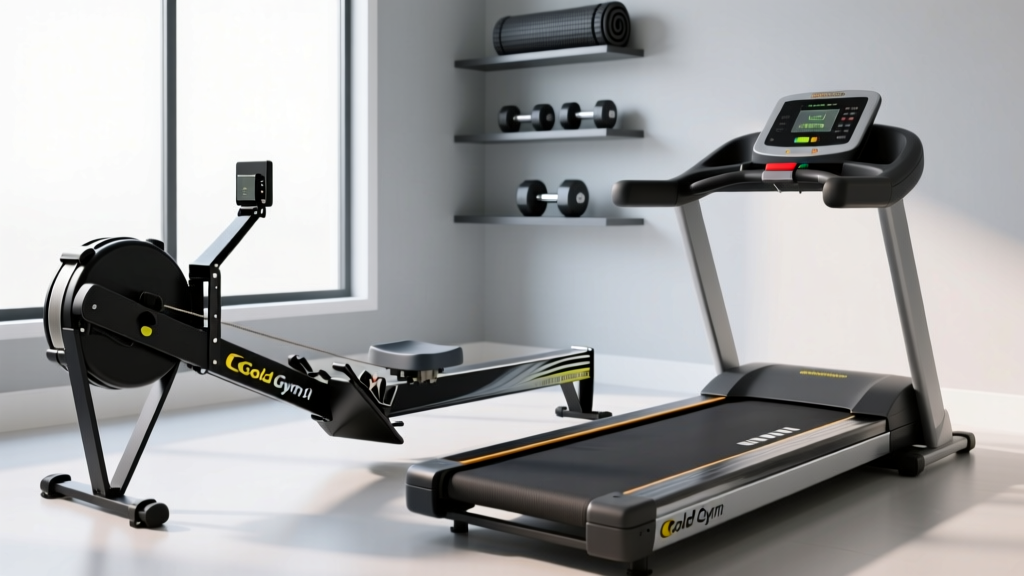
Elliptical Walker vs Treadmill: Motor Size & Horsepower Guide
Compare elliptical walker vs treadmill through our treadmill motor size and horsepower guide. Learn how CHP, drive systems, and maintenance impact your choice.

The Core Mechanical Divide: Motor-Driven vs. User-Driven
When researching the elliptical walker vs treadmill debate, most buyers focus exclusively on joint impact, calorie burn, or footprint. However, the most critical differentiator lies beneath the chassis: the drive system. Treadmills rely on continuous electrical force to fight gravity, friction, and user weight, while elliptical walkers utilize user-generated momentum paired with magnetic resistance.
Because of this fundamental mechanical divide, evaluating a treadmill motor size and horsepower guide is the single most important step in determining long-term reliability, electrical draw, and maintenance costs for your home gym. In this head-to-head comparison, we break down exactly how treadmill motors operate, why ellipticals bypass the need for heavy-duty motors, and how to choose the right machine based on your biomechanics and 2026 fitness goals.
Treadmill Motor Size and Horsepower Guide: Decoding the Specs
The treadmill motor is the heart of the machine. If you undersize the motor for your body weight or running speed, you will experience belt hesitation, thermal shutdowns, and premature control board failure. To make an informed decision, you must understand the terminology manufacturers use.
Peak HP vs. Continuous Horsepower (CHP)
The most common marketing trap in the fitness industry is advertising 'Peak Horsepower' (HP). Peak HP measures the absolute maximum output the motor can hit for a fraction of a second before tripping the breaker. What you actually need to look for is Continuous Duty Horsepower (CHP). CHP measures the power the motor can sustain indefinitely during a grueling 10-mile run without overheating. According to testing standards referenced by the American Council on Exercise (ACE), a treadmill with a 4.0 Peak HP motor might only deliver 2.5 CHP, which is vastly different from a true 4.0 CHP commercial motor.
Sizing Your Treadmill Motor by User Weight and Activity
Motor requirements scale dynamically with user weight and belt speed. The heavier the user, the more torque required to pull the belt over the deck. Here is the definitive 2026 sizing matrix for residential DC (Direct Current) motors:
- 2.0 to 2.5 CHP: Ideal for walking and light jogging. Suitable for single users under 180 lbs. (e.g., Horizon T101).
- 3.0 to 3.5 CHP: The sweet spot for dedicated runners and multi-user households. Supports users up to 250 lbs at speeds up to 12 MPH. (e.g., Sole F80, NordicTrack Commercial 1750).
- 4.0+ CHP (or AC Motors): Required for heavy sprinters, users over 275 lbs, or light commercial settings. AC (Alternating Current) motors run cooler, lack carbon brushes, and offer superior longevity.
Most residential treadmills use DC motors equipped with an internal cooling fan attached directly to the motor shaft. If you use your treadmill for slow, prolonged walking (e.g., 1.5 to 2.0 MPH for 2+ hours while working at a standing desk), the fan spins too slowly to dissipate heat. This leads to thermal throttling and eventual motor burnout. If you are a slow-speed walker, an elliptical walker or a treadmill with an upgraded AC motor is a vastly superior choice.
Head-to-Head: Elliptical Walker vs Treadmill Drive Systems
Unlike treadmills, elliptical walkers do not require a massive drive motor to move your body. Instead, they use a heavy flywheel (often 15 to 25 lbs) that you spin using your own momentum. Resistance is generated via eddy current magnetic systems, where magnets move closer to or further from the flywheel to create drag without any physical friction.
Below is a structured comparison of how these two drive systems impact your daily life, maintenance schedule, and wallet.
| Feature | Treadmill (3.5 CHP DC Motor) | Elliptical Walker (Magnetic Flywheel) |
|---|---|---|
| Primary Power Draw | High (900W - 1500W under load) | Low (Under 50W for console/electronics) |
| Friction & Heat | High (Belt-to-deck friction generates massive heat) | Near Zero (Magnetic resistance creates no physical friction) |
| Routine Maintenance | 100% Silicone belt lubrication every 150 miles | Wipe down rails; inspect pivot bearings annually |
| Acoustic Profile | Motor hum + heavy footfall impact (65-80 dB) | Quiet mechanical whir (40-55 dB) |
| Typical Lifespan | 7-12 Years (Motor brushes/belt require replacement) | 10-15+ Years (Fewer moving electrical parts) |
Real-World Failure Modes and Maintenance Costs
To truly evaluate the elliptical walker vs treadmill comparison, we must look at how these machines actually fail in a home environment. The Centers for Disease Control and Prevention (CDC) recommends consistent, long-term cardiovascular routines; your equipment must be able to survive your consistency.
Treadmill Failure Modes
- Belt/Deck Friction Burnout: If a user neglects to apply 100% silicone lubricant (never use WD-40 or petroleum-based products), the friction coefficient between the belt and deck spikes. The motor must draw excess amperage to compensate, which eventually fries the motor control board (a $250–$400 repair).
- Carbon Brush Degradation: Residential DC motors use carbon brushes to conduct electricity to the spinning armature. After roughly 4,000 to 5,000 hours of use, these brushes wear down to the nub, causing the motor to spark, stall, and die.
- Incline Motor Failure: The lift motor that adjusts the deck incline is highly susceptible to gear stripping if users frequently jump onto the treadmill while it is elevated.
Elliptical Walker Failure Modes
- Pivot Bearing Wear: The shoulder and pedal joints endure repetitive lateral stress. Over 5+ years, the sealed bearings can dry out, resulting in a rhythmic 'squeak-click' that requires bearing replacement.
- Crank Arm Fatigue: On lower-end front-drive ellipticals, the bolts securing the pedal arms to the central flywheel can loosen, causing a dangerous 'dead spot' in the pedal stroke.
- Alternator Snapping: On self-generating models (like the Bowflex Max Trainer series), a small internal alternator belt charges the console. If this snaps, the screen dies, though the mechanical resistance still functions.
'From a biomechanical and engineering standpoint, the elliptical is a vastly simpler machine. By removing the high-torque drive motor and the high-friction belt deck, you eliminate the two most expensive points of failure in home cardio equipment.' — FitGearPulse Engineering Analysis
2026 Buying Verdict: Matching the Machine to Your Profile
So, who wins the head-to-head? The answer depends entirely on your training style, body weight, and tolerance for maintenance. Based on current 2026 market pricing and engineering standards, here are our targeted recommendations.
Choose a Treadmill If:
- You are training for outdoor road races and need to simulate exact pacing and incline gradients.
- You prefer the natural biomechanics of walking or running without the fixed stride-length constraint of an elliptical.
- Top 2026 Pick: Sole F80 (3.5 CHP, $1,199). Its heavy-duty motor and cushioned deck easily handle runners up to 350 lbs, and its folding mechanism is robust.
Choose an Elliptical Walker If:
- You suffer from plantar fasciitis, knee osteoarthritis, or lower back pain, requiring zero-impact cardiovascular conditioning (a principle heavily supported by Mayo Clinic fitness guidelines for joint preservation).
- You want a machine that requires virtually zero routine maintenance and draws minimal electricity.
- You are a slow-speed walker who wants to avoid the DC motor thermal throttling issue mentioned above.
- Top 2026 Pick: Sole E35 Elliptical (25 lb Flywheel, $1,199). It offers a fluid, 20-inch stride with heavy-duty pedal articulation, entirely bypassing the need for a high-wattage drive motor.
Frequently Asked Questions (FAQ)
Can I plug my 3.5 CHP treadmill into a standard wall outlet?
Yes, but with caveats. Most 3.5 CHP residential treadmills draw between 12 to 15 amps under heavy running loads. They must be plugged into a dedicated 15-amp or 20-amp circuit. Plugging a treadmill into a shared circuit with a microwave, space heater, or window AC unit will routinely trip your breaker and risk damaging the treadmill's internal surge capacitor.
Do elliptical walkers have weight limits if they don't have motors?
Absolutely. While they lack a drive motor, ellipticals have strict weight limits dictated by the structural integrity of the frame, the weld points, and the load-bearing capacity of the pivot bearings. High-end ellipticals like the Bowflex Max Trainer M9 ($2,299) support up to 300 lbs, utilizing reinforced steel tubing and commercial-grade bearings to handle the dynamic downward force of a heavy user.
Is an AC motor worth the extra cost for a home treadmill?
If you are running a multi-user household, hosting a garage gym, or exclusively doing slow-speed walking pad routines, an AC (Alternating Current) motor is a phenomenal upgrade. AC motors do not use carbon brushes, run significantly cooler, and generate higher torque at low speeds. However, they are heavier and typically push the treadmill price point above $2,500.
More gear to consider
All reviews
Costway SuperFit Treadmill vs Stationary Bike Types: Space Guide

How Big Is a Treadmill Box? Sizing & Maintaining Compact Cardio

2026 Performance Treadmill Noise Comparison: Quietest Models

Horizon 7.4 AT Treadmill Install & Rowing Machine Guide
XT185 Treadmill Installation & Motor Horsepower Guide