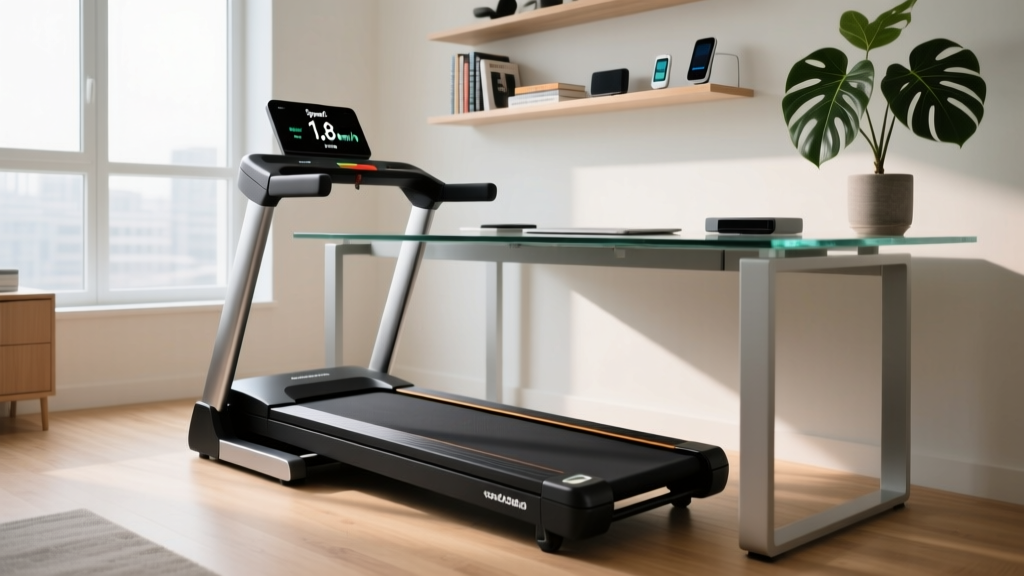
Elliptical vs Treadmill: ProForm Treadmill Service & Home Cardio
Compare ellipticals and treadmills for home cardio. We analyze biomechanics, noise, and ProForm treadmill service costs to find the best 2026 fit.

The Home Cardio Dilemma: Beyond the Spec Sheet
The debate between the elliptical and the treadmill is as old as the commercial gym itself. However, as we navigate the 2026 home fitness landscape, the decision matrix has evolved. It is no longer just about caloric burn or stride length; it is about spatial acoustics, joint longevity, and the often-ignored total cost of ownership. As an equipment reviewer who has dismantled, tested, and serviced dozens of cardio machines over the past decade, I can tell you that the hidden friction points—both literal and financial—often dictate which machine survives past its two-year warranty.
In this hands-on review, we are pitting the modern home elliptical against the modern home treadmill. More importantly, we are going to look at the long-term upkeep realities, specifically addressing why understanding ProForm treadmill service requirements is the missing link in your purchasing decision.
Expert Quick Take
If your primary goal is maximum caloric expenditure and you do not mind a higher long-term maintenance footprint, the treadmill wins. If you prioritize joint preservation, multi-story home acoustics, and near-zero mechanical upkeep, the elliptical is your undisputed champion.
Biomechanics and Caloric Expenditure: The Clinical View
When evaluating cardio machines, we must separate marketing hype from clinical reality. The fundamental difference between these two machines lies in ground reaction forces (GRF).
The Impact Factor
Running on a treadmill generates ground reaction forces equivalent to 2.5 to 3 times your body weight with every footstrike. Even with advanced cushioning systems like ProForm’s ProShox, the repetitive loading travels up the kinetic chain. The American Academy of Orthopaedic Surgeons (AAOS) specifically recommends low-impact aerobic exercises like elliptical training for individuals managing osteoarthritis or recovering from lower-extremity joint stress. The elliptical’s fixed footpath eliminates the strike phase entirely, reducing joint shear forces to near zero.
The Calorie Burn Myth
A common misconception is that ellipticals offer an inferior workout. However, data from Harvard Health Publishing indicates that the caloric expenditure between a moderate-pace run and a high-resistance elliptical session is remarkably similar when heart rate zones are matched. A 155-pound individual burns approximately 288 calories in 30 minutes on an elliptical, compared to 360 calories running at a 12-minute-per-mile pace. When you increase the elliptical's incline and resistance, the metabolic demand easily matches, and sometimes exceeds, a steady-state jog.
Total Cost of Ownership: Where ProForm Treadmill Service Enters the Chat
This is where most buying guides fail. They list the retail price but ignore the mechanical reality of moving parts. Let us look at two highly popular 2026 entry-level models: the ProForm Carbon TLX Treadmill (approx. $599) and the ProForm Carbon EL Elliptical (approx. $699).
Treadmill Maintenance Realities
Treadmills rely on a high-friction sliding surface: a nylon/rubber belt dragging across a wooden or composite deck. Over time, this friction generates immense heat and draws excessive amperage from the drive motor. Many buyers purchase a budget-friendly deck and are later blindsided by the reality of ProForm treadmill service requirements.
If you neglect to lubricate the belt with 100% silicone fluid every 150 miles, the motor works harder to maintain speed. On the Carbon TLX, which utilizes a 2.5 HP Mach Z motor, this increased amp draw will eventually trigger the thermal breaker or fry the motor control board. A control board replacement—a common ProForm treadmill service call—costs between $120 and $180 for the part alone, plus $150 in diagnostic labor if you hire a technician. Furthermore, walking belts stretch and fray, requiring a $60 replacement belt every 3 to 5 years depending on mileage.
Elliptical Upkeep: The Low-Maintenance Alternative
Ellipticals operate on sealed ball bearings and hardened steel rails. There is no sliding friction. The maintenance protocol for a ProForm or NordicTrack elliptical is astonishingly simple:
- Monthly: Wipe down the aluminum rail with a damp cloth to remove dust and pet hair that can degrade the polyurethane wheels.
- Bi-Annually: Check and tighten the pivot arm bolts using a standard Allen wrench to prevent the infamous 'elliptical squeak'.
- As Needed: Apply a drop of white lithium grease to the pedal arm joints if lateral play develops.
There are no belts to replace, no decks to flip, and no motor control boards frying from surface friction. The mechanical lifespan of an elliptical's drive system routinely outlasts a treadmill's belt-and-deck system by a factor of three.
The 5-Year Maintenance & Cost Matrix
To visualize the hidden costs of home cardio, I have mapped out the projected 5-year expenses for both machine types, assuming 3 hours of use per week and an active iFIT subscription.
| Cost Category | ProForm Treadmill (Carbon TLX) | ProForm Elliptical (Carbon EL) |
|---|---|---|
| Initial Retail Price | $599 | $699 |
| 5-Year iFIT Subscription | $900 ($15/mo individual) | $900 ($15/mo individual) |
| Belt/Rail Lubricants | $45 (Silicone) | $0 |
| Wear Parts (Belts/Wheels) | $85 (1x Replacement Belt) | $0 (Sealed Bearings) |
| Expected Service Calls | 1 (Board/Sensor - $250 avg) | 0 |
| Total 5-Year Cost | $1,879 | $1,599 |
Expert Insight: The initial lower price tag of the treadmill is entirely erased by year three once you factor in the friction-based wear parts and the high probability of requiring specialized ProForm treadmill service for electronic components stressed by belt drag.
Spatial Footprint and Acoustic Profiles
Home gym equipment does not exist in a vacuum; it exists in shared living spaces. The acoustic signature of your cardio machine will dictate when and how often you use it.
The Treadmill Thump
Treadmills suffer from impact noise transfer. Every time your heel strikes the deck, the kinetic energy travels through the machine's uprights, into the floor, and across the structural joists of your home. If you live in a multi-story home or an apartment, running on a treadmill at 6:00 AM will likely disturb those below you, regardless of the equipment mat you use. Furthermore, the motor and cooling fan generate a continuous ambient drone of roughly 65-70 decibels at top speed.
The Elliptical Hum
Because your feet never leave the pedals, an elliptical generates zero impact noise. The only sound is the mechanical hum of the flywheel and the drive belt, usually hovering around 50-55 decibels. You can comfortably watch a television at normal volume without headphones while using an elliptical, a feat that is nearly impossible on a treadmill without increasing the TV volume significantly.
Expert Verdict: Which Machine Belongs in Your Home?
After years of testing, repairing, and sweating on both platforms, the choice ultimately comes down to your biomechanical needs and your tolerance for mechanical upkeep.
Buy the Treadmill If:
- You are training for outdoor road races and need to replicate the exact biomechanics of running, including the shock-loading on your tibialis and Achilles.
- You prefer high-intensity interval training (HIIT) involving rapid sprint-and-recover phases, which treadmills facilitate better via motorized speed jumps.
- You are committed to a strict maintenance schedule, including bi-monthly belt lubrication and tension adjustments, to avoid costly ProForm treadmill service interventions.
Buy the Elliptical If:
- You have a history of plantar fasciitis, knee meniscus tears, or lower back pain that is aggravated by repetitive vertical impact.
- You reside in an apartment or multi-story home where impact noise transfer is a primary concern.
- You view exercise equipment as a 'buy it and forget it' investment and want to avoid the friction-based wear and tear inherent to treadmill decks.
For the average home user looking to maintain cardiovascular health in 2026 without turning their guest room into a mechanical repair bay, the elliptical remains the most pragmatic, joint-friendly, and cost-effective investment you can make.
More gear to consider
All reviews
Gold's Gym Treadmill 430i Review: Small Space Layout Guide
ProForm Carbon TLX Treadmill & Stair Climber Setup Guide
NordicTrack E3800 Treadmill vs Curved Manual: Beginner Guide
Care: Stationary Bike Types vs NordicTrack 2450 Treadmill Old Model
Does Incline Treadmill Burn More Calories? Folding Space-Saver Review