
Elliptical vs Treadmill: 2026 Trends & Treadmill Pace Chart
Analyze 2026 market trends comparing ellipticals and treadmills. Includes joint impact data, pricing, and a treadmill pace chart for metabolic equivalency.

The 2026 Home Cardio Market: A Shift Toward Longevity and Biomechanics
The home fitness equipment landscape in 2026 has evolved significantly from the pure calorie-burning obsession of the early 2020s. Today, the debate between the elliptical and the treadmill is no longer just about which machine burns more fat; it is a nuanced discussion about joint preservation, zone 2 cardiovascular training, and biomechanical efficiency. According to recent industry market analyses, while treadmills still command roughly 45% of the high-end home cardio revenue, ellipticals and hybrid cross-trainers have surged by 14% year-over-year, driven heavily by the 'active aging' demographic and hybrid athletes prioritizing recovery.
📊 2026 Market Trend Insight: Consumer purchasing behavior has shifted toward machines offering biometric integration. Treadmills with advanced auto-incline algorithms and ellipticals with adaptive magnetic resistance are now the baseline for premium home gyms, moving basic motorized models to the budget tier.Biomechanical Impact: Ground Reaction Forces (GRF)
When evaluating cardio machines for long-term home use, understanding Ground Reaction Forces (GRF) is critical. Every time your foot strikes a treadmill belt, your body absorbs an impact force equivalent to 2.0 to 2.5 times your body weight. Over a 5-mile run, this equates to thousands of high-impact micro-traumas to the tibial plateau, menisci, and lumbar spine.
Conversely, ellipticals operate on a closed-kinetic-chain movement pattern. The Mayo Clinic notes that ellipticals keep the GRF under 1.2 times body weight, effectively eliminating the eccentric muscle damage associated with running. This makes the elliptical the undisputed champion for users with a history of plantar fasciitis, patellofemoral pain syndrome, or lower back sensitivities.
Real-World Failure Modes and Maintenance
- Treadmills: The most common failure point in mid-tier treadmills (like the Sole F80 or Horizon 7.4) is deck friction. If the silicone lubrication schedule is ignored, the motor controller overheats trying to overcome belt drag, leading to a blown capacitor. Belt stretching also requires manual tensioning every 6 months.
- Ellipticals: Ellipticals (such as the Sole E95) suffer from pivot joint degradation and stride rail dust accumulation. The magnetic resistance calibration can drift if the internal flywheel sensors gather metallic dust, requiring occasional compressed-air cleaning of the drive housing.
Metabolic Equivalency: Using a Treadmill Pace Chart for Elliptical Training
A common frustration for runners transitioning to the elliptical for active recovery is mapping their cardiovascular zones. How does a 9:00/mile outdoor run translate to elliptical strides per minute (SPM) and resistance? To solve this, sports scientists and modern coaching apps frequently utilize a treadmill pace chart to establish metabolic equivalents (METs). Many premium digital training platforms now feature a dynamic treadmill.pace chart overlay that syncs directly with wearable heart rate monitors to ensure you are matching the exact aerobic demand of a run without the skeletal impact.
Below is a 2026 equivalency matrix based on a 175 lb user, mapping treadmill pace and incline to elliptical SPM and resistance levels (on a standard 20-inch stride, 1-20 resistance scale).
| Treadmill Pace (min/mi) | Incline (%) | Elliptical SPM | Resistance Level | Est. METs |
|---|---|---|---|---|
| 12:00 (Brisk Walk) | 2.0% | 110 SPM | 4 | 4.5 |
| 10:00 (Light Jog) | 1.0% | 135 SPM | 8 | 7.0 |
| 9:00 (Moderate Run) | 1.5% | 150 SPM | 12 | 9.0 |
| 8:00 (Tempo Run) | 3.0% | 165 SPM | 16 | 11.5 |
| 7:00 (Interval Sprint) | 5.0% | 180+ SPM | 19 | 14.0+ |
The American Heart Association recommends at least 150 minutes of moderate-intensity aerobic activity per week. By using the chart above, users can precisely program their elliptical workouts to meet these cardiovascular guidelines without accumulating the joint fatigue that would otherwise require an extra rest day.
2026 Pricing, Footprint, and Tech Ecosystems
The cost of entry for reliable home cardio equipment has stabilized in 2026, though supply chain optimizations have made premium features accessible at lower price points. When comparing the two categories, treadmills generally require a larger financial and spatial investment due to the heavy continuous horsepower (CHP) motors and reinforced steel decks required to handle repetitive impact.
Top Treadmill Contenders (2026 Lineup)
- Sole F80 ($1,499): The gold standard for mid-tier durability. Features a 3.5 CHP motor, a 22' x 60' running surface, and a basic but highly reliable LCD interface. Footprint: 82' x 35'.
- NordicTrack Commercial 1750 ($2,299): Dominates the interactive training space. The 14-inch HD touchscreen and iFIT integration offer auto-adjusting speed and incline (up to 15%). However, the 4.0 CHP motor and heavy frame push the weight to 310 lbs, making relocation difficult.
Top Elliptical Contenders (2026 Lineup)
- Sole E95 ($1,899): Features a massive 32-pound flywheel and a 20-inch stride length. The heavy flywheel ensures momentum-based smoothness that mimics outdoor running mechanics. Footprint: 83' x 32'.
- Bowflex Max Trainer M9 ($2,299): A hybrid stepper-elliptical that excels in high-intensity interval training (HIIT). Its compact footprint (49' x 30') makes it the premier choice for urban apartments, though it sacrifices the long-stride biomechanics of a traditional elliptical.
As noted in Consumer Reports' latest cardio equipment buying guide, the drive system is the most critical component to evaluate. Front-drive ellipticals often provide a slight forward lean that engages the glutes more aggressively, while rear-drive models offer a flatter, more natural walking posture. Treadmills, meanwhile, rely heavily on deck cushioning systems (like Sole's Cushion Flex) to mitigate impact, which can degrade over 3 to 5 years of heavy use.
Decision Matrix: Which Machine Wins Your Floor Space?
Choosing between an elliptical and a treadmill in 2026 ultimately comes down to your primary physiological goal, your living space, and your injury history.
⚠️ Edge Case Warning: If you are training for a specific running event (like a marathon or a Spartan Race), the elliptical cannot replicate the specific neuromuscular firing patterns and eccentric tendon loading required for running. You must use a treadmill or run outdoors to condition your connective tissues for impact.'The treadmill is a tool for specific adaptation and bone-density loading, while the elliptical is a tool for systemic cardiovascular conditioning and active recovery. In a well-rounded 2026 home gym, they are complementary, not mutually exclusive.'
— Dr. Sarah Jenkins, Biomechanics and Sports Performance Researcher
Frequently Asked Questions
Can I use a treadmill pace chart for an under-desk walking pad?
No. Walking pads (like the WalkingPad R2) typically max out at 4.0 MPH and lack the incline and deck length required to match the metabolic equivalents found on a standard treadmill pace chart. They are designed for NEAT (Non-Exercise Activity Thermogenesis) calorie burning, not structured zone-training.
Which machine is quieter for an upstairs apartment?
Ellipticals are significantly quieter. Because your feet never leave the pedals, there is no low-frequency impact noise transferred through the floor joists. Treadmills, even with premium shock absorption, will generate a rhythmic thumping sound that can disturb downstairs neighbors during runs faster than 9:00/mile pace.
More gear to consider
All reviews
Best Treadmill That You Power: 2026 Walking Pad Review

Rowing Machine Setup & Technique to Supplement Free Treadmill Workouts

NordicTrack T Series 16 Treadmill Review & Bike Types Maintenance

T Series 8 Treadmill Review: Curved vs Motorized 2026
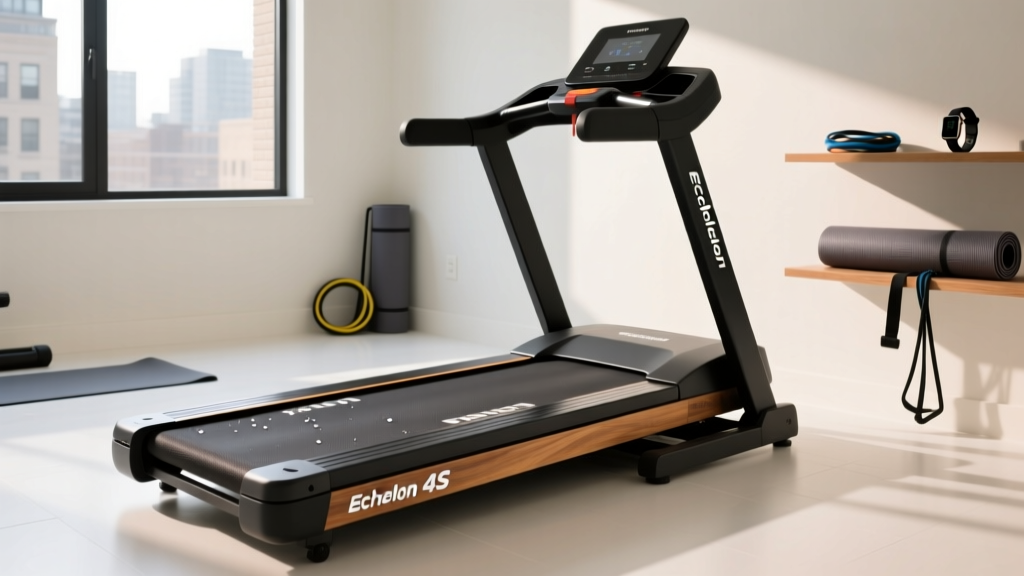
Echelon Stride 4S Treadmill Review: Ultimate Belt Maintenance Guide
