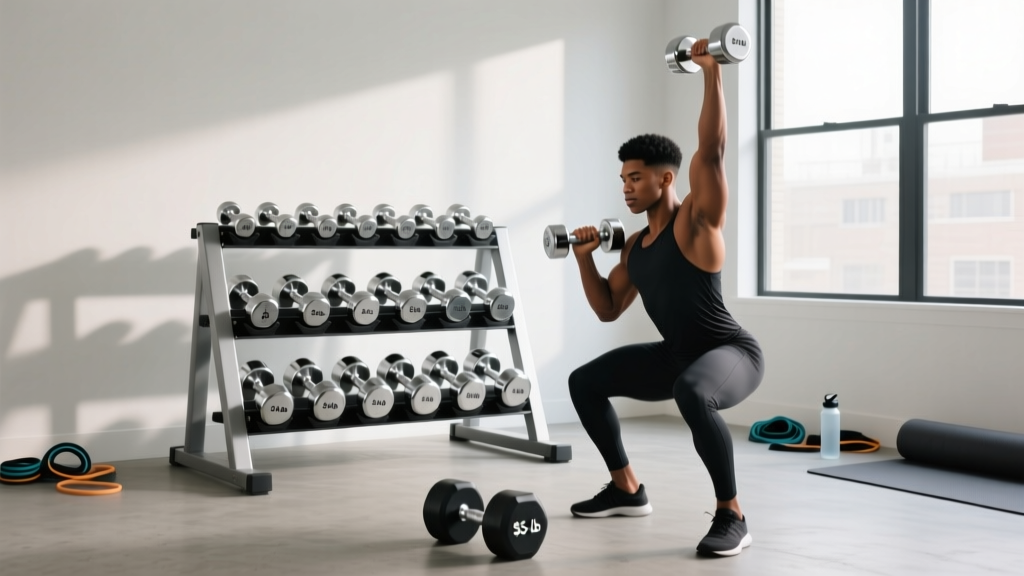
Power Rack vs Squat Rack vs Stand: Dumbbell Woodchop Workout
Compare power racks, squat racks, and squat stands to find the best 2026 home gym rig for heavy lifting and your dumbbell woodchop workout.

The 2026 Home Gym Dilemma: Heavy Squats vs. Rotational Power
Designing a modern home gym requires balancing two often conflicting needs: the structural safety required for heavy barbell lifting and the open spatial dynamics needed for functional, multi-planar movements. If your programming includes heavy back squats alongside a dynamic dumbbell woodchop workout, choosing the right rig is critical. The three dominant categories—power racks, squat racks (half racks), and squat stands—each offer distinct advantages and frustrating limitations when it comes to rotational core training.
In this comprehensive head-to-head comparison, we break down the exact dimensions, price points, and spatial clearances of top 2026 models to help you decide which setup best supports both your one-rep max and your transverse-plane athleticism.
Rig Comparison Matrix: Clearance and Capacity
Before diving into the biomechanics of rotational movements, let's look at the raw data. The table below compares standard configurations across the three main rig types, focusing on metrics that directly impact functional workouts.
| Feature | Power Rack (e.g., Rogue R-3) | Squat Rack / Half Rack (e.g., Titan T-2) | Squat Stands (e.g., Rep SR-4000) |
|---|---|---|---|
| Upright Design | 4 Uprights (Enclosed) | 2 Uprights + Rear Base | 2 Independent Uprights |
| Interior Width | 49 inches (Standard) | 43 - 49 inches | N/A (Infinite lateral space) |
| Rotational Clearance | Restricted (High risk of impact) | Moderate (Step-out required) | Unrestricted (360 degrees) |
| Weight Capacity | 1,000 - 1,500 lbs | 800 - 1,000 lbs | 500 - 800 lbs |
| Average 2026 Price | $900 - $1,400 | $500 - $800 | $250 - $450 |
The Biomechanics of the Transverse Plane
To understand why your rig choice matters for a dumbbell woodchop workout, we must look at the biomechanics of the movement. According to the National Strength and Conditioning Association (NSCA), rotational exercises like the woodchop heavily recruit the obliques, transversus abdominis, and hip rotators to generate and resist torque in the transverse plane.
When you perform a high-to-low or low-to-high dumbbell woodchop, the weight travels in a wide, sweeping arc. If you are using a 35 lb or 50 lb dumbbell, the momentum at the end of the arc is significant. Hitting a steel upright during this movement doesn't just ruin the set; it can cause severe wrist sprains or damage the knurling and powder coat on your expensive equipment. For a deeper look at the muscle activation patterns involved in diagonal cable and dumbbell chops, the ExRx Exercise Directory provides excellent biomechanical breakdowns of oblique-targeting movements.
Power Racks: Maximum Safety, Minimum Clearance
Power racks are the gold standard for heavy, unassisted barbell training. Models like the Rogue R-3 or the Rep Fitness PR-4000 feature 3x3-inch 11-gauge steel uprights and enclosed safety spotter arms.
The Woodchop Problem Inside the Rack
Performing a dumbbell woodchop workout inside a standard 49-inch wide power rack is highly discouraged. The safety spotter arms, even when pushed to the back of the rack, protrude enough to interrupt the lower arc of a low-to-high chop. Furthermore, the pull-up bar and crossmembers overhead can limit the upward extension phase of the movement.
Warning: Never perform explosive rotational dumbbell movements inside an enclosed power rack with the safety doors closed or spotter arms deployed. The risk of deflecting a heavy dumbbell into your face or shins is unacceptably high.The Workaround: Step Outside
The solution is simple but requires space: step outside the rack. However, this negates the benefit of having a structured station. If you are utilizing a rack-mounted cable system (like the Rogue RM-4000 cable attachment) to perform cable woodchops instead of dumbbell variations, the power rack becomes an absolute necessity, as the cables require the structural rigidity of a bolted-down 4-upright frame to handle lateral tension.
Squat Racks (Half Racks): The Functional Compromise
Half racks, such as the Bells of Steel Half Rack or the Titan T-2 Half Rack, utilize two front uprights supported by a heavy-duty rear base frame. This design is arguably the best compromise for athletes who split their time between heavy squats and functional dumbbell work.
Optimal Spatial Flow
With a half rack, you can rack your heavy barbells and store your dumbbells on the rear weight horns. When it is time for your dumbbell woodchop workout, you simply take two steps forward, completely clearing the uprights and the rear base. You get the open-floor feel of a commercial gym functional zone while keeping your heavy equipment safely anchored behind you.
- Pros: Excellent weight storage, built-in pull-up bars, safe spotter arms for benching, and easy step-out access for rotational movements.
- Cons: The rear base frame extends 3 to 4 feet behind the uprights, requiring a larger total footprint (often 4x8 feet or more) than squat stands.
Squat Stands: Unrestricted Movement on a Budget
Squat stands, like the Rogue S-1 or Rep Fitness SR-4000, are essentially two independent metal pillars with a saddle for the barbell. They are the ultimate choice for garage gyms with low ceilings or limited square footage.
Total Rotational Freedom
Because there is no overhead crossmember and no rear base, squat stands offer 360 degrees of unrestricted space. You can position yourself directly between the stands (with the barbell safely racked above you) and perform a full range of dumbbell woodchops without fear of clipping the hardware. This makes them ideal for high-volume functional circuits where you transition rapidly from goblet squats to rotational chops.
The Stability Trade-Off
The major drawback of squat stands is their lower weight capacity and tipping risk. While a 600 lb capacity is sufficient for most lifters, the light overall footprint means you must use weight storage horns loaded with heavy bumper plates to anchor the stands during heavy barbell squats. Furthermore, they lack integrated safety spotter arms, making heavy bench pressing a risky endeavor without a separate spotting system.
Programming the Dumbbell Woodchop in Your Rig Setup
Regardless of whether you chose the enclosed safety of a power rack or the open freedom of squat stands, proper execution is key. Here is a 2026-approved protocol for integrating this movement into your routine:
1. The Hypertrophy & Endurance Block
Use a moderate weight (25 to 40 lbs for most adults). Perform 3 sets of 12-15 reps per side. Focus on the eccentric (return) phase, taking 2 full seconds to bring the dumbbell back to the starting position. This builds rotational deceleration strength, which is vital for injury prevention in sports like golf and tennis.
2. The Power & Torque Block
Use a heavier dumbbell (50 to 80 lbs). Perform 4 sets of 5-8 reps per side. The goal here is explosive concentric hip rotation. Drive through the heel of your lead foot and aggressively pivot your back foot, allowing the hips to lead the shoulders and arms.
Pro-Tip for Garage Gyms: Rotational movements generate massive lateral shear force on your flooring. If you are doing heavy woodchops on standard EVA foam tiles, the tiles will slide apart. Invest in 3/4-inch vulcanized horse stall mats to ensure a stable, non-slip base for your transverse-plane workouts.Frequently Asked Questions
Can I mount a cable system to squat stands for woodchops?
No. Cable systems generate immense lateral and upward tension. Squat stands are not engineered to handle the multi-directional pull of a functional trainer cable system and will tip over. If you want cable woodchops, you must use a bolted-down power rack or a dedicated freestanding functional trainer.
What is the best dumbbell type for woodchops?
Urethane or rubber-coated hex dumbbells are highly recommended. The flat edges prevent them from rolling away when placed on the floor between sets, and the coating protects your flooring (and your shins) if you lose your grip during a high-momentum swing.
Final Verdict: Which Rig Should You Buy?
If your primary goal is moving maximum barbell weight safely and you have the space to step outside the rig for your dumbbell woodchop workout, invest in a Power Rack like the Rep PR-4000. It is the safest, most versatile long-term investment.
If you want a seamless transition between barbell lifts and functional floor work without leaving your designated workout zone, the Half Rack is your best option. It provides the perfect middle ground of safety, storage, and spatial awareness for the modern hybrid athlete.
More gear to consider
All reviews
Olympic vs Standard Plates & Alternating Incline Dumbbell Press
Power Rack vs Squat Stand: American Barbell Dumbbell Layout Mistakes

Loadable Dumbbell Maintenance: Honoring the Dumbbell Origin

Bumper vs Iron Plates: Space Layouts & Standing Dumbbell Calf Raise

Budget Breakdown: Loadable Bench Flyes Dumbbells vs. Fixed Sets