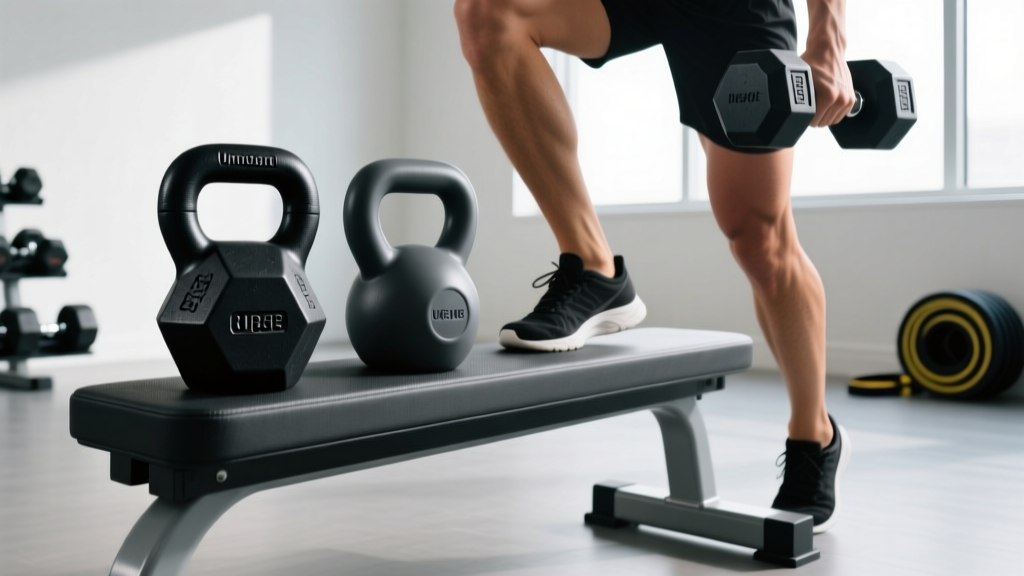
Rubber Hex vs Urethane: Best Gear for Dumbbell Step Ups on Bench
Discover whether rubber hex or urethane dumbbells are best for dumbbell step ups on bench. Our hands-on review compares grip, bounce, and durability.

The Ultimate Unilateral Torture Test: Why Step-Ups Demand the Right Gear
When building a home gym or upgrading a commercial facility in 2026, the debate between rubber hex dumbbells and urethane dumbbells usually centers around drop tests and aesthetics. But as gear reviewers, we test equipment based on how it performs during the most grueling, high-tension movements in your programming. Enter the dumbbell step ups on bench. This unilateral leg exercise is a biomechanical nightmare for poorly designed free weights. The combination of extended time under tension, heavy grip demands, and the inevitable swinging momentum at the top of the concentric phase will expose every flaw in a dumbbell's handle, knurling, and head construction.
In this hands-on review, we pit the industry-standard CAP Barbell Cast Iron Rubber Hex against the premium Rogue Fitness Urethane Dumbbells to determine which coating, handle, and price point actually makes sense for heavy, high-rep step-up variations.
Expert Callout: The Momentum Factor
During the lockout phase of a heavy step-up, the dumbbells naturally swing forward and backward. If the dumbbell head is poorly balanced or the handle diameter is too thick, this micro-momentum forces your forearm flexors to overwork, leading to grip failure before your quadriceps and glutes reach true muscular fatigue.
Contender 1: CAP Barbell Rubber Hex Dumbbells (Model SD-Series)
The CAP Barbell SD-Series rubber hex dumbbell has been the undisputed king of budget garage gyms for over a decade. Priced between $1.50 and $1.80 per pound in 2026, they offer an accessible entry point for heavy leg training. The hexagonal cast-iron core prevents rolling, which is crucial when you are resting heavy dumbbells on your thighs before kicking them up into position for step-ups.
Hands-On Performance During Step-Ups
When performing dumbbell step ups on bench with the 50 lb and 60 lb CAP hex models, the first thing you notice is the handle thickness. CAP uses a standardized chrome handle that creeps up to 35mm in diameter on the heavier sets. While this is fine for pressing, holding 120 lbs of combined weight for a 45-second set of step-ups will fry your grip. Furthermore, the knurling on the SD-series is relatively shallow (approximately 1.0mm depth). When your hands get sweaty, the dumbbells tend to slip, forcing you to squeeze tighter and accelerating forearm pump.
Failure Modes & Edge Cases
- Odor Off-Gassing: CAP uses a blend of recycled rubber. If you buy these new and keep them in a poorly ventilated garage, the volatile organic compounds (VOCs) will smell like burning tires for up to three months.
- Coating Degradation: The rubber is applied via a liquid dip process. After 2 to 3 years of repeated drops from waist height, the rubber tends to crack and peel away from the cast iron core, exposing it to rust.
Contender 2: Rogue Fitness Urethane Dumbbells
Urethane is a premium polymer that has largely replaced rubber in high-end commercial gyms and serious home setups. The Rogue Urethane Dumbbells represent the gold standard, utilizing virgin urethane that is completely odorless and highly resistant to UV and impact damage. Expect to pay between $2.60 and $3.10 per pound, making them a significant investment.
Hands-On Performance During Step-Ups
The difference in grip ergonomics during step-ups is night and day. Rogue utilizes an ergonomic, contoured handle that tapers slightly, keeping the grip diameter around 33mm to 34mm even on heavier sets. The knurling is significantly more aggressive (closer to 1.4mm depth), providing a secure, chalk-friendly grip that locks the dumbbell into your palm. When you are doing walking step-ups or high-rep bench step-ups, this knurling ensures the weight stays anchored, allowing you to focus entirely on driving through the heel of your working leg.
Failure Modes & Edge Cases
- Surface Scuffing: While virgin urethane will not crack or peel like rubber, it is prone to cosmetic scuffing and black marks if dragged across rough concrete.
- The 'Dead Bounce': Urethane has a higher Shore A durometer (hardness) rating than rubber. It offers a 'dead bounce' upon impact. While great for protecting your floor and bench, if you drop them directly on the steel edge of a plyo box, the urethane can chip.
Head-to-Head Comparison Matrix
Below is our structured breakdown of how these two materials and models compare specifically for the demands of unilateral leg training and general gym use.
| Feature | CAP Rubber Hex (SD-Series) | Rogue Urethane Dumbbells |
|---|---|---|
| Price per Pound | $1.50 - $1.80 | $2.60 - $3.10 |
| Handle Diameter | 35mm (Thick on heavy sets) | 33mm - 34mm (Ergonomic) |
| Knurling Depth | Shallow (~1.0mm) | Aggressive (~1.4mm) |
| Impact Bounce | High (Bounces off floors) | Low (Dead bounce) |
| Odor Profile | Strong rubber smell (months) | Zero odor (Virgin material) |
| Step-Up Grip Score | 6/10 (Grip fails early) | 9.5/10 (Secure lock-in) |
Biomechanics & Form: Executing the Perfect Step-Up
Having the right dumbbell is only half the equation. According to exercise biomechanics data cataloged by ExRx, the dumbbell step-up primarily targets the quadriceps and gluteus maximus, but the mechanics shift drastically based on your bench height and torso angle.
'To maximize glute activation during a step-up, utilize a higher box (16 to 18 inches) and maintain a slight forward torso lean. For quad isolation, use a lower box (12 inches) and keep the torso perfectly upright.'
When performing dumbbell step ups on bench, the American Council on Exercise (ACE) emphasizes the importance of driving entirely through the heel of the elevated foot. A common failure point is pushing off the back foot, which turns the movement into a glorified lunge and robs the working leg of the intended stimulus. Furthermore, keep the dumbbells pinned to your sides; do not let them drift forward, as this alters your center of gravity and places unnecessary shear force on the lumbar spine.
Step-by-Step Execution Guide
- The Setup: Stand 6 inches away from a sturdy, flat bench (12-18 inches high). Hold your chosen dumbbells in a neutral grip.
- The Ascent: Place your right foot entirely on the bench. Brace your core and drive through the right heel until the leg is fully extended.
- The Lockout: Stand tall at the top. Do not hyperextend the lower back. Let the dumbbells hang naturally; fight the urge to curl them.
- The Descent: Lower yourself under strict control (3-second eccentric phase) until the left foot lightly taps the floor. Do not rest your weight on the bottom foot.
The Final Verdict: Which Should You Buy?
If your primary goal is to build a budget-friendly garage gym and you only plan to do dumbbell step ups on bench occasionally, the CAP Barbell Rubber Hex dumbbells are a capable, cost-effective choice. Just be prepared to use lifting straps on your heavy working sets to compensate for the thick handles and shallow knurling, and ensure your gym space is well-ventilated to manage the rubber odor.
However, if unilateral leg training is a staple in your programming, and you demand equipment that will survive a decade of daily abuse without degrading, the Rogue Urethane Dumbbells are the undisputed winner. The superior knurling, ergonomic handle taper, and dead-bounce impact absorption make them a joy to use during high-tension, sweat-drenched leg sessions. The higher upfront cost is easily justified by the elimination of grip fatigue and the total absence of rubber off-gassing in your training space.
More gear to consider
All reviews
Olympic vs Standard Plates for Lying Dumbbell Skull Crushers

Barbell Collar Comparison: Safe Lifts Beyond a Dumbbell Step Up GIF

Olympic vs Standard Plates for Incline Seated Dumbbell Curls

EZ Curl Bar vs Straight Bar: Training for a 350 lb Dumbbell

Bumper Plate vs Iron Plate Trends & Dumbbell Chest Exercises
