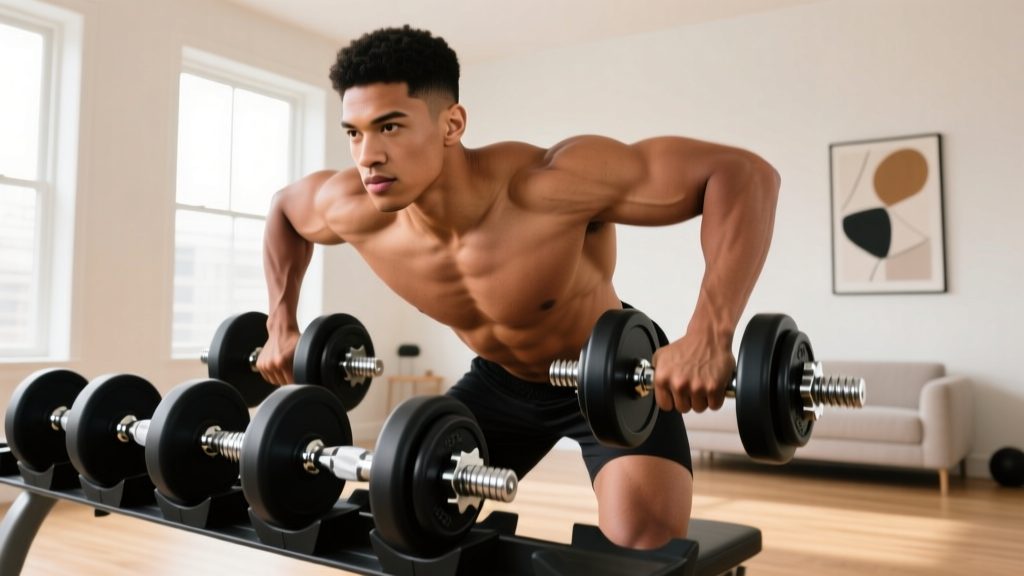
Dumbbell Shrug Muscles Worked: Form & Adjustable Dumbbell Review
Learn which dumbbell shrug muscles worked targets, master step-by-step form, and compare the best adjustable dumbbells for heavy home gym shrugs.

Building a formidable upper back and a thick, resilient neck starts with mastering scapular elevation. For home gym owners, the exercise is simple, but the equipment choice is critical. In this beginner-friendly guide, we break down the exact dumbbell shrug muscles worked, provide a step-by-step execution protocol, and review the top adjustable dumbbells on the market in 2026 to ensure your grip doesn't fail before your traps do.
The Anatomy: Dumbbell Shrug Muscles Worked
When beginners research the dumbbell shrug muscles worked, the primary answer is the upper trapezius. However, the biomechanics of scapular elevation involve a synergistic network of stabilizers. According to Healthline's anatomical guide to the trapezius muscle, the trapezius is a large, diamond-shaped muscle spanning the neck, shoulders, and mid-back. The shrug specifically isolates the superior (upper) fibers, which are responsible for elevating the scapula (shoulder blades) toward the ears.
Secondary movers include the levator scapulae, which assists in lifting the shoulder girdle, and the erector spinae, which works isometrically to keep your spine neutral under heavy loads. Furthermore, your forearm flexors and grip muscles act as crucial stabilizers. Because the traps are incredibly dense, they require heavy loads to stimulate growth, which often makes grip strength the limiting factor in your workout.
⚠️ Form Warning: Never "roll" your shoulders backward or forward at the top of the movement. As noted by ExRx.net's biomechanical breakdown of the dumbbell shrug, rolling places unnecessary shear stress on the rotator cuff and cervical spine without increasing trapezius activation. Move strictly up and down in a linear path.Step-by-Step Guide to the Perfect Dumbbell Shrug
To maximize hypertrophy and prevent injury, follow this precise execution protocol:
- The Setup: Stand with feet shoulder-width apart, knees slightly bent (about a 15-degree flex). Hold a dumbbell in each hand using a neutral grip (palms facing your thighs).
- The Brace: Engage your core and pull your shoulder blades down and back slightly to establish a stable thoracic spine. Keep your arms completely straight; imagine them as ropes connecting your shoulders to the weights.
- The Concentric Phase: Exhale and drive your shoulders straight up toward your ears. Focus on the cue "touch your shoulders to your ears." Do not use momentum from your hips or lower back.
- The Apex Pause: Hold the peak contraction for a full 1.5 seconds. This isometric hold is where maximum muscle fiber recruitment occurs in the upper traps.
- The Eccentric Phase: Inhale and slowly lower the dumbbells back to the starting position over a controlled 3-second count. A slow eccentric phase causes micro-tears in the muscle fibers, stimulating stretch-mediated hypertrophy.
Why Adjustable Dumbbells Are Ideal (and Challenging) for Shrugs
Shrugs are a high-load, low-repetition exercise. To stimulate the dense muscle fibers of the upper traps, you typically need to lift in the 8–12 rep range with heavy weight—often 50 to 80+ lbs per hand for intermediate lifters. Buying a full rack of fixed hex dumbbells up to 100 lbs costs upwards of $2,500 and consumes massive floor space. Adjustable dumbbells solve the footprint issue, but they introduce a unique challenge: handle geometry.
When evaluating adjustable dumbbells for shrugs, the handle diameter, knurling depth, and weight distribution dictate your success. If the handle is too thick or lacks aggressive knurling, your grip will fail before your traps are fully fatigued. According to the ACE Fitness guide on strengthening the traps, maintaining a secure grip without excessive wrist flexion is key to isolating the target muscles safely.
2026 Adjustable Dumbbell Comparison for Heavy Pulls
| Model | Max Weight (Per DB) | Handle Diameter | Knurling | Est. Price (Pair) |
|---|---|---|---|---|
| Nuobell 80lb | 80 lbs | 32mm | Medium-Deep | $449 |
| Bowflex SelectTech 552 | 52.5 lbs | 38mm (Varies) | Smooth/Mild | $399 |
| PowerBlock Elite USA | 50 lbs (Base) | Cage Grip | Mild | $359 |
1. Nuobell 80lb: The Heavy Pull Champion
The Nuobell 80lb is arguably the best adjustable dumbbell for shrugs in 2026. Its 32mm handle diameter perfectly mimics a standard Olympic barbell, allowing your fingers to wrap securely. The knurling is aggressive enough to bite into your skin without tearing calluses. At 80 lbs per hand, advanced beginners and intermediates have enough headroom to progressively overload their traps for years without needing to upgrade.
2. Bowflex SelectTech 552: The Space-Saver with Grip Limits
The Bowflex 552 is a home gym staple, but it has drawbacks for heavy shrugs. The handle is thicker, and the plastic casing at higher weight increments can feel bulky against the thighs. Furthermore, the max weight of 52.5 lbs is often too light for trap development once you pass the novice stage. If you use these, you will likely need to incorporate lifting straps to bypass the grip limitation and adequately challenge the traps.
3. PowerBlock Elite USA: The Secure but Restrictive Option
PowerBlock's cage design offers incredible durability and a compact footprint. However, the enclosed handle restricts wrist movement. During heavy shrugs, the natural tendency is for the wrists to slightly extend under the load; the PowerBlock cage prevents this, which can feel awkward and limit the mind-muscle connection in the upper traps.
Edge Cases & Troubleshooting Your Shrug
- Grip Failure Before Trap Fatigue: The Fix: Invest in Figure-8 lifting straps or Versa Gripps. Since the forearms are merely stabilizers, it is perfectly acceptable to use straps on your heaviest working sets to ensure the targeted muscles (the traps) reach mechanical failure.
- Bicep Tendon Strain: The Fix: This occurs when lifters slightly bend their elbows and turn the shrug into a heavy, partial-range curl. Keep your triceps engaged and elbows locked out completely to remove the biceps from the kinetic chain.
- Neck Pain or Cervical Strain: The Fix: You are likely jutting your chin forward at the top of the movement (anterior head carriage). Tuck your chin slightly, maintaining a neutral cervical spine aligned with your thoracic spine. Imagine holding a tennis ball under your chin.
- Lower Back Swinging: The Fix: If you find yourself using hip thrusts to move the weight, the load is too heavy. Alternatively, try seated dumbbell shrugs on a 90-degree bench to completely eliminate lower back momentum and isolate the upper traps.
Final Thoughts on Trap Development
Understanding the dumbbell shrug muscles worked is only half the battle; executing the movement with strict biomechanics and the right equipment is what yields results. By avoiding the common trap of shoulder rolling, utilizing a controlled eccentric phase, and selecting an adjustable dumbbell with a proper handle diameter like the Nuobell 80lb, you will build a thick, resilient upper back safely in your home gym. Track your reps, increase the weight incrementally, and let the traps grow.
More gear to consider
All reviews
Setting Up Your Space for Effective Dumbbell Workouts for Women

Barbell Collar Types: A Dumbbell Manufacturer's Troubleshooting Guide
Rogue Loadable Dumbbells vs Neoprene Weights: Home Gym Guide
Beyond Dumbbell Snatch Benefits: Beginner's Guide to Barbell Collars

Olympic vs Standard Plates Setup + Full Body Dumbbell Workout PDF
