Dumbbell Press No Bench: Standard vs Olympic Plates
Learn how to choose between standard and Olympic weight plates for adjustable dumbbells to master the dumbbell press no bench safely and effectively.

The Home Gym Dilemma: Mastering the Dumbbell Press No Bench
As we navigate the home fitness equipment market in 2026, space optimization remains a top priority for beginners. The dumbbell press no bench—commonly known as the dumbbell floor press—is the ultimate space-saving chest and triceps builder. It eliminates the need for a bulky $300 weight bench while providing a safer range of motion for the shoulder joints. However, to perform this movement effectively, you need adjustable dumbbells, which immediately forces beginners into a critical decision: Should I buy standard or Olympic weight plates?
Choosing the wrong plate ecosystem is one of the most expensive beginner mistakes in strength training. This step-by-step guide will break down the exact differences between standard (1-inch) and Olympic (2-inch) weight plates, helping you build a durable, safe, and cost-effective setup for your floor pressing needs.
Step 1: Evaluating Standard (1-Inch) Weight Plates
Standard weight plates feature a 1-inch center hole and are designed to fit on entry-level, threaded spinlock dumbbell handles. They are typically the first purchase for beginners due to their low upfront cost and widespread availability in big-box sporting goods stores.
The Pros and Cons for Floor Pressing
- Pros: Low initial investment. A basic 100 lb kit of standard cast iron plates (like the CAP Barbell 1-Inch Solid Iron set) typically costs around $1.00 to $1.30 per pound in 2026. They are also physically narrower, allowing you to load more plates onto a short dumbbell sleeve before they touch.
- Cons: Severe structural limitations. Standard spinlock handles rely on a threaded star-nut to secure the plates. When you are performing a heavy dumbbell press no bench, the lateral torque can cause cheap spinlock threads to strip, potentially dropping a 25 lb iron plate onto your face or wrists.
Step 2: Upgrading to Olympic (2-Inch) Weight Plates
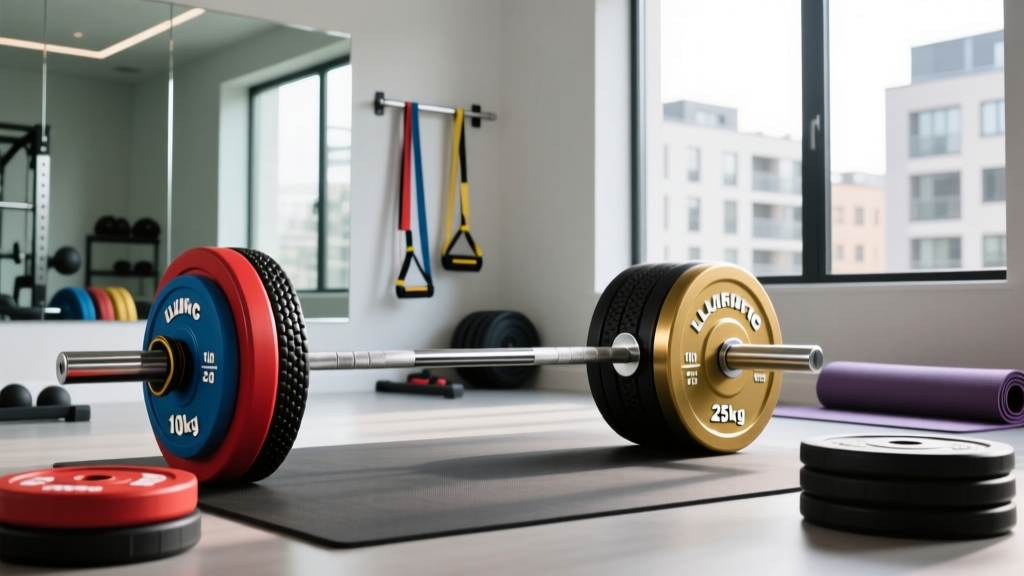
Olympic plates feature a 2-inch (50mm) center hole, matching the sleeves on commercial barbells and high-quality loadable dumbbell handles. If you are serious about progressing your dumbbell press no bench beyond 50 lbs per hand, Olympic plates are the undisputed industry standard.
Why Olympic Plates Dominate Long-Term
According to Rogue Fitness's specifications on bumper and iron plates, Olympic plates are manufactured to stricter weight tolerances (often within 1% of the stated weight) and feature hardened steel hubs that will never warp or crack, unlike the painted cast iron hubs of cheap standard plates.
- Cast Iron Olympic Plates: Ideal for dumbbells because their slim profile allows you to load up to 100+ lbs on a single dumbbell handle. Expect to pay $1.50 to $2.50 per pound.
- Bumper Plates: Made of dense virgin rubber, these are designed to be dropped. While great for barbell Olympic lifts, thick bumper plates (like the Rogue Black Bumpers) are generally poorly suited for adjustable dumbbells because their 17.7-inch diameter and thick rubber construction cause the plates to clash together before you can load adequate weight.
Step 3: The Dumbbell Handle Bottleneck
You cannot mix ecosystems. Standard plates require standard handles; Olympic plates require Olympic handles. Here is where your budget must align with your safety.
| Feature | Standard (1-Inch) System | Olympic (2-Inch) System |
|---|---|---|
| Handle Type | Threaded Spinlock (e.g., Yes4All 14") | Loadable Olympic (e.g., Titan Fitness 20") |
| Handle Cost (Pair) | $25 - $35 | $80 - $130 |
| Max Safe Load | ~45 - 60 lbs (Thread failure risk) | 150+ lbs (Secured by spring collars) |
| Plate Security | Star-nut (Prone to loosening mid-set) | Spring Collars / Clamps (Instant & secure) |
| Floor Press Suitability | Beginner / Light Weight Only | Intermediate to Advanced / Heavy Loading |
Step 4: Executing the Dumbbell Press No Bench Safely
Once you have selected your plates and assembled your dumbbells, proper execution is vital. The floor press restricts your range of motion compared to a bench press, which heavily biases the triceps and protects the anterior deltoid. ExRx.net's kinesiology guide on the Dumbbell Floor Press highlights this movement as a premier accessory lift for lockout strength.
The Step-by-Step Floor Press Setup
- The Knee Pop: Sit on the floor with the dumbbells resting vertically on your thighs, just above your knees. Kick one knee up at a time to "pop" the dumbbells into position as you roll backward onto your shoulder blades.
- The Anchor: Plant your feet flat on the floor. Keep your glutes tight and your core braced. Do not arch your lower back excessively; the floor provides natural feedback to keep your spine neutral.
- The Descent: Lower the weights with your elbows tucked at a 45-degree angle to your torso. Flaring your elbows to 90 degrees on the floor places immense, unnecessary shear stress on the rotator cuff.
- The Touchdown: Allow your triceps to gently kiss the floor. Do not bounce your elbows off the ground. Pause for a micro-second to eliminate the stretch reflex.
- The Lockout: Drive the weights up and slightly inward, squeezing the pectorals at the top without clanking the dumbbell plates together.
Step 5: Safety Protocols and Floor Protection
When performing the dumbbell press no bench, gravity is unforgiving. Harvard Health Publishing's guidelines on safe strength training emphasize the importance of environmental safety when lifting without a spotter.
- Never Drop the Weights: When finishing a set, do not drop the dumbbells to your sides. This can tear your rotator cuff or bicep tendon. Instead, pull the weights to your chest, crunch up, and use your momentum to sit forward, guiding the dumbbells back to your thighs.
- Use High-Density Flooring: If you are using cast iron Olympic or standard plates, a simple yoga mat will not protect your subfloor or the iron from chipping. Invest in 3/8-inch or 1/2-inch thick vulcanized rubber horse stall mats (typically $50-$70 per 4x6 sheet) to dampen the impact of setting the dumbbells down between sets.
Frequently Asked Questions
Can I use standard plates on an Olympic dumbbell handle?
No. The center hole of a standard plate is 1 inch, while an Olympic dumbbell sleeve is 2 inches (50mm). While you can buy cheap plastic "bushings" to adapt standard plates to Olympic bars, doing this on dumbbells is highly dangerous. The adapter adds slop and wobble, which can cause the plate to slip off the sleeve during a floor press.
Are adjustable dumbbells (like Bowflex or Nuobell) better than plate-loaded dumbbells for the floor press?
For pure convenience, dial-adjustable dumbbells are excellent. However, they are fragile. Dropping a $350 pair of Nuobells or Bowflex 552s on a hard floor after a grueling set of floor presses will likely shatter their internal plastic selector mechanisms. Plate-loaded Olympic dumbbells are virtually indestructible and remain the superior choice for heavy, aggressive floor pressing.
How heavy should my floor press be compared to my bench press?
Because the floor press eliminates the bottom 4-6 inches of the range of motion (removing the weakest part of the lift where the pecs are maximally stretched), most lifters can floor press 90% to 105% of their traditional bench press working weight. It is an excellent tool for overloading the triceps and breaking through bench press sticking points.
Final Verdict: Which Plate Type Wins?
If your budget is strictly under $150 and you are only pressing up to 40 lbs per hand, a Standard Cast Iron setup will suffice for your first year of training. However, if you view fitness as a long-term investment, the Olympic weight plate ecosystem is the undisputed winner. The ability to use secure spring collars, upgrade to commercial-grade loadable handles, and eventually transition to barbell work without buying a second set of plates makes Olympic the only logical choice for serious home gym builders in 2026.
More gear to consider
All reviews
RDL with Dumbbells: Form Mistakes & Adjustable Gear Guide

Olympic vs Standard Plates: Building the Biggest Dumbbell Setup
Storage Layouts for Different Types of Dumbbell Workouts

Barbell Collar Comparison: Safe Lifts Beyond a Dumbbell Step Up GIF

Power Rack vs Squat Rack vs Squat Stand for Your Nike Dumbbells Set