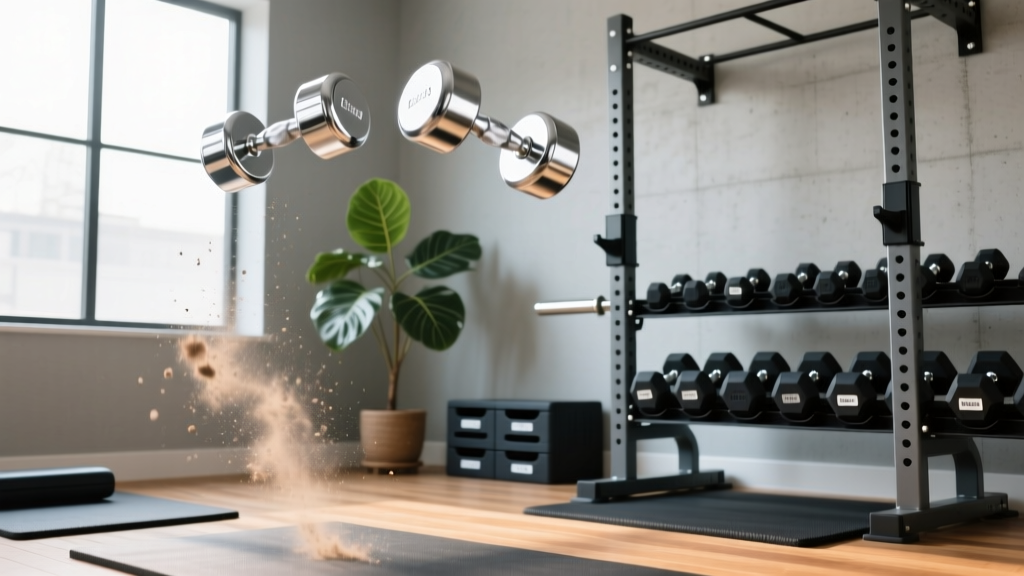
Dumbbell Jump Squats & Rack Care: Storage Tips for Longevity
Learn how explosive movements like dumbbell jump squats impact your gear. Discover rack storage solutions, maintenance tips, and longevity hacks for 2026.

The Hidden Toll of Explosive Movements on Your Gear
When building lower-body power and athletic rate of force development (RFD), few exercises are as effective as dumbbell jump squats. However, the explosive nature of this movement creates a unique challenge for your home gym infrastructure. The kinetic energy generated during a set of heavy dumbbell jump squats doesn't just disappear when the set ends; it is transferred directly into your equipment during the re-racking phase.
Hastily slamming 50-pound hex dumbbells back onto a storage tier after an exhausting set of plyometrics introduces severe shear stress to rack welds and micro-fractures to the dumbbell heads. According to facility maintenance guidelines outlined by the National Strength and Conditioning Association (NSCA), high-impact environments require rigorous equipment inspection schedules to prevent catastrophic structural fatigue. In a home or commercial gym setting, understanding the intersection between explosive lifting and equipment storage is the key to maximizing the lifespan of your investment.
⚠️ Critical Equipment Warning: Never use adjustable dumbbells (e.g., PowerBlock Elite, Bowflex SelectTech, or Nuobell) for dumbbell jump squats. The internal pin, dial, and magnetic mechanisms cannot withstand repetitive ballistic deceleration. Using them for explosive jumps will lead to catastrophic mechanism failure, potentially causing the weight plates to detach mid-air or upon re-racking.Choosing a Rack Built for High-Impact Re-Racking
If your programming heavily features explosive movements, your storage solution must be engineered for dynamic loading. Flimsy, lightweight commercial racks with 14-gauge steel tubing will eventually bow or develop stress fractures at the weld joints when subjected to the aggressive re-racking that often follows high-intensity interval training (HIIT) or plyometric circuits.
For 2026, the gold standard for heavy-duty storage remains 11-gauge or 7-gauge steel construction with reinforced gusset plates at the tier joints. Below is a comparison of the most common rack types and their suitability for high-impact routines.
| Rack Type | Top 2026 Model | Est. Price | Impact Tolerance |
|---|---|---|---|
| 3-Tier Vertical | Rogue 3-Tier Dumbbell Rack | $550 - $795 | Excellent (11-gauge steel, wide footprint) |
| A-Frame | Titan Fitness A-Frame Rack | $289 - $349 | Moderate (Good for mid-weight, can tip if unbalanced) |
| Wall-Mounted | Rep Fitness Wall Shelf | $199 - $250 | Poor for heavy drops (Relies entirely on drywall/stud integrity) |
For athletes regularly performing dumbbell jump squats with weights exceeding 40 lbs per hand, a bolted-down 3-Tier Vertical rack is the only safe option. The Rogue Fitness ecosystem, for instance, utilizes heavy-duty UHMW plastic saddles on their tiers. This high-density polymer absorbs the shock of re-racking, protecting both the steel rack and the dumbbell heads from abrasive metal-on-metal contact.
Routine Maintenance: Warding Off Rust and Weld Fatigue
Explosive exercises lead to increased perspiration. When you finish a grueling set of dumbbell jump squats, your hands are coated in sweat, which is then transferred directly to the dumbbell handles and the rack tiers. Human sweat contains urea, lactic acid, and sodium chloride. The chloride ions in sweat are highly aggressive and will rapidly penetrate the passive oxide layer on chrome-plated steel, initiating oxidation (rust) from the inside out.
Step-by-Step Knurling and Steel Care
To maintain the structural integrity and grip quality of your gear, implement this bi-weekly maintenance protocol:
- Dry Brushing: Use a stiff nylon bristle brush (never steel wire, which strips chrome) to dislodge chalk, dead skin, and debris from the knurling grooves.
- Neutralization: Wipe the handles and rack contact points with a 10:1 water-to-white-vinegar solution. This neutralizes the alkaline salts left behind by evaporated sweat.
- Micro-Oiling: Apply two drops of 3-IN-ONE Multi-Purpose Oil to a microfiber cloth and lightly buff the knurling. This leaves a microscopic hydrophobic barrier that prevents ambient humidity from causing surface rust.
- Weld Inspection: Visually inspect the tier welds on your dumbbell rack. Look for 'paint creep'—hairline cracks in the powder coating near the weld seams. This is the earliest indicator of metal fatigue caused by repetitive impact loading.
Urethane vs. Rubber: Material Longevity Under Stress
The type of dumbbell you use for jump squats dictates how your storage rack will age. When you misjudge the placement of a dumbbell after a jump squat and it clips the edge of the rack tier, the material composition of the dumbbell head determines the outcome.
- Virgin Rubber (e.g., CAP Barbell): Prone to drying out, cracking, and emitting a persistent off-gassing odor. Repeated impacts against steel rack tiers will cause the rubber to chunk and flake over 2-3 years.
- Cast Iron / Chrome: Indestructible heads, but they will chip the powder coating off your storage rack upon impact, leading to rust on the rack itself.
- Premium Urethane (e.g., Rogue Urethane, Eleiko): Urethane is a high-durometer elastomer that is virtually impervious to UV degradation, sweat, and blunt force trauma. While a 60 lb urethane dumbbell might cost $250+ per pair, it will protect your rack's finish and outlast rubber alternatives by a decade.
"Urethane's molecular structure allows it to absorb and disperse kinetic energy without deforming permanently. When an athlete aggressively re-racks a urethane dumbbell, the material acts as a shock absorber for the steel rack tier, significantly extending the lifespan of the storage unit."
Safe Re-Racking Techniques Post-Jump Squat
Equipment longevity isn't just about buying the right gear; it's about user behavior. After a set of maximal-effort dumbbell jump squats, central nervous system (CNS) fatigue can make you careless. Follow these rules to protect your rack:
- The 'Touch and Set' Rule: Never drop dumbbells from shoulder height onto the rack. Guide the dumbbell down until it makes physical contact with the UHMW plastic saddle, then release your grip.
- Sequential Racking: Rack one dumbbell at a time. Attempting to slam both dumbbells onto a 3-tier rack simultaneously while fatigued often results in misaligned placements, causing the dumbbells to roll and pry the steel tier brackets outward.
- Hex Alignment: Ensure hex dumbbells are seated flat against the tier lip. If a hex dumbbell is stored at an angle, the next time you grab it for a heavy set, the uneven leverage can torque the rack's cross-bracing.
Frequently Asked Questions
Can I just drop my dumbbells on the floor after jump squats?
Dropping dumbbells on the floor is highly discouraged unless you are using competition-grade bumper plates on a calibrated Olympic barbell. Hex dumbbells, whether rubber or urethane, have hard internal steel cores. Dropping them from waist height onto concrete or even thick rubber horse-stall mats will eventually shatter the outer coating, bend the steel handles, and ruin your flooring. Always control the eccentric phase and re-rack safely.
How often should I tighten the bolts on my dumbbell rack?
If you are frequently performing explosive movements like dumbbell jump squats and re-racking with force, the micro-vibrations can loosen hardware over time. You should use a socket wrench to check and tighten all structural bolts on your storage rack every 90 days. Apply a medium-strength threadlocker (like Loctite Blue 242) to the threads during your initial assembly to prevent vibration-induced backing out.
Does chalk damage my dumbbell rack?
Gym chalk (magnesium carbonate) itself is not corrosive to steel, but it is highly abrasive. When chalk builds up on the rack tiers, it acts like sandpaper. Every time you slide a heavy dumbbell across the tier after a set of jump squats, the chalk grit will grind away the protective powder coating. Wipe down your rack tiers with a damp microfiber cloth weekly to remove chalk accumulation.
More gear to consider
All reviews
Power Rack vs Squat Stand Mistakes & Dumbbell Arm Workout for Ladies

Beyond the Dumbbell Workout PDF: Barbell Knurling & Weight Mistakes

Loadable Dumbbells for Your 10 Minute Upper Body Dumbbell Workout

Power Rack vs Squat Rack vs Stand: Dumbbell Rear Deltoid Raise Guide

Olympic vs Standard Plates: Setup and Dumbbell Row Guide for Women
