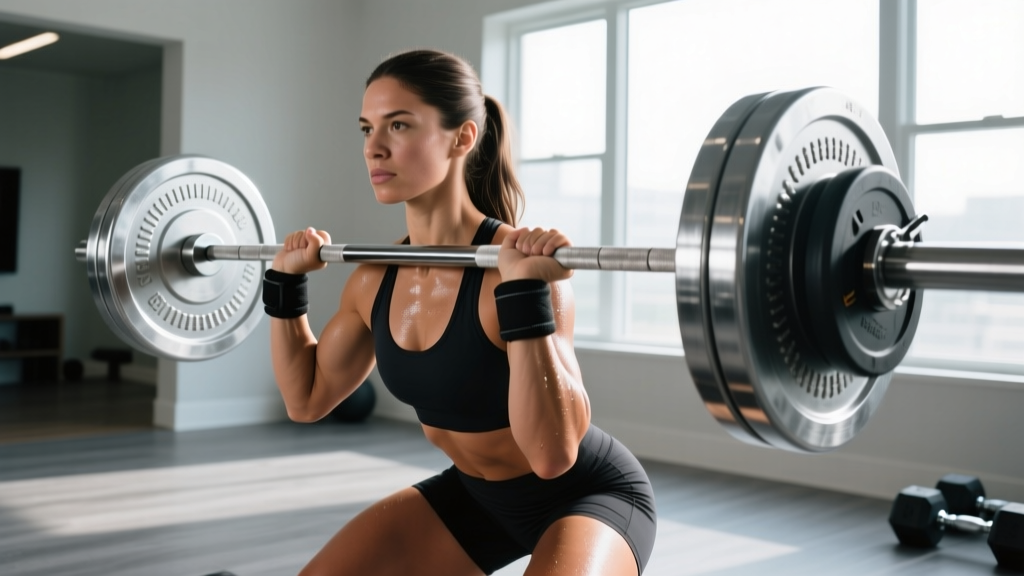
Beyond Dumbbell Curls Women Use: Olympic Barbell Weight & Knurling
Transition from the dumbbell curls women use for isolation to heavy compound lifts. Learn to choose an Olympic barbell by weight, whip, and knurling.

Many lifters begin their strength journey with isolation movements. While the dumbbell curls women frequently use for bicep isolation are fantastic for building foundational arm strength and establishing a mind-muscle connection, true systemic strength and metabolic adaptation require compound movements. Transitioning from 15-pound dumbbells to a 45-pound Olympic barbell can feel intimidating, especially when faced with a wall of steel and confusing terminology.
If you are ready to upgrade your home gym and move beyond the dumbbell rack, you need to understand the anatomy of a barbell. This step-by-step beginner's guide will demystify Olympic barbell weight standards, shaft diameters, and knurling patterns so you can invest in a bar that will last a lifetime.
Step 1: Demystifying Olympic Barbell Weight and Dimensions
The first decision you will make is between a standard 20kg (45lb) men's bar and a 15kg (33lb) women's Olympic bar. The 'women's bar' is not just a lighter version of the standard bar; it features distinct dimensional differences mandated by the International Weightlifting Federation (IWF) to accommodate different hand sizes and biomechanics.
| Specification | Standard Men's Bar (20kg) | Women's Olympic Bar (15kg) |
|---|---|---|
| Total Weight | 45 lbs (20.4 kg) | 35 lbs (15.8 kg) |
| Total Length | 2200 mm (86.6 inches) | 2010 mm (79.1 inches) |
| Shaft Diameter | 28 mm - 29 mm | 25 mm |
| Loadable Sleeve | 16.3 inches | 12.5 inches |
For beginners transitioning from lighter dumbbells, the 15kg bar is often the superior starting point. The shorter loadable sleeves and lighter overall weight make it easier to maneuver during exercises like the overhead press or hip thrust, while the 25mm shaft is significantly easier to grip for those with smaller hands.
Step 2: Decoding Knurling Patterns
Knurling is the crosshatched pattern machined into the steel shaft that provides grip. According to BarBend's comprehensive guide to barbell knurling, the shape and depth of these cuts drastically alter the feel of the bar. As a beginner, you want a grip that secures the bar without tearing your calluses.
The Three Main Knurl Types
- Hill Knurl: The peaks of the knurl are rounded off. This feels very mild on the hands and is common on cheap, entry-level barbells. While comfortable for high-rep sets, it becomes slippery when you start lifting heavy or using chalk.
- Mountain Knurl: The peaks are sharp and pointed. This provides an aggressive, almost sandpaper-like grip. It is excellent for heavy deadlifts but can easily tear the skin on your palms during high-volume dynamic movements.
- Volcano Knurl: The gold standard for premium barbells. The machine cuts a deep valley with a sharp rim, creating a 'volcano' shape. This digs into the skin for a secure grip without the sharp, tearing peaks of a mountain knurl.
Powerlifting bars feature a 'center knurl' to help the bar grip your upper back during low-bar back squats. However, if you plan to do Olympic weightlifting (cleans and snatches) or front squats, a center knurl will scrape your collarbones. For a beginner building a multi-purpose home gym, opt for a bar with no center knurl or a very passive, smooth center marking.
Step 3: Understanding Shaft Diameter and Hand Ergonomics
Shaft diameter dictates how the bar feels in your palm and how much 'whip' (flex) the bar has during dynamic lifts. As noted by Eleiko's educational guides on barbell selection, matching the diameter to your hand size is crucial for preventing grip fatigue.
- 25mm: Found exclusively on 15kg women's weightlifting bars. Ideal for smaller hands, allowing the fingers to wrap fully around the bar and secure a hook grip comfortably.
- 28mm: The standard for multi-purpose and Olympic weightlifting bars. Offers a great balance of grip and bar whip.
- 28.5mm to 29mm: Found on powerlifting bars (like the Rogue Ohio Power Bar). The thicker shaft maximizes stiffness for heavy squats and bench presses but can be difficult to hold for those with smaller hands.
Step 4: Tensile Strength and 'Whip' Explained
Tensile strength is measured in PSI (pounds per square inch) and indicates how much force the steel can take before breaking or permanently bending. When shopping in 2026, never purchase a barbell with a tensile strength below 165,000 PSI; it will permanently bend if dropped during a heavy deadlift.
For a beginner, look for a bar rated between 190,000 PSI and 205,000 PSI. This range provides the perfect balance of durability and 'whip'. Whip refers to the bar's ability to bend and snap back. Weightlifters want high whip to help bounce the bar out of the bottom of a clean, while powerlifters want zero whip (stiffness) to maintain stability under maximal loads.
Step 5: Top Barbell Recommendations for Upgrading
Based on current 2026 pricing and build quality, here are three exceptional barbells for lifters graduating from dumbbell isolation work to compound barbell training.
1. Rogue Bella Bar 15KG (Best for Smaller Hands)
Retailing at approximately $245, the Rogue Bella Bar 15KG is the premier choice for women upgrading their home gym. It features a 25mm shaft, a Cerakote finish for rust resistance, and a highly refined volcano knurl. It is rated at 190,000 PSI, making it durable enough for heavy deadlifts but whippy enough for cleans.
2. REP Fitness AB-4100 (Best Multi-Purpose Value)
Priced around $219, the REP AB-4100 offers incredible value. It features a 28mm shaft, dual knurl marks (for both powerlifting and weightlifting), and a stainless steel shaft that requires zero maintenance. The knurl is moderately aggressive, perfect for a beginner learning to use chalk.
3. Rogue Ohio Bar (Best Overall Hybrid)
At roughly $295, the standard Rogue Ohio Bar (28mm, 190k PSI) remains the gold standard for multi-purpose training. It lacks a center knurl, features composite bushings for smooth sleeve rotation, and has a knurl pattern that strikes the perfect balance between aggressive and mild.
Frequently Asked Questions
Can I use a 15kg bar for heavy deadlifts?
Yes. A high-quality 15kg bar rated at 190,000 PSI or higher can safely hold hundreds of pounds. The limiting factor is not the weight capacity, but the shorter loadable sleeves; you may run out of room on the sleeves before you reach your maximum deadlift potential if you are using thick bumper plates.
Do I need to oil my barbell knurling?
If you buy a bar with a Cerakote or stainless steel shaft, no maintenance is required. However, if you purchase a bare steel or black oxide bar, you must scrub the knurl with a nylon brush and apply a light coat of 3-in-1 oil or mineral oil once a month to prevent rust and dead skin buildup.
How long does it take to transition from dumbbells to barbells?
Most lifters can begin incorporating empty barbell movements (like squats and overhead presses) within their first month of training. Focus on mastering the movement pattern with the 45lb or 35lb bar before adding weight plates. The grip strength you built performing dumbbell curls will translate well to holding the barbell for pressing movements.
More gear to consider
All reviews
Dumbbell Wrist Curls Palms Up: Rubber Hex vs Urethane Value

Easy Dumbbell Exercises: A Beginner's Guide to Neoprene Weights

RDL Exercise with Dumbbells vs. Barbell: 2026 Knurling Guide

Full Upper Body Workout With Dumbbells: Adjustable Dumbbell Comparison

Bumper vs Iron Plates for Dumbbell Tenements: 2026 Guide
