
Dumbbell vs Cable Fly: Is Chest Press Machine Same as Bench Press?
Compare dumbbell vs cable fly equipment for chest isolation. Plus, we answer: is chest press machine same as bench press? Expert 2026 gear reviews.

The Biomechanical Divide: Tension Curves in Chest Isolation
When designing a comprehensive chest training setup, the debate between free weights and cables is a cornerstone of equipment selection. The dumbbell fly and the cable fly target the pectoralis major, but they do so through fundamentally different resistance profiles. Understanding these biomechanical differences is critical before dropping thousands of dollars on home or commercial gym gear.
The traditional dumbbell fly relies on gravity, creating a bell-shaped resistance curve. At the bottom of the movement (the stretch), the resistance is maximal, placing immense torque on the shoulder joint. However, as you bring the dumbbells together at the top, the resistance drops to near zero because the weight is stacked directly over the joint. According to biomechanical analyses from ExRx.net, this means the muscle is underloaded at its shortest contraction point.
Conversely, the cable fly provides constant, linear tension throughout the entire range of motion. The resistance does not disappear at the top; in fact, you can cross your hands over one another to extend the adduction range, maximizing peak contraction. For hypertrophy-focused training in 2026, constant tension is generally preferred, but dumbbells still hold a distinct advantage for stabilizer recruitment and accommodating natural wrist rotation.
Hands-On Review: Top Cable Crossover Machines for 2026
If you are prioritizing constant tension and joint safety, a high-quality functional trainer or cable crossover is mandatory. Here are our top hands-on picks based on durability, pulley ratios, and stack friction.
1. Rep Fitness FT-5000 2.0 Functional Trainer
- Price: $1,899 (Base Model)
- Pulley Ratio: 2:1 (230 lb stack yields 115 lbs of resistance per handle)
- Dimensions: 63” W x 53” D x 84” H
The FT-5000 2.0 remains a benchmark in the home gym space. The 2:1 ratio is exceptionally smooth, making it ideal for high-rep cable flys where a 1:1 ratio might feel too jerky at the stretch. The laser-cut numbering on the shrouds is a massive quality-of-life upgrade. Failure Mode Warning: The dual selector pins can occasionally slip if the stack is dropped violently. Always guide the weight stack down during fly variations.
2. Bells of Steel Residential Cable Crossover
- Price: $1,299
- Pulley Ratio: 1:1 (180 lb stack yields 180 lbs of resistance)
- Dimensions: 104” W x 30” D x 82” H
For those who need heavier absolute loads for standing cable crossovers, the 1:1 ratio on the Bells of Steel unit is superior. The wider 104-inch footprint allows for a true, deep stretch that narrower functional trainers cannot accommodate. However, the 1:1 ratio means the weight stack moves at the exact speed of your hands, which can feel punishing on the rotator cuff during the eccentric phase of a fly.
The Free Weight Route: Dumbbell & Bench Pairings
If you prefer the tactile feedback of free weights, your equipment choices must mitigate the inherent risks of the dumbbell fly. You need adjustable dumbbells that do not rattle and a bench that supports a safe retraction of the scapula.
Nuobell 80 lb Adjustable Dumbbells
Priced at $499 per pair, the Nuobell 80s are our top pick for flys. Unlike dial-based competitors, the twist-handle mechanism of the Nuobell creates a solid, single-piece feel. More importantly, the knurling is mild. Aggressive knurling tears up calluses during high-rep flys where the grip is relaxed to allow for a deeper stretch. Edge Case: Never drop Nuobells. The internal plastic gears that align the weight plates will crack, rendering the dumbbell a safety hazard.
Rogue Adjustable Bench 3.0 (AB-3)
At $695, the AB-3 offers a 14-inch height, which is lower than standard commercial benches. A lower bench height is crucial for dumbbell flys because it allows your elbows to travel below the torso for a maximal pec stretch without your knuckles scraping the floor. The ladder-step adjustment mechanism ensures the back pad won't collapse mid-set, a common failure point in cheaper $150 Amazon benches.
Expert Tip: Scapular Retention on the Fly
Whether using cables or dumbbells, the pectoralis major can only fully contract if the scapulae remain retracted and depressed. If your shoulders roll forward at the top of a cable fly, the anterior deltoids take over the load. Use a bench for cable flys whenever possible to lock your shoulder blades into the pad.
The Pressing Question: Is Chest Press Machine Same as Bench Press?
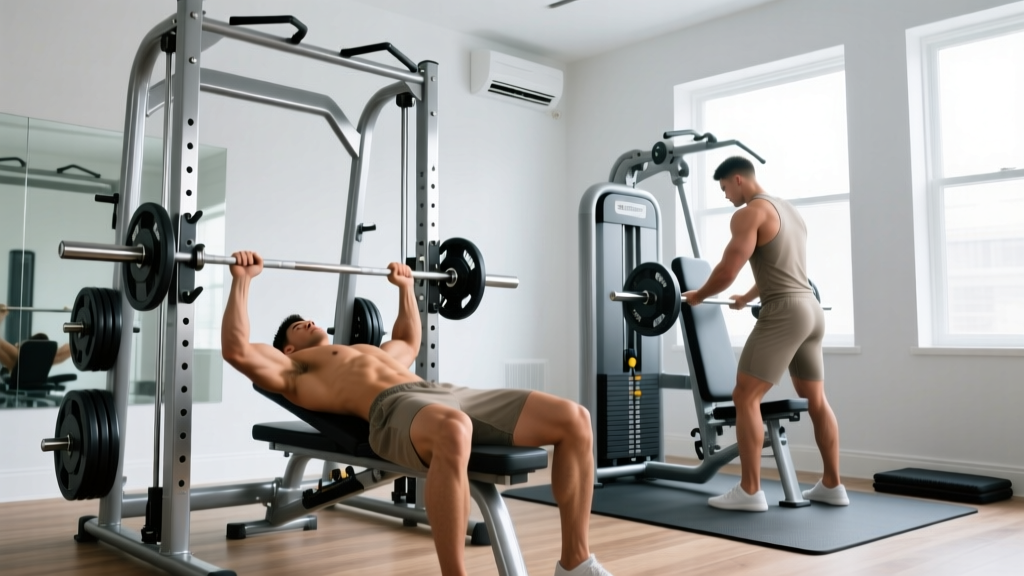
When outfitting a gym, a frequent question we receive from buyers is: is chest press machine same as bench press? The short answer is an emphatic no, and treating them as interchangeable will lead to suboptimal programming and equipment regrets.
Biomechanics and Stabilization
The barbell bench press is an open-chain, free-weight compound movement. As detailed in barbell pressing biomechanics guides, it requires immense stabilization from the rotator cuff, core, and leg drive. The bar path is not perfectly vertical; it follows a slight J-curve from the lower sternum to over the shoulder joint. This demands high neurological output and limits the amount of sheer mechanical tension you can safely place on the pecs without risking a shoulder impingement or a missed lift.
The Converging Arc of Modern Machines
Modern chest press machines, such as the Hammer Strength ISO-Lateral Chest Press (approx. $3,800), utilize a converging arc. This means the handles move closer together as you press forward, mimicking the natural adduction function of the pectoralis major—something a straight barbell physically cannot do. Because the machine stabilizes the load, you can safely train to absolute muscular failure without a spotter. Furthermore, the unilateral nature of ISO-lateral machines corrects left-to-right strength imbalances that the barbell bench press often masks.
Verdict: The bench press is a superior tool for total-body athletic power and central nervous system overload. The chest press machine is a superior tool for localized pectoral hypertrophy, safe failure training, and rehabilitation. A complete gym requires both.
Equipment Selection Matrix: When to Use What
To help you finalize your equipment purchases and programming, refer to this decision matrix based on your primary training goals.
| Equipment Type | Resistance Profile | Best Use Case | Joint Stress Level |
|---|---|---|---|
| Dumbbell Fly | Bell-Curve (Max at stretch) | Stretch-mediated hypertrophy, stabilizer recruitment | High (Anterior capsule) |
| Cable Crossover Fly | Linear / Constant Tension | Peak contraction, metabolic stress, drop sets | Low to Moderate |
| Barbell Bench Press | Gravity-dependent | Maximal strength, CNS adaptation, powerlifting | High (Sternum & AC joint) |
| Converging Chest Press Machine | Cammed / Variable | Safe failure training, unilateral balancing, rehab | Low |
Expert Troubleshooting & Maintenance
Equipment longevity requires specific maintenance protocols, especially for the high-friction movements involved in chest training.
- Cable Machine Guide Rods: Do not use standard WD-40 on your cable crossover guide rods. It attracts dust and creates a grinding paste. Use a dry PTFE (Teflon) spray once a month to maintain the silent, frictionless glide required for smooth cable fly eccentrics.
- Dumbbell Knurling Care: Chalk buildup in dumbbell knurling reduces grip security. Use a nylon brush and a mild degreaser monthly. Avoid wire brushes on adjustable dumbbells, as they can damage the plastic alignment dials.
- Bench Pad Degradation: Vinyl bench pads crack when exposed to UV light and sweat salts. Wipe down your Rogue or Rep bench with a damp microfiber cloth after every session to prevent the vinyl from drying out and splitting at the seams.
Ultimately, whether you are debating the merits of a dumbbell fly vs cable fly, or asking if a chest press machine is the same as a bench press, the answer lies in the specific adaptation you are chasing. Invest in the equipment that matches your biomechanical needs, maintain it rigorously, and the hypertrophy will follow.
More gear to consider
All reviewsUltimate Cupping Guide: Science, Safety, and Evidence-Based Practice for Clinicians and Consumers

Pec Deck Guide: Space Layouts vs the Leg Bench Press Machine

Cable Crossover Installation Walkthrough & Seated Machine Chest Press

Push-Up Bars vs Boards: The Best Machine Chest Press Alternative
Bench Press Racks vs. Chest Press Machine Weight Without Plates
