
Curved vs Motorized: Troubleshooting & How to Fold Ovicx Treadmills
Compare curved manual vs motorized treadmills. Learn troubleshooting tips, maintenance fixes, and exactly how to fold Ovicx treadmill models safely.

The Biomechanical and Mechanical Divide
Choosing between a curved manual treadmill and a traditional motorized unit fundamentally alters your home gym footprint, maintenance routine, and workout biomechanics. According to the American Council on Exercise (ACE), curved treadmills can increase calorie expenditure by up to 30% due to the self-propelled nature of the slat belt, which demands greater posterior chain engagement. However, this mechanical complexity introduces unique troubleshooting challenges that differ vastly from the electronic and hydraulic systems found in motorized models like the Ovicx lineup.
While motorized treadmills require electronic diagnostics, belt alignment, and folding mechanism maintenance, curved manual treadmills demand physical tension adjustments and bearing care. This comprehensive troubleshooting guide addresses the most common mistakes users make with both platforms in 2026, featuring a deep-dive into motorized storage solutions.
| Feature | Curved Manual (e.g., AssaultRunner Elite) | Compact Motorized (e.g., Ovicx Q7) |
|---|---|---|
| Power Source | Self-propelled (User-generated) | 2.5 HP to 3.25 HP Electric Motor |
| Top Speed | Unlimited (User-dependent) | Typically 8.0 to 10.0 MPH |
| Belt Type | Rubberized Slat Belt on Ball Bearings | Continuous PVC/Nylon Loop |
| Folding Capability | None (Fixed 65+ inch footprint) | Hydraulic or Manual Fold-Down Deck |
| Common Failure Point | Bearing friction / Slat tension loss | Electronic sensors / Latch misalignment |
Curved Manual Treadmill Mistakes and Fixes
Mistake 1: Misdiagnosing Slat Belt Slippage
On a curved treadmill, the belt is not driven by a motor; it relies on the user's foot strike and gravity. If you feel the belt 'slipping' or lagging during a heavy push-off, the instinct is to tighten the belt to the extreme. This is a critical error. Over-tightening the rear axle bolts increases friction on the guide wheels, causing premature wear and a sluggish feel.
The Fix: Use an 8mm Allen wrench to adjust the rear tensioning bolts. Turn both the left and right bolts exactly one-quarter (1/4) turn clockwise. Test the belt. The ideal tension allows the slats to move freely under foot pressure without lateral shifting. If the belt tracks to the left, tighten the left bolt 1/8th turn and loosen the right bolt 1/8th turn.
Mistake 2: Using Liquid Lubricants on Slat Bearings
Curved treadmills utilize dozens of individual ball bearings to allow the slat belt to glide over the curved chassis. When these bearings begin to squeak, users often reach for WD-40 or liquid silicone. Liquid lubricants attract dust and pet hair, eventually creating a grinding paste that destroys the bearings.
The Fix: Use a PTFE (Teflon) dry lubricant spray. Apply a light mist directly to the bearing tracks on the underside of the chassis, wipe away any excess immediately, and let it cure for 15 minutes before running.
Motorized Treadmill Troubleshooting: Error Codes and Belts
Compact motorized treadmills are heavily reliant on optical sensors and motor controllers. When a workout is interrupted by a flashing console, it is usually tied to one of two issues.
Decoding E01 and E07 Error Codes
The Consumer Reports treadmill buying guide notes that electronic communication errors are the leading cause of motorized treadmill downtime.
- E01 (Communication Error): This indicates the console is not receiving data from the lower control board. Before replacing parts, unplug the machine, remove the motor hood, and check the primary data cable (usually a multi-pin ribbon cable). Reseat the connections firmly. In 80% of cases, vibration has simply loosened the plug.
- E07 (Motor Overcurrent/Protection): The motor is drawing too many amps, often due to excessive friction between the walking belt and the deck. This is almost always a lubrication issue, not a failing motor.
The Silicone Lubrication Mistake
To fix an E07 error or general belt drag, you must lubricate the deck. The mistake users make is using petroleum-based sprays or applying too much 100% silicone oil. Excess oil will seep out the sides, degrading the drive belt and causing the motor pulley to slip.
The Fix: Apply exactly 15ml of 100% pure silicone treadmill lubricant in a zig-zag pattern directly onto the wooden deck beneath the walking belt. Run the treadmill at 3.0 MPH for 3 minutes without walking on it to distribute the oil evenly.
Storage Solutions: Ovicx Treadmill How to Fold and Fix Jams
One of the primary advantages of motorized units like the Ovicx series is their space-saving design. However, the folding mechanism is a frequent point of frustration. Many users search for ovicx treadmill how to fold without realizing that the hydraulic assist and safety latch require specific alignment to engage properly. Forcing the deck down or up can bend the locking pin.
Step-by-Step Folding Procedure
- Power Down and Clear: Turn off the master switch at the front base and remove the magnetic safety key from the console.
- Positioning: Stand at the very back of the treadmill. Place your feet firmly on the rear end caps, not on the belt.
- The Lift: Bend your knees, grip the rear edge of the deck frame (never pull by the plastic belt trim), and lift upward using your legs.
- Engage the Latch: As the deck reaches a 45-degree angle, the hydraulic cylinder will take over the weight. Continue lifting until you hear a distinct metallic 'click' from the upper locking pin engaging the catch bracket.
Troubleshooting a Stuck or Misaligned Latch
If the deck refuses to lock in the upright position, or if it won't release when you pull the manual release cord, the locking pin mechanism is likely jammed or dry.
WARNING: Never place your fingers near the locking pin catch while the deck is in motion. The hydraulic cylinder exerts over 150 lbs of force and can cause severe pinching injuries.The Fix for a Stuck Release: If the deck won't lower, the locking pin is bound by lateral tension. Push the deck upward slightly (about one inch) to relieve pressure on the pin, then pull the yellow release lanyard. The deck should lower smoothly.
The Fix for a Failure to Lock: If the pin isn't clicking into place, inspect the catch bracket on the upright mast. Over time, the factory grease dries out. Apply a small dab of white lithium grease to the spring-loaded pin shaft and wipe away any debris from the catch hole.
Space Planning and Safety Clearances
When comparing fixed curved treadmills to folding motorized options, spatial planning is critical for both safety and machine longevity. The Centers for Disease Control and Prevention (CDC) emphasizes safe exercise environments to prevent falls and injuries.
Always maintain a minimum of 24 inches of clearance on both sides of any treadmill, and at least 48 inches of clearance behind the machine. If a user falls off the back of a motorized treadmill, the 4-foot buffer prevents them from striking a wall or furniture.
For folding Ovicx models, ensure your ceiling height accommodates the upright deck. Most compact folding treadmills stand approximately 68 to 72 inches tall when locked. If your room has standard 8-foot (96-inch) ceilings, you will have ample room, but be wary of sloped ceilings or low-hanging light fixtures in basement gyms.
2026 Preventative Maintenance Schedule
To minimize troubleshooting and extend the lifespan of your cardio equipment, adhere to this strict maintenance cadence:
- Weekly: Vacuum beneath and immediately behind the motor hood (motorized) or rear axle (curved) to prevent dust ingestion into the cooling fan or bearings.
- Monthly: Check belt tracking. Run the machine at 4.0 MPH and observe the rear roller. The belt should remain perfectly centered.
- Quarterly (Every 150 Miles): Apply 15ml of 100% silicone lubricant under the motorized walking belt. Inspect curved treadmill slats for loose fastening screws.
- Bi-Annually: Test the emergency stop button and safety key lanyard. Inspect the power cord for fraying or compression damage, especially near the base where it bends during folding.
Whether you are managing the raw mechanical resistance of a curved manual treadmill or troubleshooting the hydraulic folding latch on an Ovicx motorized unit, precision maintenance is the key to uninterrupted training. By understanding the distinct engineering of your machine, you can resolve 90% of common home gym errors without requiring a costly technician visit.
More gear to consider
All reviews
Air Bike vs Assault Bike Layouts: AoraPulse Treadmill Pairings

Assault vs Air Bike: Beyond What Is a Good Speed to Walk on the Treadmill

DeerRun Treadmill Reviews & Spin, Upright, Recumbent Bike Care
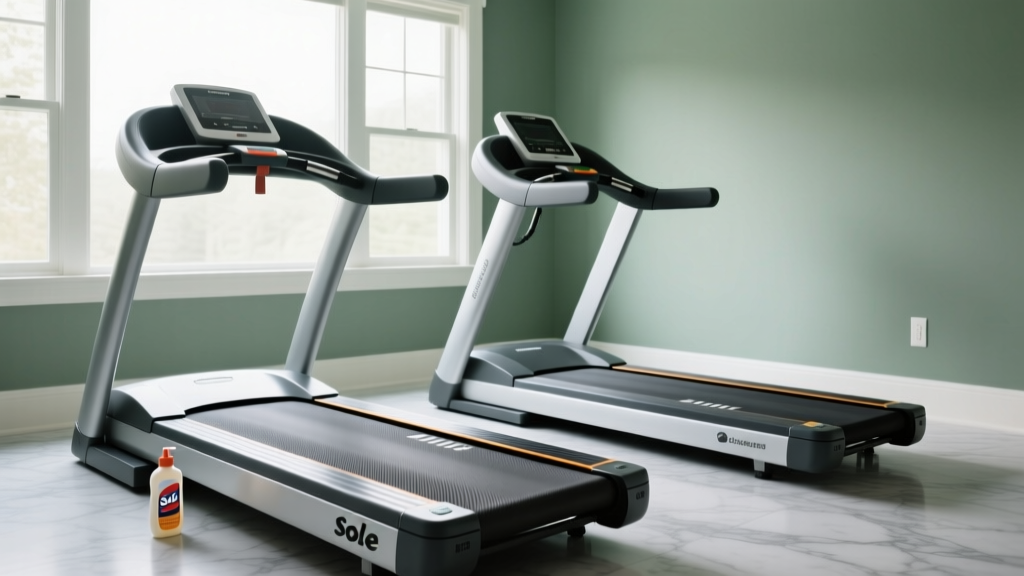
Curved Manual vs Motorized Treadmill: Sole Treadmill Lube & Care

Define Treadmill Trends 2026: Best Folding Models for Small Spaces
