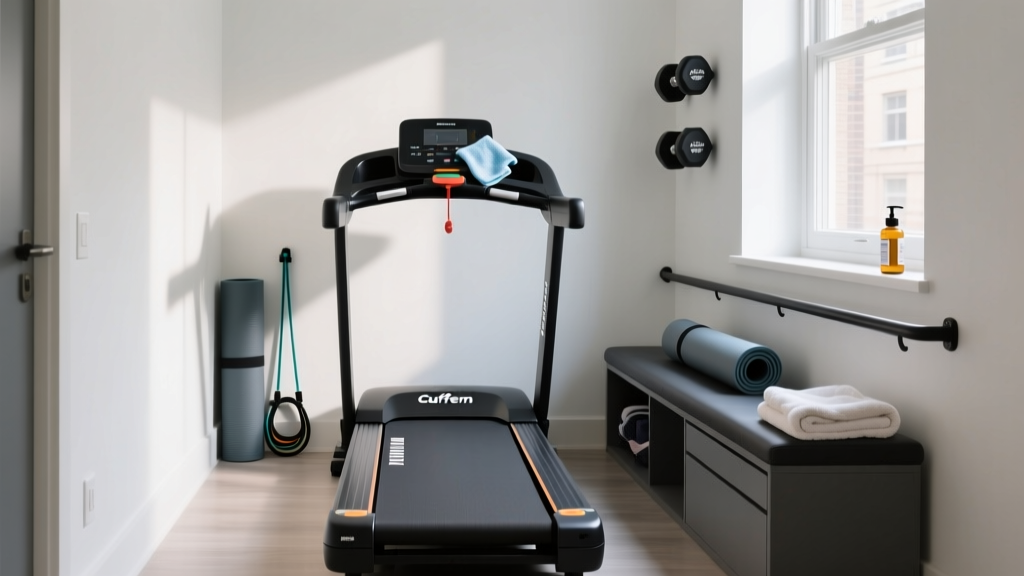
Cuffem Treadmill Review: Small Space Maintenance & Longevity Guide
Read our Cuffem treadmill review focusing on small-space setup, daily maintenance routines, and longevity tips to maximize your folding cardio machine.

As urban living spaces shrink and remote work becomes a permanent fixture in 2026, the demand for compact, stowable fitness equipment has skyrocketed. The Cuffem treadmill has emerged as a popular choice for apartment dwellers and home-office users who need a reliable walking pad and light jogging machine that can slide under a bed or couch. However, compact treadmills face unique mechanical stresses that their full-sized commercial counterparts do not. Folding mechanisms, smaller motor housings, and low-clearance decks make them highly susceptible to dust ingestion, wiring fatigue, and belt misalignment.
In this comprehensive Cuffem treadmill review, we are looking past the unboxing experience and focusing strictly on maintenance care, structural longevity, and real-world troubleshooting. If you want your folding treadmill to survive beyond its one-year warranty, this guide will show you exactly how to care for it.
Cuffem V2 Compact Treadmill: Quick Specs
- Motor: 2.25 Peak HP (1.5 Continuous Duty)
- Running Surface: 16 inches x 43 inches
- Weight Capacity: 240 lbs
- Folded Dimensions: 54 x 22 x 6 inches
- Frame Material: 14-gauge stamped steel with aluminum hinge joints
Evaluating the Cuffem Frame and Hinge Durability
The defining feature of any folding treadmill for small spaces is the hinge mechanism. The Cuffem utilizes a dual-piston gas strut system to assist with lifting and lowering the deck. While this makes the 65-pound frame manageable for a single user, the repeated folding action introduces a specific failure point: the internal wiring harness.
Every time you fold the Cuffem treadmill, the main ribbon cable that connects the lower control board to the upper LED console bends at a 90-degree angle near the left hinge. According to equipment repair specialists at Treadmill Doctor, repeated bending of unshielded ribbon cables is a leading cause of console blackout and speed sensor errors in folding models.
Longevity Tip: The Hinge Inspection
Once a month, lower the deck and inspect the rubber accordion boot covering the left hinge. Ensure the boot has not slipped out of place, exposing the wiring to dust and friction. If you notice the rubber cracking or the wires pressing against the steel frame, apply a small strip of high-density felt tape (available at any hardware store for under $5) to the inside of the frame to act as a buffer. This simple $5 fix can prevent a $120 control board replacement down the line.
The Dust Factor: Micro-Environment Belt Care
Small-space treadmills are rarely left in the center of a room. They are pushed under beds, shoved into closets, or wedged behind sofas. These micro-environments are notorious for accumulating dust bunnies, pet dander, and carpet fibers. When the Cuffem's 1.5 CHP motor pulls in air for cooling, it acts like a vacuum cleaner, drawing this debris directly into the motor compartment and onto the deck.
Dust acts as a severe abrasive between the walking belt and the wooden deck. This friction forces the motor to draw higher amperage, leading to overheating and premature failure. Proper lubrication is not optional; it is the single most critical factor in extending the life of your Cuffem treadmill.
Step-by-Step Silicone Lubrication
- Use the Right Product: Only use 100% pure silicone treadmill lubricant. Never use WD-40, lithium grease, or petroleum-based products, which will melt the PVC backing of the belt.
- Access the Deck: Unplug the machine. Loosen the rear roller bolts on both sides using a 5mm Allen wrench (exactly three full turns counter-clockwise) to create slack in the belt.
- Apply Lubricant: Lift the edge of the belt and apply exactly 0.5 ounces of silicone in a zig-zag pattern down the center of the deck. Repeat on the other side.
- Retension and Spread: Tighten the rear bolts back to their original position. Plug the machine in, turn it on to 2.0 MPH, and walk on it for three minutes to evenly distribute the silicone.
Routine Maintenance Schedule for Compact Treadmills
Consistency is key to preventing catastrophic mechanical failures. Below is a structured maintenance matrix specifically designed for the Cuffem treadmill when used in a high-dust, small-space environment.
| Timeframe | Maintenance Task | Tools Required |
|---|---|---|
| After Every Use | Wipe down console and handrails with a damp microfiber cloth to remove corrosive sweat salts. | Microfiber cloth, water |
| Weekly | Vacuum the floor beneath the stored treadmill and wipe the exposed edges of the walking belt. | Handheld vacuum |
| Monthly | Inspect the hinge ribbon cable boot; check belt tracking and tension. | 5mm Allen wrench |
| Bi-Annually | Apply 1.0 oz total of 100% silicone lubricant; remove motor hood and blow out dust with compressed air. | Silicone lube, Phillips screwdriver, canned air |
Troubleshooting Common Cuffem Error Codes
Even with meticulous care, compact treadmills can throw error codes due to power fluctuations or minor sensor misalignments. Understanding these codes saves you from unnecessarily calling a technician or throwing the machine away. Consumer Reports frequently notes that user error and lack of basic troubleshooting account for over 40% of premature treadmill returns.
Error E02: Motor Overcurrent / Overheating
The Cause: The motor is drawing too many amps. This is almost always caused by a dry belt creating excessive friction, or a motor compartment clogged with pet hair. It can also happen if a user exceeds the 240 lbs weight limit, straining the 1.5 continuous duty motor.
The Fix: Unplug the machine. Remove the four Phillips-head screws on the front motor hood. Use compressed air to blow out the motor fan and the lower control board heat sink. Lubricate the deck as outlined above. Allow the machine to cool for 45 minutes before resetting the breaker switch on the power cord.
Error E05: Speed Sensor Failure
The Cause: The optical sensor near the front roller is not reading the slotted disc on the motor flywheel. In folding treadmills, the vibration from folding and unfolding can slightly bump the sensor bracket out of alignment.
The Fix: Remove the motor hood. Locate the small black sensor bracket pointing at the toothed disc on the left side of the motor. Ensure there is exactly a 2-millimeter gap between the sensor and the disc. If it is bent away, gently push it back into alignment with your fingers. Wipe the sensor eye with a dry Q-tip to remove any dust.
Expert Storage Warning: Never store the Cuffem treadmill vertically on its tail end unless the manual explicitly permits it. Storing compact treadmills vertically can cause the internal hydraulic fluids in the gas struts to pool at one end, leading to seal degradation and a sudden, dangerous dropping of the deck when you attempt to unfold it months later. Always store it horizontally flat under furniture.
Belt Alignment: Correcting the 'Drift'
If your walking belt drifts to the left or right, it will eventually catch on the side rail, tear, and ruin the deck. Belt drift is incredibly common in small spaces because users often step off the treadmill onto uneven carpet edges or kick the side rails when pulling it out from under a bed.
To correct a rightward drift, insert the 5mm Allen wrench into the left rear roller bolt and turn it one-quarter turn clockwise. Then, insert the wrench into the right rear roller bolt and turn it one-quarter turn counter-clockwise. Run the treadmill at 3.0 MPH and observe. Never turn the bolts more than a quarter-turn at a time; over-tightening will stretch the belt permanently and snap the roller bearings.
Final Verdict: Is the Cuffem Built to Last?
As a folding treadmill for small spaces, the Cuffem offers an excellent footprint-to-performance ratio for walkers and light joggers in 2026. However, its longevity is entirely dependent on the user's willingness to manage the unique environmental hazards of micro-space living. The 1.5 CHP motor is highly efficient but unforgiving of dust and friction.
If you are willing to commit to the bi-annual silicone lubrication, monthly hinge inspections, and careful horizontal storage, the Cuffem treadmill will easily provide five to seven years of reliable daily cardio. Neglect the deck, and the motor will burn out in less than eighteen months. Treat this machine with the same mechanical respect you would give a full-sized commercial rig, and it will serve as a cornerstone of your home fitness routine for years to come.
More gear to consider
All reviews
Nordic Track X22i Treadmill vs Elliptical: Home Cardio Guide

Infinadeck Treadmill vs Stationary Bike Types: Maintenance Guide

Treadmill Elliptical Combo vs. Dedicated: 2026 Review

Elliptical vs Treadmill Longevity: How to Jog on a Treadmill Safely

Air Bike vs Assault Bike: How to Burn 500 Calories on Treadmill in 30 Minutes
