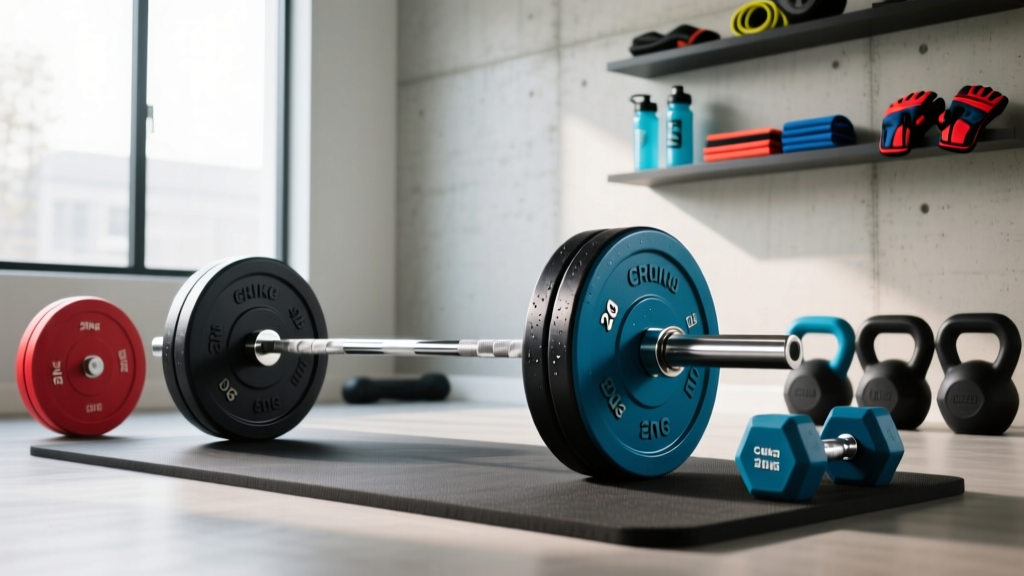
Compact Gyms: Loadable Dumbbells & Dumbbell Lying Hip Abduction
Discover how to optimize small home gym layouts using loadable dumbbells for the dumbbell lying hip abduction and other space-saving free weight routines.

The Spatial Economics of Free Weights in 2026
Designing a high-performance home gym in a limited footprint requires a ruthless approach to spatial economics. For years, the gold standard for free weight training was the fixed rubber hex dumbbell rack. However, a standard 5 to 50-pound fixed dumbbell set requires a heavy-duty steel rack measuring roughly 48 inches wide and 30 inches deep, consuming over 10 square feet of valuable floor space and costing upwards of $1,800. As urban living spaces shrink and garage gyms double as parking spaces, fitness enthusiasts are pivoting toward a highly efficient alternative: the loadable dumbbell with interchangeable plates.
Loadable dumbbell handles paired with a compact set of Olympic or 1-inch plates offer an unprecedented strength-to-footprint ratio. By utilizing interchangeable plates, you can replicate a 50-pound fixed set using just two steel handles and a few pairs of urethane plates, reducing your equipment footprint by nearly 75%. But transitioning to loadable gear isn't just about storage; it fundamentally changes how you execute specific isolation movements in tight quarters, particularly the dumbbell lying hip abduction.
Fixed Racks vs. Loadable Systems: A Footprint Comparison
Before mapping out your gym layout, it is critical to understand the exact spatial and financial differences between traditional fixed sets and modern loadable systems. The data below highlights why loadable handles are the cornerstone of the micro-gym.
| Equipment Type | Approximate Cost (2026) | Floor Footprint | Weight Range | Setup Time |
|---|---|---|---|---|
| Fixed Hex Rack (5-50 lbs) | $1,600 - $2,200 | 10.5 sq ft (Rack included) | 5 - 50 lbs | Instant |
| Adjustable Dials (e.g., Bowflex) | $400 - $600 | 2.5 sq ft | 5 - 52.5 lbs | Instant |
| Loadable Handles + Urethane Plates | $350 - $550 | 3.0 sq ft (Wall-mounted) | 5 - 100+ lbs | 45 - 90 seconds |
While adjustable dial dumbbells are popular, their bulky, rectangular cages often interfere with exercises that require the weights to touch or rest against the body. Loadable handles mimic the exact profile of traditional gym dumbbells, making them vastly superior for complex movement patterns, provided you manage the plate sleeves correctly.
Biomechanics and Spatial Constraints of the Hip Abduction
The dumbbell lying hip abduction is a premier isolation exercise targeting the gluteus medius and minimus, crucial for pelvic stability and lateral hip strength. According to the ACE Fitness Exercise Library, proper execution requires the lifter to lie supine on a bench or floor, pressing the soles of the feet together, and lowering the knees outward while resisting the weight of a dumbbell.
⚠️ The Sleeve Clash Failure Mode
When performing the traditional bilateral dumbbell lying hip abduction (where a single dumbbell is held between the feet or rests on the inner thighs), loadable dumbbells present a unique mechanical hazard. Handles like the Titan Fitness 20-inch Loadable Dumbbells feature 8.5-inch steel sleeves. When loaded with plates, the exposed steel sleeves extend outward. If you attempt to hold the dumbbell between your feet, the metal sleeves will clash, pinch your shins, or destabilize the plates. Always opt for a unilateral adaptation or specialized short-sleeve handles when performing lower-body isolation work in a compact space.
The Unilateral Thigh-Rest Adaptation
To safely execute the dumbbell lying hip abduction with loadable gear in a tight layout, you must adapt the movement to a unilateral format. This not only solves the sleeve clash issue but also allows for independent limb correction, a principle heavily supported by the National Strength and Conditioning Association (NSCA) for addressing muscular imbalances.
- The Setup: Lie supine on a flat bench (or the floor if ceiling height/bench storage is an issue). Bend your knees and bring the soles of your feet together in a butterfly stretch position.
- Positioning the Loadable Dumbbell: Take a single loadable dumbbell (e.g., Rogue Fitness 15.75-inch handles with 5.25-inch sleeves) and rest the plate-loaded head gently on the lateral side of your right thigh, just above the knee.
- The Execution: Use your right hand to stabilize the dumbbell handle against your thigh. Slowly allow your right knee to drop outward toward the floor, feeling a deep stretch in the hip adductors and engaging the gluteus medius.
- The Contraction: Squeeze the glute medius to pull the knee back to the starting position, pressing against the weight of the dumbbell. Complete all reps before switching the dumbbell to the left leg.
Designing the 10x10 Micro-Gym Layout
Integrating loadable dumbbells into a 10x10 foot room requires a zoned approach to layout design. The goal is to keep the center of the room entirely clear for floor work, bench placements, and dynamic movements, pushing all storage to the vertical perimeter.
Zone 1: The Vertical Plate Perimeter
Ditch the traditional floor-standing plate tree, which creates a tripping hazard and wastes 4 square feet of floor space. Instead, install a wall-mounted plate peg system. By mounting 1-inch or 2-inch Olympic pegs directly into the wall studs at a height of 48 inches, you keep plates accessible but entirely off the floor. Store your loadable handles on specialized wall hooks adjacent to the pegs. This creates a dedicated 'Loading Zone' that takes up zero usable floor space.
Zone 2: The Multi-Functional Center
In the center of the room, place a foldable flat/incline bench. When performing the dumbbell lying hip abduction, the bench provides the necessary elevation for a full range of motion. When finished, the bench folds flat and slides under a wall-mounted pull-up bar or squat rack. This ensures the central 8x8 foot area remains open for kettlebell swings, yoga, or plyometrics.
Zone 3: Micro-Plate Storage
Loadable dumbbells require frequent weight changes. Keep 2.5 lb, 5 lb, and 10 lb urethane grip plates in a shallow, wall-mounted wire basket near your loading zone. Urethane plates are highly recommended over rubber hex plates for loadable handles because their thinner profile allows you to fit more weight onto the limited sleeve length of a dumbbell handle.
'In spatial design for fitness environments, the floor is your most expensive real estate. Every pound of iron that can be moved to the wall is a victory for functional movement space.'
Choosing the Right Loadable Handles for Isolation Work
Not all loadable dumbbell handles are created equal, especially when considering exercises like the dumbbell lying hip abduction where the equipment rests near the body.
- Rogue Fitness Loadable Dumbbell Handles ($135/pair): Featuring a 5.25-inch sleeve length, these are ideal for isolation movements. The shorter sleeve minimizes the 'clash zone' and keeps the center of gravity tight, making them the premium choice for unilateral thigh-rest exercises.
- Titan Fitness 20-inch Loadable Handles ($79.99/pair): With an 8.5-inch sleeve, these hold more weight but are cumbersome for lower-body isolation work. Reserve these for heavy floor presses, lunges, and farmer carries where the sleeves hang freely away from the body.
- Collar Selection: Avoid bulky spring collars that add an extra 1.5 inches of width to the sleeve. Invest in low-profile spin-lock collars or specialized silicone friction collars to maximize sleeve space and prevent pinching during close-contact exercises.
Frequently Asked Questions
Can I do dumbbell lying hip abductions on the floor instead of a bench?
Yes, the floor is an excellent space-saving alternative. However, lying flat on the floor limits the range of motion because your elbows and the dumbbell plates will hit the ground before your hip achieves maximum adduction stretch. To fix this in a compact layout, lie supine with your hips elevated on a firm foam roller or a tightly rolled yoga mat, giving your elbows and the dumbbell sleeves clearance to drop lower.
How do I prevent plates from sliding during the hip abduction?
Because the dumbbell is resting on an angled surface (the thigh) during the unilateral hip abduction, gravity will try to slide the plates down the sleeve. You must use high-quality, tight-fitting collars. If using standard spring collars, ensure they are pushed completely flush against the outer plate. For maximum security during angled isolation movements, threaded spin-lock handles are vastly superior.
What is the best plate material for loadable dumbbells?
Urethane grip plates are the industry standard for loadable handles. They are thinner than crumb-rubber plates, allowing you to load up to 40-50 lbs on a standard 5.25-inch sleeve. Furthermore, urethane does not degrade, smell, or leave black marks on your walls or bench upholstery, which is vital for maintaining a clean, multi-use room environment.
More gear to consider
All reviews
Back Squats with Dumbbells: Beginner Guide Using Neoprene Weights

Lower Chest Dumbbell Errors: Troubleshooting Neoprene Home Weights

Power Rack vs Squat Rack vs Stand: Push Press With Dumbbells
Side Lunges Exercise With Dumbbells: Top Loadable Picks
Rack Setup Guide: Power vs Squat & Wrist Pain Dumbbell Curls Fixes